A Different Language
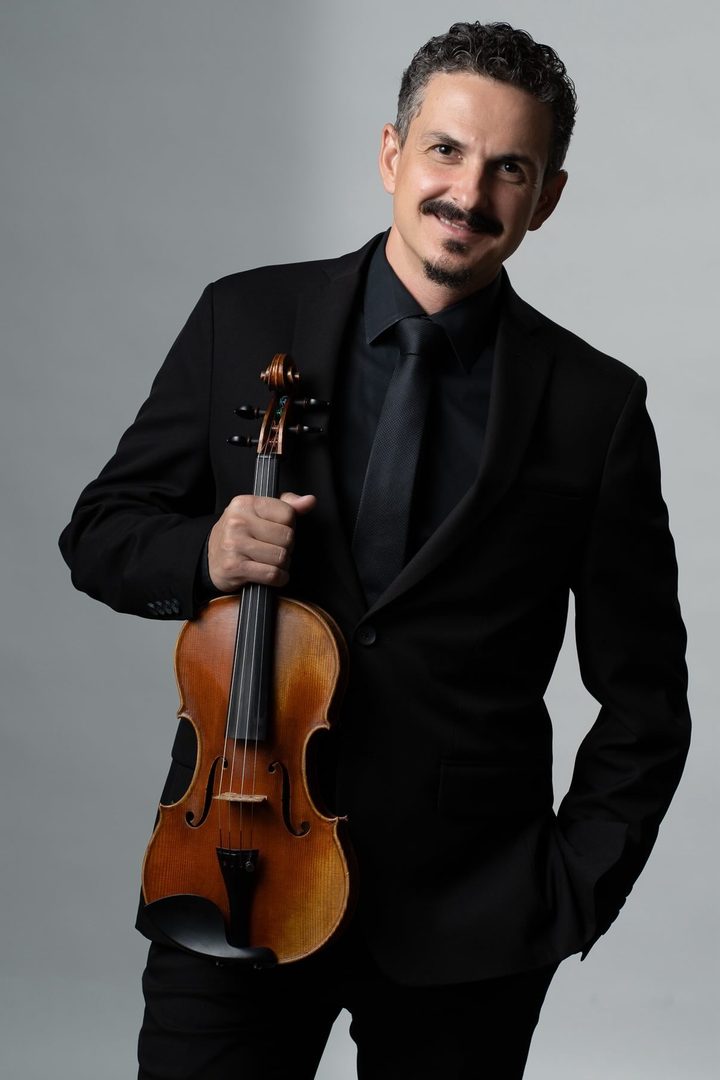
We came to Cristian Fatu entirely by chance. We had reached out, as we always do, simply to ask his permission to use a glimpse of his footage from the Guarneri del Gesù gatherings for a reel on our social media. He agreed right away — and then, while we were chatting on Instagram, it just slipped out of me: “…and if you’d ever be up for an interview.” A joke, really. A little stone tossed into a still pond.
But you don’t joke with Cristian’s warm, gentle nature — nor with his openness to serve something larger than himself: to be a vessel for classical music, for music as a whole. He said yes. And here we are!
He’s often described as kind, warm and down-to-earth, and after our conversation we can absolutely vouch for that. Talking to him, you get a rare and different view of a musician’s life. Here is a renowned, deeply respected artist with a solid, well-established career — and yet, stripped of the frills and the allure, the impression he leaves is of someone who has spent his whole artistic life in the service of music. More a humble (in the very best sense) craftsman than a fortune-seeker chasing stardom.
And that, let me tell you, is an angle we are rarely shown. I found it extremely interesting — and deeply moving.
There is a quiet paradox at the heart of Cristian Fatu. He moves through the rarefied world of 300-year-old violins — he has recorded on a Guarneri del Gesù, and he is a familiar face at David Garrett’s exclusive del Gesù Club — and yet, on a daily basis, he chooses to play modern instruments. Ask him why, and you don’t get romance. You get a Formula 1 car.
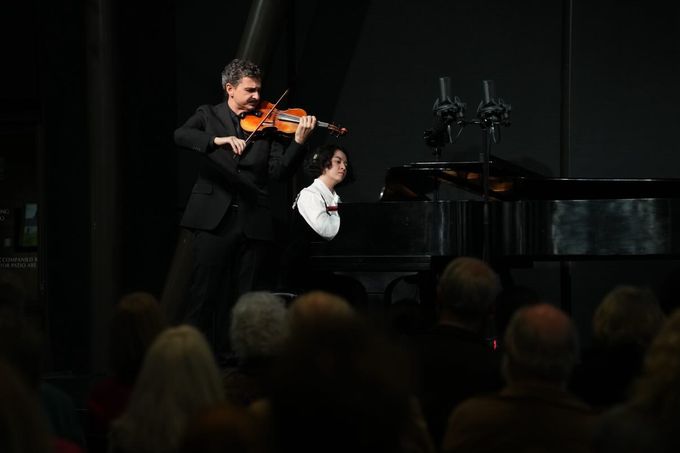
Born in Romania into a family of musicians — his mother is a cellist — Fatu studied at the music university in Bucharest before moving to the United States in 2006 for graduate studies. His American journey took him from Kansas City to West Virginia and, since 2019, to Los Angeles. Along the way he has built one of the more unusually varied careers in classical music: solo recitalist, chamber musician, orchestral player, Hollywood studio recording artist, and dedicated teacher who gives masterclasses wherever he is invited. He’s just back from Mexico, and he told us about it.
What unites these threads is a deep, almost scientific curiosity about the instrument itself. Since 2013 he has been a regular at the Oberlin Acoustics Workshop, the gathering where players, makers and scientists pull the violin apart — figuratively and literally — to understand what makes a great one great. He was heading back there the very week we spoke, to give a recital and to do string-optimisation work for Thomastik-Infeld.
It is this engineer’s eye that shapes his now-famous willingness to play new violins. The historic masterpieces, he points out, are simply unattainable — “they cost more than any musician can make.” But more than that, he genuinely believes the best modern makers can match, or even surpass, the old Cremonese gods. Sound, he insists, is subjective: hand the same violin to two players, put two listeners in the hall, and everyone hears something different. In the end, the player decides what the instrument means.
He currently plays a violin by the American maker Jordan Hess of Salt Lake City, with a Samuel Zygmuntowicz on loan. When a historic instrument comes his way — through the collectors he is fortunate to know, or at Garrett’s gatherings — he embraces it gladly. He doesn’t deny the charge of holding three centuries of history under his chin. But for Fatu, a violin is, first and last, a tool in service of the music.
• • •
The Strings SocietyFirst things first, Cristian, thank you so much for this — you’ve been incredibly kind.
Cristian FatuThank you for reaching out — I’m flattered that you wanted to talk to me and hear my story.
The Strings SocietyYours is an unusually varied career. You perform of course, but you also teach — bringing younger people into music and clearly eager to pass your artistry on to the next generation.
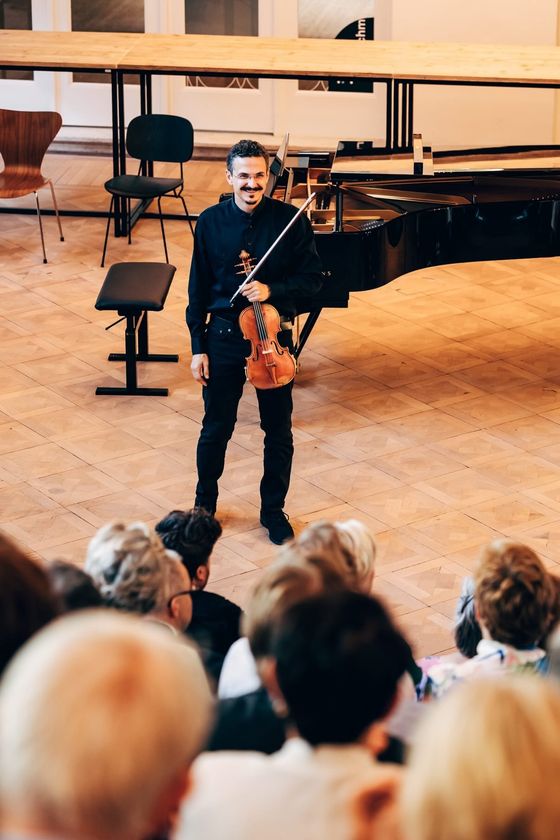
Cristian FatuAs a professional musician, there are many ways to build and conduct a career, and in my case I do a multitude of things. I perform solo recitals and concerts, of course, but I also teach on a regular basis and give masterclasses when I’m invited. I just got back from Mexico, where I was invited by the Benning Academy. They have a wonderful educational system based on El Sistema, and Tito Quiroz — the violin teacher, director and overall engine for classical music in Mexico — invites accomplished musicians from Los Angeles every year to work with the students in masterclasses. Past faculty have included members of the Los Angeles Philharmonic, so I was very moved to be extended the invitation. They have a great thing going in Mexico, and the students are very passionate.
The Strings SocietyIt must have been an incredible experience! You’re also fascinated by how violins are actually made — you’ve studied the physics of the instrument, through the Oberlin Acoustics Workshop.
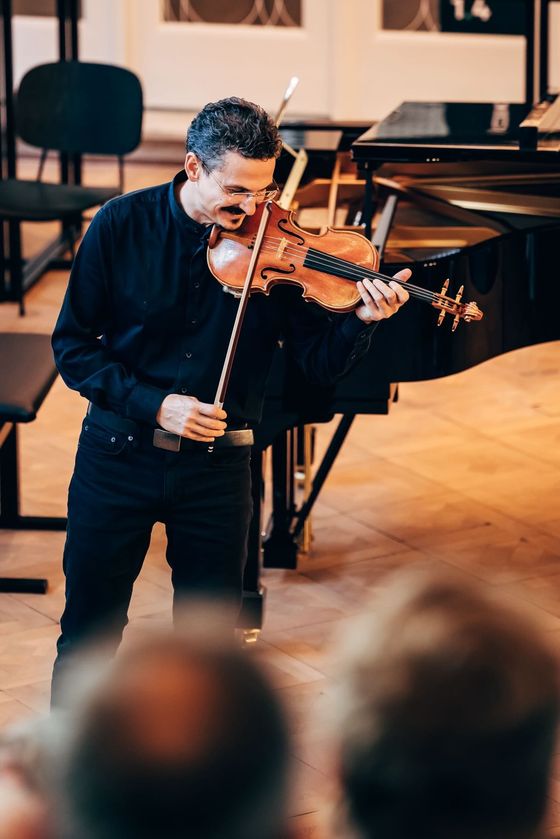
Cristian FatuYes — I’ve always been passionate about that side of violin playing: how violins are made, and how to optimise an instrument so it sounds really good. That’s exactly what we do at Oberlin. In fact I’m going there this week; it’s an annual event, and I’ve attended since around 2013, with some breaks. They’ve invited me to give a recital, and I’ll also do some string optimisation for Thomastik-Infeld. I’ve been involved with this for a long time.
The Strings SocietyWhat’s the most surprising thing you’ve learned about why a great instrument sounds so great?
Cristian FatuI’ll make an analogy with motor racing. An instrument that sounds truly great is like a Formula 1 car, or a Tour de France bicycle — optimised and designed for the best possible performance. In the violin world, that can be a historic instrument, a Stradivari or a Guarneri del Gesù. But those are unattainable for most musicians today; they cost more than any musician can earn. Equally, there are modern makers whose instruments, in my opinion, sound just as good — or in some cases even better — than the old ones. And sound is subjective: give the same instrument to different players, with different people listening, and everyone hears something different. In the end, it’s the player who has to decide what works best, and what the instrument means to them.
The Strings SocietyYou currently play two modern instruments, is that right?
Cristian FatuCorrect — on a regular basis, yes. I play an instrument by Jordan Hess, an American maker from Salt Lake City, and I have a Samuel Zygmuntowicz on loan — also a modern American maker. And I’m fortunate to know a few collectors of fine Italian instruments, so whenever I have the chance to play one of those — or when I’m invited to events like the Del Gesù Club organised by dear David Garrett — it’s a great pleasure.
The Strings SocietyIs the difference between a modern and a historic instrument more emotional, or genuinely technical?
Cristian FatuIt’s a combination. Emotion certainly plays a part — when you play a historic instrument and you know you’re holding 300 years of history under your chin, that’s charged with a certain energy, a certain weight. But fundamentally I’m interested in an instrument as a musical tool: something that serves the music I’m playing and makes my life easier by responding, by doing what I need it to do. If that’s a modern instrument and it’s the best I have, I’ll use it. If it’s a historic instrument, I’ll be more than happy to use that too. I’m good with both.
The Strings SocietyYou mentioned the Del Gesù Club gatherings. How did you come to be part of them?
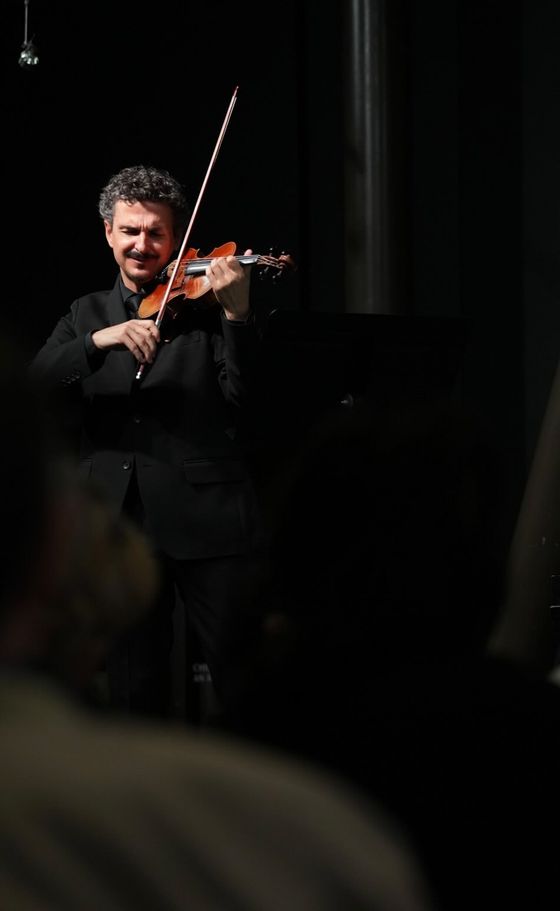
Cristian FatuPurely by coincidence. David reached out to me around 2020. I’ve attended the meetings twice — once in Italy and once in Berlin. The first time, there was a collector in Los Angeles, Dr. William Sloan, who needed someone to play his instrument and to be a travel companion; I happened to be friends with him, and that’s how I was first invited. The second time, I was invited again to play an instrument belonging to a collector from New York, Dr. Mark Ptashne — and that was the meeting in Berlin. I’ve been invited again this year, though I’m not yet sure whether I’ll be able to attend; there are still some things to figure out.
The Strings SocietyAnd you became the gathering’s photographer and videographer.
Cristian FatuYes. When I was invited, I was incredibly humbled to be in that company — David invites some of the best soloists and collectors in the world, so it’s a great honour to be in the same room with such esteemed colleagues. I wanted to help in any way I could, beyond playing the violin, which everyone there is doing. So I offered to take some pictures and make a little vlog — a short film about the meeting itself. That’s the material you can find on my YouTube channel.
The Strings SocietyIt gives the rest of us a rare glimpse inside. Thank you for that. What does it actually feel like to be in a room with fifteen or more of these violins?
Cristian FatuIt’s a wonderful feeling. These are historic instruments that have existed for 300 years. Some have been beautifully cared for — they’re in excellent condition and sound amazing. Others had a rougher life, so they’ve been extensively reconditioned and restored, and those tend to be more temperamental, as musicians say — a little harder to play. But they’re all historic pieces. It’s a great honour to be in that room.
The Strings SocietyIs there one violin among them that especially captured you — one you’d love to play?
Cristian FatuYes — a 1735 Del Gesù nicknamed the “Plowden.” It belongs to Dr. Mark Ptashne, the collector I travelled with last year.
The Strings SocietyLet’s turn to your story. You were born and grew up in Romania before coming to the United States.
Cristian FatuYes, I’m originally from Romania — I studied at the music university there, and then moved to the United States in 2006 for graduate studies. After graduating I began working here, and I’ve lived in a few places: Kansas City, Missouri; then West Virginia; and most recently Los Angeles, where I’ve been based since 2019.
The Strings SocietyThose must be almost incomparable worlds — the Romanian and the American music scenes.
Cristian FatuThey really are two different worlds, musically and artistically. As a young musician trying to find your place and your way, you go where you think you can have the most success and make a living.
The Strings SocietyAnd in Los Angeles you went deep into the city’s musical life, including Hollywood.
Cristian FatuSometimes, yes. Los Angeles has the big film industry, and with it a recording industry. When I arrived, new in town, I reached out to established musicians to find work. I was very fortunate to know Bruce Dukov, a famous LA recording-studio concertmaster, who helped me get work recording for films and commercials. But I haven’t done a huge amount of it, because — as everywhere — there’s a system, and it’s based on seniority. People who’ve lived in town for twenty or thirty years are at the top of the contractors’ lists when the work comes in, and newcomers are at the bottom.
The Strings SocietySadly that happens everywhere — meritocracy isn’t always at the top of the list.
Cristian FatuI agree completely. Unfortunately the music world in itself can be quite a cruel world, and meritocracy isn’t always there.
The Strings SocietyHow does playing in a concert hall differ from playing for a film or a commercial — where you have retakes? It must be a completely different experience.
Cristian FatuThey’re different jobs. A live performance — a recital, or a concert with orchestra, whether at Carnegie Hall or anywhere else — is a public performance: you prepare, and you get one chance to say what you have to say. In an orchestra, or as a studio musician, you’re usually in a large ensemble, in a recording studio, so depending on the music there are a number of takes. If the music director, or whoever is running the session, wants it faster or slower, louder or softer — whatever the requests — you do as many takes as needed to fulfil them.
The Strings SocietyOne slightly personal question: I read that your daughter Sophie was the youngest-ever contestant on America’s Got Talent.
Cristian FatuYes, that’s correct — thank you for asking.
The Strings SocietyYou come from a family of musicians, and your children clearly inherited the talent. It’s in the DNA. How does it feel?
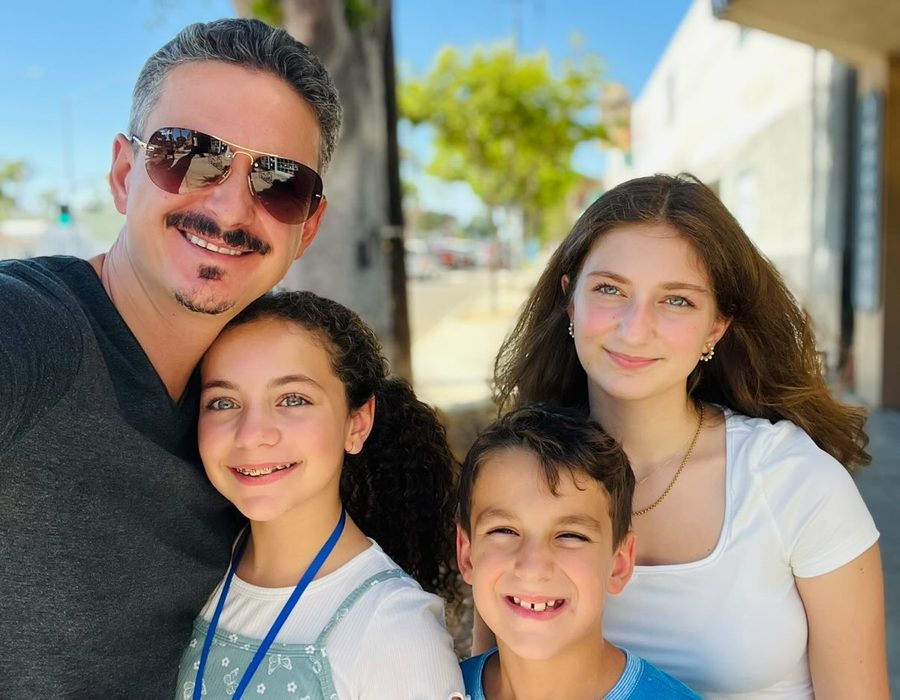
Cristian FatuI come from a musical family: my mother is a cellist, back in Romania, and my ex-wife, Victoria, is a concert pianist. We have three children — Mark is 10, Sophie is 13, and Vivienne is 15. Both Sophie and Vivienne are musicians. Vivienne plays the tuba with the Los Angeles Youth Symphony; next week they have a concert at Carnegie Hall in New York. And Sophie is a jazz singer and child actor — she was the youngest contestant in the history of America’s Got Talent. That show, in fact, was the reason we moved to Los Angeles. She went on to appear on other major American shows, like the Ellen show and Little Big Shots with Steve Harvey, and that opened up opportunities for her to work in Hollywood. At the time I was in West Virginia, teaching violin and chamber music at West Virginia State University and playing with the West Virginia Symphony. When all of this happened with Sophie, I gave it all up; we moved to Los Angeles and basically started from scratch, just so we could be there to support her.
The Strings SocietyYou must be enormously proud of all three of them.
Cristian FatuOf course — like any parent, I’m proud of all my children, and I support them in every way I can.
The Strings SocietyWhat are you up to next, and where can people follow you?
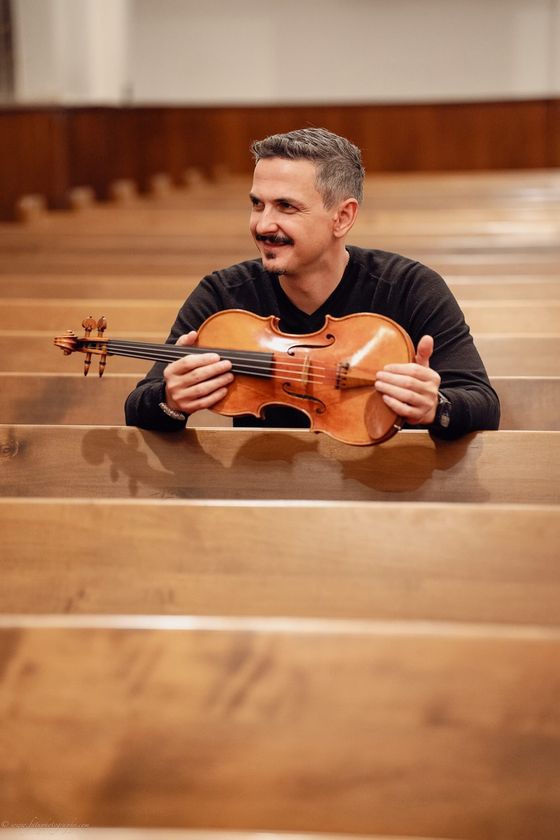
Cristian FatuSince we’re speaking internationally — you’re in Europe, I’m in the United States — the best place to follow me is online. I have a YouTube channel where I post recordings from live performances regularly; just search my name, Cristian Fatu. I’m also on Instagram, where my handle is @misterfatu, and on Facebook under my name. As for what’s next — simply continuing my career as a professional musician: playing the violin, giving concerts, teaching. This week I’m excited to be back at Oberlin for a recital on Friday, with more performances coming over the summer and into next season.
The Strings SocietyThe Strings Society is a community built around David Garrett — but those of us who love David also, without question, love classical music. He’s wonderfully wild, in the best way: his crossover style gets people hooked. And many of his followers come to love classical music through him. That’s what we like to highlight as we follow what he does — spreading the music a little further, especially to a new generation, using technology, social media and websites to help young people see that it isn’t boring at all. It’s something truly beautiful, once you experience classical music a little more deeply, and with a different approach. Does that resonate with you?
Cristian FatuVery much. It’s a different language, and if you educate yourself, if you learn a little about it, you discover a wonderful world. David has a phenomenal talent for bridging the two worlds — classical music, and the pop, rock and other genres he plays on the violin. He brings people across; he makes young audiences aware of classical music and everything we’re doing. He’s doing a great service to all of us, to all of classical music.
The Strings SocietyAbsolutely. And through him, we’d love to discover other stories, other musicians, other talents. So, again — thank you so much for your time and your generosity. I wish you all the very best, and I hope we might meet in person, if you make it to Gstaad.
Cristian FatuThank you for reaching out, and I’m grateful that you’d share my story. I hope we keep bringing more and more people to classical music and to the violin. And if I do come to Switzerland, I’ll certainly let you know — it would be wonderful to meet in person.
• • •
Follow Cristian Fatu on YouTube, on Instagram at @misterfatu, and on Facebook at fa2violin. Interview by The Strings Society. All rights reserved. Footage from the del Gesù gatherings © Cristian Fatu, used with our thanks.