Composed by Nature Itself
Almost everything a soloist plays on a big night has been rehearsed down to the breath. On 12 November, in Zankel Hall at Carnegie Hall, one passage won't have been.
About halfway through OCEAN, the orchestra stops. Yury Revich is left alone with his violin, and what he plays next will be decided there and then, in front of the audience. He wrote the piece, he plays the solo part, and he has kept one moment of it for himself, unwritten.
He told us so in a voice note, almost in passing, as if it were the most natural thing in the world. For him, I suspect, it is.
A few weeks before the premiere, he trusted us with OCEAN's score, and with a recording of it, the kind composers use to hear an orchestra before the orchestra exists. I sat down with both one evening, meaning to listen to the first minutes, and I didn't get up until the last. There's a sea in there that starts before a single string plays, a heartbeat that hardly ever stops, and a silence left open in the middle for him alone.
So we asked him about all of it.
• • •
Austrian violinist and composer, born in Moscow. His great-grandfather, his grandfather and his father were violinists before him. His grandfather gave him his first lessons. His father, he says, is still his most honest mentor.
His first appearance at Carnegie Hall was in 2009, with Daniil Trifonov at the piano. He has since written a violin concerto, Awakening, premiered in Salzburg in 2022, and a first symphony, Kaleidoscope, premiered in London in 2023. His album PEACE came out this year on ARS Produktion: a journey through music by composers from all over the world, held together by his own poems and by short pieces he improvised live in the studio.
OCEAN lasts fifteen minutes and is written for solo violin and symphony orchestra. On 12 November it will be played by the MidAtlantic Philharmonic Orchestra under Jason Tramm, with the composer as soloist. For this premiere he isn't playing an old Italian instrument. He's playing a contemporary violin made especially for him by Alain Carbonare.

We sent ten questions, and an eleventh that doesn't count. He answered every one of them out loud, in two voice notes, seventeen minutes in all, numbering them as he went. In one he stopped, said "let me think about this", and came back with a second recording.
I'm especially glad to introduce Yury to you. He plays, he composes, he paints, he writes poems, and he finds his inspiration everywhere, starting with nature. He is also, I can tell you, a true gentleman. His music is a pleasure to listen to, and I hope his story will be just as much of a pleasure to read.
So… here it is!
The Strings SocietyThe first time you walked onto a stage at Carnegie Hall, Daniil Trifonov was at the piano and everything on the stand had been written by someone else. In November everything on the stand will be yours. I've been trying to imagine the difference in the body rather than on paper: the walk out, the moment before the first note. Will you be more nervous, or less?
Yury RevichIt's not about nervousness. It's about being excited, I think. And it's a very different feeling. When I was 18, I felt very differently about being on stage and making music. I wasn't composing much yet. I was still learning the language of composing.
Back then I only spoke the language of the composer I was performing. I did my best to interpret it and share it with the audience. That's what all interpreters do. But now I speak my own language. I'm going on stage with my own vocabulary and my own emotions, with my music written, so to say, from A to Z.
So I don't think I'll be nervous. I'll be excited. I can't wait to share my music with people, because this is my own language, the one I use to talk to the audience.
The Strings SocietyYour great-grandfather, your grandfather and your father were all violinists. Your grandfather taught you first, and you've called your father your most honest mentor. Has he seen OCEAN yet? I'd like to know what he said, and I'd rather have the honest version than the kind one.
Yury RevichYes, my father is the most honest mentor, I think. I showed him the MIDI file of OCEAN, and he really liked it. I kept him informed from the very beginning, and I loved his feedback.
What I especially appreciate about my father is this. He comes from a very traditional violin school, and he's not that young anymore, but he is extremely open to new things, and very supportive. He keeps his ears open to learn. Sometimes I play music with electronics, which is very modern, and I can still see how carefully he listens: what he likes, what he's questioning.
I think my father is a great definition of a real artist. He respects tradition and works with it, but he's open to innovation. That's something I learned from him.
My mother is very supportive of me too. She isn't a musician, but I trust her instinct a lot, because she listens to my music with emotion, not analysing it.
The Strings SocietyIn this piece you are the composer and the soloist, which means two people with opinions about the same notes. I'd love to know who has been winning. Has the violinist ever asked the composer to make a passage easier, or kinder to the hand, and did the composer give in?
Yury RevichI don't think there are two people with opinions, because it's my music, you know. I never make a passage easier just because it needs to be easier. When I compose, everything must first serve the music: what I want to express with this passage, this melody, this harmony. Of course I try to write things that aren't too difficult to play, as long as that doesn't touch the emotional quality of what I want to say.
So the composer wins over the violinist, for sure. You can be a great violinist or a great conductor, but it all starts with music. First the music. Then the musicians learn to play it, and the conductor learns to connect it all together. It's teamwork, but first there is a composer.
The Strings SocietyI've been reading the score, and the first thing that struck me is that the sea arrives before any of the strings do. The piece opens with breath and metal: very quiet horns, a gong, cymbals that swell and fade away, and a snare drum played so that it sounds like white noise. Did OCEAN start there, with the sound of the water before any melody?
Yury RevichI love nature so much, and starting with water just felt natural to me. The sound of water, and there's rain in it too, and a little bit of a thunderstorm. It's a pure moment of nature at the very beginning, to create the feeling that we're really on the ocean. And then the human journey begins.
I've composed so many things connected to nature, and I've even named my pieces after nature without realising it: Awakening, Morning Shine, Magic Forest, which is the third movement of my first symphony. So I thought: I'm so inspired by nature that I feel confident composing about it.
I can sit in front of the ocean or the sea for hours, close my eyes, listen to the waves and meditate. That's the beautiful music of nature, composed by nature itself. I wanted the piece to begin there.
The Strings SocietyThen the marimba comes in, and from that point it hardly ever stops. It goes on under everything, like a heartbeat or a tide. You've written for it before, in your octet Auf den Hügeln der Zeit, so I suspect it's an instrument you trust. What does it do that nothing else in the orchestra can?
Yury RevichI love the marimba, and I love all kinds of instruments. As a violinist I'm connected to only one, the violin, which is a beautiful partner for me and can express so many feelings. But as a composer I feel I can play other instruments too. When I write for them, I hear them. It's as if I'm playing them.
I love combining different soundscapes. When I produce electronic music on the computer, I build my own synthesizer, and that's exactly how I think about mixing the sounds of instruments: sometimes unexpected combinations that create a new sound. Like a painter mixing colours on a palette to find the right one for a particular moment. And I felt the marimba gave some magic to the beginning of the piece.
The Strings SocietyA little before the halfway point, the whole orchestra goes silent and you're left on your own, free to play the passage however you feel it, before the strings come back in very softly. I'd love to know what goes on in you during those moments. Is every note written down, or is that a door you've left open for the improviser we hear on PEACE? Will it sound the same on 12 November as it did in rehearsal?
Yury RevichIn the middle of the piece there's a solo violin passage, which I wrote, but on stage it will actually be improvised. It's a spontaneous moment. Nature is unpredictable. We have weather forecasts, of course, but very often the weather isn't exactly what was forecast.
Inside this very clear symphonic structure, we wanted one moment for the violin alone. One single voice: the voice of the human travelling across the ocean. And we humans don't know exactly what's coming next. So it's a very sensitive moment, and a very vulnerable one, when the violin is alone on stage and nothing is written for it.
I'm going to improvise that part live on stage, and I'm very much looking forward to it. Actually, I love improvising.
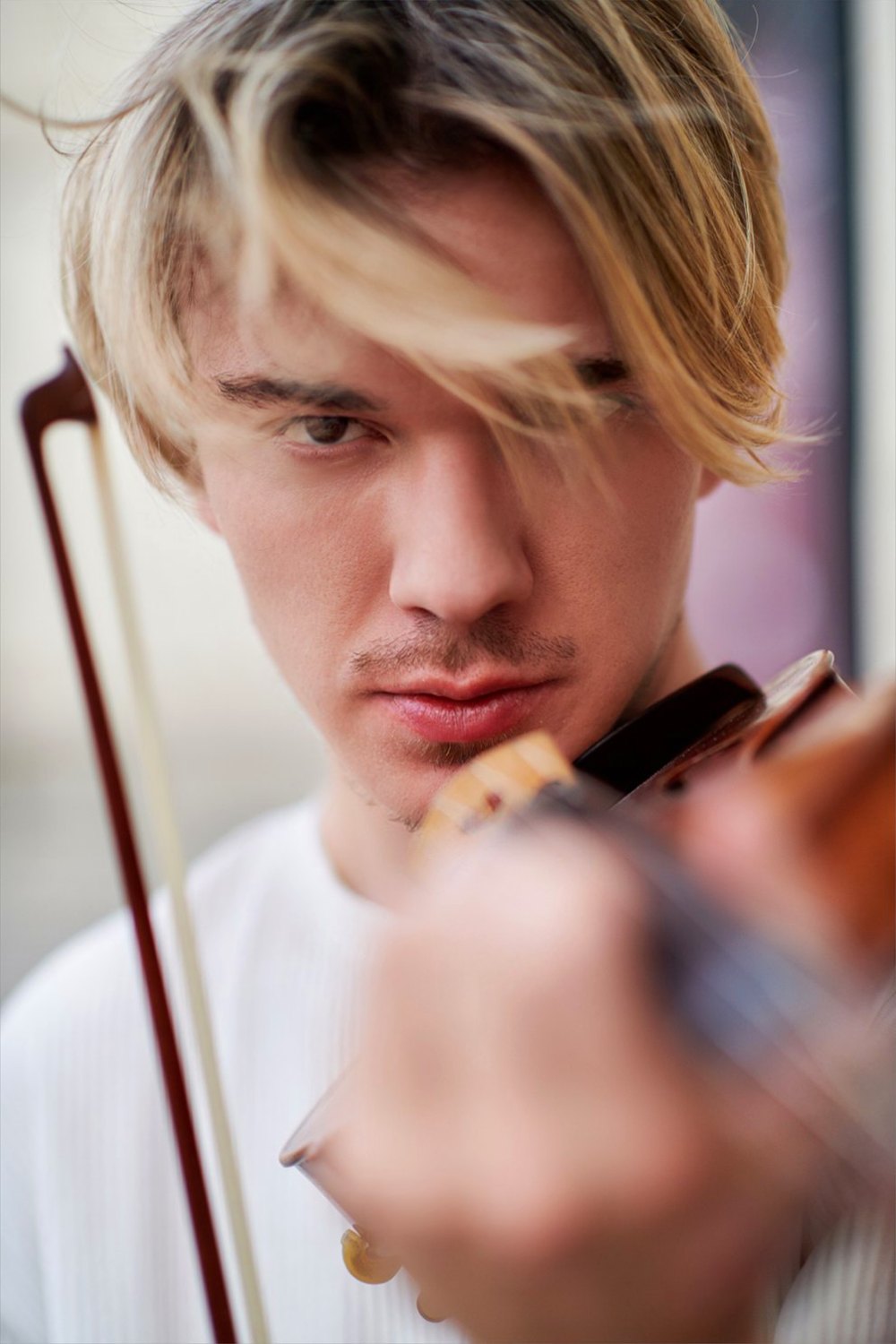
The Strings SocietyOn PEACE the sea gets one minute and twenty-two seconds. Your Impression "Sea" comes straight after Castelnuovo-Tedesco's Sea Murmurs, in Heifetz's arrangement, and it's over almost before you've noticed it. In November the sea gets fifteen minutes and a full orchestra. Is OCEAN that small Impression grown up, or did it come from somewhere else entirely?
Yury RevichImpression "Sea" is something very different. PEACE is a very personal album. It's my first interdisciplinary album, and it includes my own poems. All the Impressions were improvised live in the studio, and they connect the pieces on the album, so I'd recommend listening to it as a whole, from beginning to end. It's a continuous journey, and some tracks blend into one another. The digital version has a few more tracks.
Impression "Sea" was a little sea moment. An impression, as I said. Afterwards I worked on it myself in post-production and added electronic soundscapes, and the sound of the waves, which I recorded.
The Strings SocietyFor PEACE you went out and recorded the sea and the birds yourself. I'd like the scene: where you were, what time of day it was, and how long you stood there waiting. And when you sat down to write OCEAN, did you go back to the water, or did you write it from memory?
Yury RevichI recorded the sea in Mexico. It was in the evening, at a place between Cancún and Tulum, kind of in the middle of nowhere. There was a beautiful small hotel on the beach, a wonderful place where I could just relax and breathe and hardly use my phone.
But at some point I ran to my room and took my phone, because I felt I needed to record this sound right now. I just felt something. I'd connected with the water, and I knew this was the moment. I didn't even know where I would use it. I recorded it quite nicely, with a little mic connected to the phone, and later I used it on the album. So you see, it happened just like that. I felt it first, and the music came later.
The Strings SocietyYou also paint, and you studied it as a child alongside the violin and the piano. So I wonder which came first with OCEAN: a picture or a sound? If you had painted it instead, what would be on the canvas?
Yury RevichWhen I compose, music is really visual for me. I see images, shapes, colours, lines, and sometimes stories. Sometimes it's more abstract, sometimes more concrete. It depends on the music and on the feeling, on whether there's a commission on a particular subject, or whether I'm just sitting at my piano or with my violin, improvising for myself. I'm a very visual person.
It's a good question. I don't know how OCEAN would look as a painting. I think there would be something specific in one part of the canvas, and then it would go into something very powerful and abstract, a whirlwind of emotions and colours, as I'd call it. The concrete thing would be the traveller: a person, a boat, whatever crosses the ocean and connects cultures and countries. Everything else would be completely unpredictable.
The Strings SocietyYour sea is a fragile one, something that needs protecting, so I expected the piece to end quietly, perhaps just fading out. Instead it ends with the whole orchestra playing as loudly as it can, with you right at the top of the violin, and then everything stops dead into silence. Why that ending? Is it the sea having the last word, or you?
Yury RevichMy piece has a lot of emotion. It's very fragile at times, because it's very human: it's the human travelling across the ocean, and the ocean speaking to the human. It ends dramatically, emotionally, because I felt I wanted to end it that way.
It's also a reminder of how powerful the ocean is. It goes to this huge, huge power. And it's a reminder of how much more care we should give to nature, to Mother Nature. Ocean levels are rising everywhere because of climate change. Without sounding too dramatic, that's in the big ending too: the ocean is rising, and it's calling us to the urgency that we need to do something.
The Strings SocietyAnd a last one, which doesn't count: who should we talk to next, and what should we ask them?
Yury RevichI think it's important to talk and to communicate. The person you should talk to next is another musician who doesn't just play the violin, or any other instrument, but also creates their own music and their own artworks. Someone who believes, like me maybe, in the true Renaissance person, where all the arts are connected and an artist finds inspiration in everything around them. Not doing the same routine every day, playing the same things composed by other people, but building something of their own.
And what to ask them? Let me think about this.
(A second voice note.)
I think it could be this: why do musicians make music? And if tomorrow they were told they would be given everything they want in the world, but they would have to stop making music, would they say yes or no?
I would definitely say no, and carry on making music, because it's something I need in order to express myself. It's part of my life.
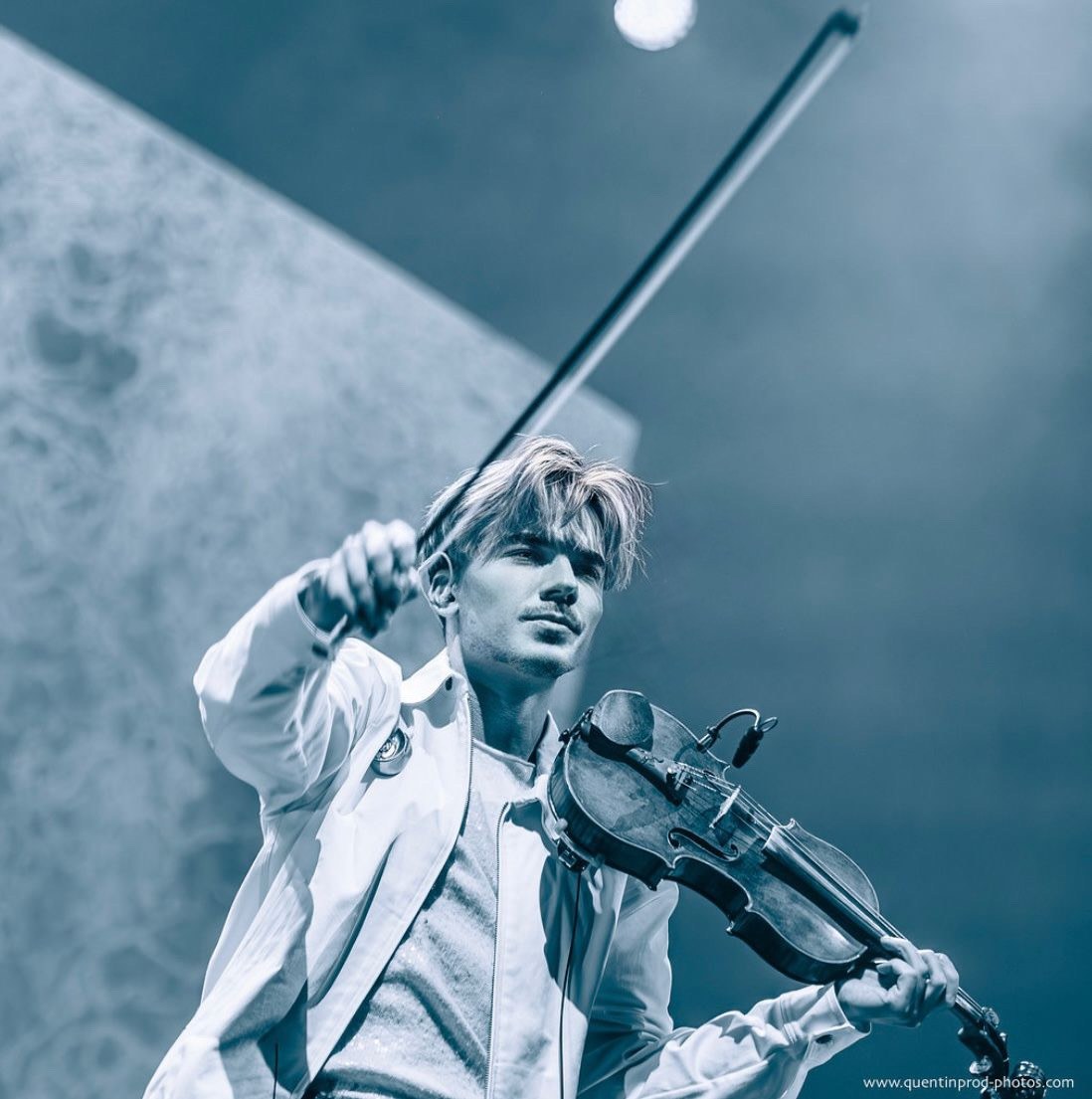
He gave the question to the next person we interview, and then he answered it himself before we had the chance to ask.
We'll ask it anyway. We'd be surprised if anyone said yes.
On 12 November, a little before the halfway point of OCEAN, the orchestra will go quiet, and for a few moments not even the composer will know what comes next. If you're in New York, go and hear it. That moment will exist only once.
And then come back to us and give us your take!
OCEAN receives its world premiere on 12 November 2026 at 7:30 pm, in Zankel Hall at Carnegie Hall, with the MidAtlantic Philharmonic Orchestra conducted by Jason Tramm. Tickets and details
PEACE is out now on ARS Produktion. Listen on Spotify, from beginning to end, as he asks.
• • •
Thank you, Yury. For seventeen minutes of answers. For trusting us with the score and its first recording, weeks before anyone else will hear them. And for leaving, in the middle of OCEAN, a moment that belongs to no page at all. We hope New York listens closely on 12 November. We'll be listening from here, with you.
Interview conducted by voice note, in English, in October 2026, and published with his approval.
Photographs © Elodie Carrel and Mattia Baldi.