The Art of Listening — The Domino Effect
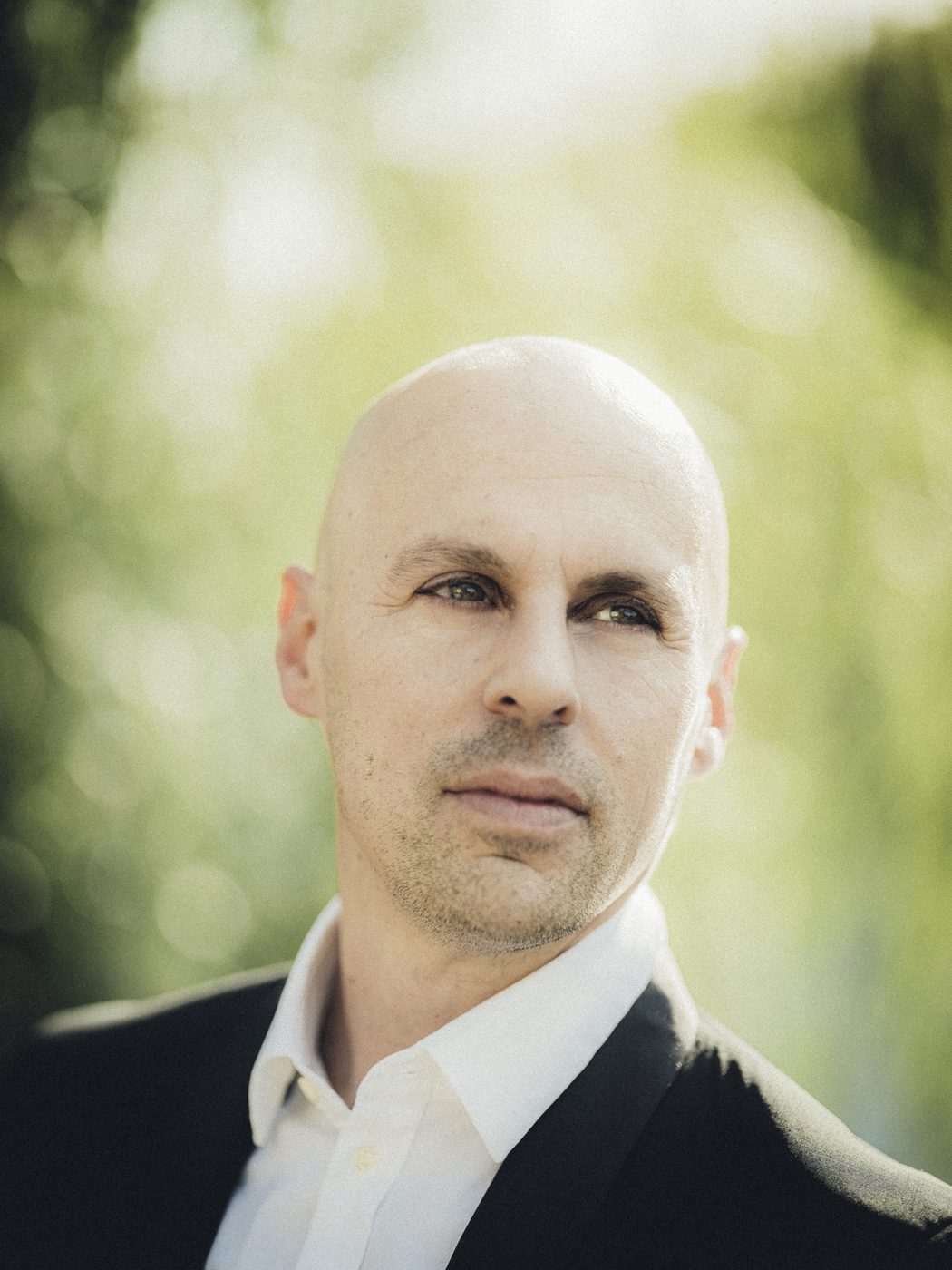
When we started the Strings Society project, we had a clear identity in mind. We knew where we wanted to go, and what we wanted to be. What we didn’t expect was that the artists themselves would take us so seriously — that they would meet us as something closer to a journalistic, editorial voice than a mere fandom.
With our first interview, with Cristian Fatu, we already had the feeling we were achieving something. Then came the conversation with Emanuel Graf, and again, the feeling was right. Their appreciation for our work was both surprising and comforting. Our aim with the Society had been perceived correctly. Our identity was built, and acknowledged.
And now… Julien Quentin.
He didn’t just accept to talk with us — he shared so much, and so honestly, that it left us astounded. And, let me say it… speechless. We went wild with our questions! (Once you have him, better do it broadly!) He didn’t flinch. He simply took his time — a long one, I imagine, considering how many questions we sent him — and opened up to us so effortlessly it’s been amazing. Just like Cristian and Emanuel before him.
Looking at all this with an eagle eye — from above, from a distance — I started thinking about the Domino Effect.
It began with one name: David Garrett. We came for him — for the violinist we loved — and he, without ever knowing it, became the first piece to fall. Because behind David there was never only David. There was a whole world of musicians he had gathered around himself, each one extraordinary, each one waiting to be discovered. Touch one, and the next comes into view.
Cristian Fatu was the first to fall toward us. Then Emanuel Graf. And now Julien Quentin — who, in answering us, did something we are only beginning to understand: he didn’t just tell us about himself. He handed us the next dominoes.
There is the Del Gesù Club — David’s circle of friends and their impossible instruments, gathered not to perform but to play for one another. There are Franck van der Heijden and John Haywood, the two minds who shaped Immortal alongside David in a room full of questions. There is Víkingur Ólafsson, turning back at the end of a concert to thank the piano itself, as one thanks an old friend. And there are the figures standing behind Julien’s own hands: Alexis Golovine, who taught him to trust; György Sándor, who reached back through Bartók to Liszt; Émile Naoumoff, and through him Nadia Boulanger, and through her Fauré and an entire French tradition. Rachmaninoff, Kreisler, Cortot. Bach and Schubert, who “were not writing for us,” and somehow still speak.
This is the Domino Effect. Not fame calling to fame, but musician handing us to musician, teacher to student, one century to the next. A chain of trust and curiosity that we — a small society born out of love for one violinist — now find ourselves following, link by link, name by name, conversation by conversation.
And perhaps that is the truest thing Julien gave us. “Music is never finished,” he said. “We are only temporary custodians.” The dominoes, it turns out, were never really falling. They were passing something forward. And for a little while, they passed it to us.
Thank you, Julien, from the heart. The more we come to know you, the more we appreciate you — and the more we understand why we were so fascinated in the first place. No wonder David wanted you this close all along. Now we get it. And we’re grateful.
• • •
The Strings SocietyA small confession first, by way of an opening: “I’m a hopeless piano student — relentlessly, stubbornly chasing Handel’s Passacaglia, and dreaming that one day I’ll get to play the June bug.” When you were still climbing toward the pieces that felt impossible, was there one that humbled you for years before it finally let you in? And does that feeling of being a “student who isn’t good enough yet” ever fully go away, even at your level?
Julien QuentinThere are always pieces that remind you how little you know. As a student, I believed there would come a point where I would finally feel ready — that one day I would simply arrive. It never happened, and I’m actually grateful for that. Some works resist you for years. Not because your fingers aren’t fast enough, but because your ears and your imagination aren’t ready yet. Then, almost without noticing, you return to them years later and suddenly they begin to open. That feeling of not being good enough never completely disappears. It just changes. When you’re young, it’s insecurity. Later, it’s respect. If a piece still makes me feel like a student, it’s usually because it still has something important to teach me.
The Strings SocietyYou move between the great solo and chamber stages of the world — Carnegie, Wigmore, the Concertgebouw — and a piano workshop in Berlin. When the music is going exactly right, where does Julien Quentin actually live: in the notes, in the silence, somewhere else entirely?
Julien QuentinHopefully, nowhere. The best moments are the ones where you stop thinking about yourself altogether. You’re no longer wondering how you’re playing or how you’re being perceived. You’re simply listening — to the other musicians, to the room, to the silence between the notes. People often imagine performing as a form of expression, and of course, it is. But for me, it’s just as much an act of listening. When everything aligns, you almost become part of something larger than yourself. Afterwards, it’s difficult to explain where you were because you weren’t really thinking in words anymore.
The Strings SocietyIf you had to introduce yourself to someone who had never heard you play — no labels, no famous names attached — who would you say you are as a musician?
Julien QuentinI would probably say that I’m someone who loves conversations through music. I’ve been lucky enough to play in extraordinary concert halls, but what has always mattered most to me is sharing music with other people — whether that’s one colleague on stage, a room of a hundred people in Berlin, or a large audience in a concert hall. Curiosity has guided almost every decision I’ve made. That’s why I enjoy moving between the piano and the harpsichord (when a festival gives me a chance to do so), between chamber music and electronic music, between traditional concert formats and more intimate ones. None of those worlds feels contradictory to me. They’re simply different ways of inviting people into the music.
The Strings SocietyIs there a single chord — in anything you’ve ever played — that you’d be happy to be remembered by?
Julien QuentinThat’s a tough question because tomorrow I would probably choose a different one. But if I had to answer today, it wouldn’t be the loudest or the most eccentric chord. It would be one that arrives after a long silence, where harmony suddenly makes emotional sense. Those are the moments I remember most as a listener, and they’re the ones I hope I can create as a performer. In the end, I don’t think people remember individual notes. They remember how a moment made them feel.
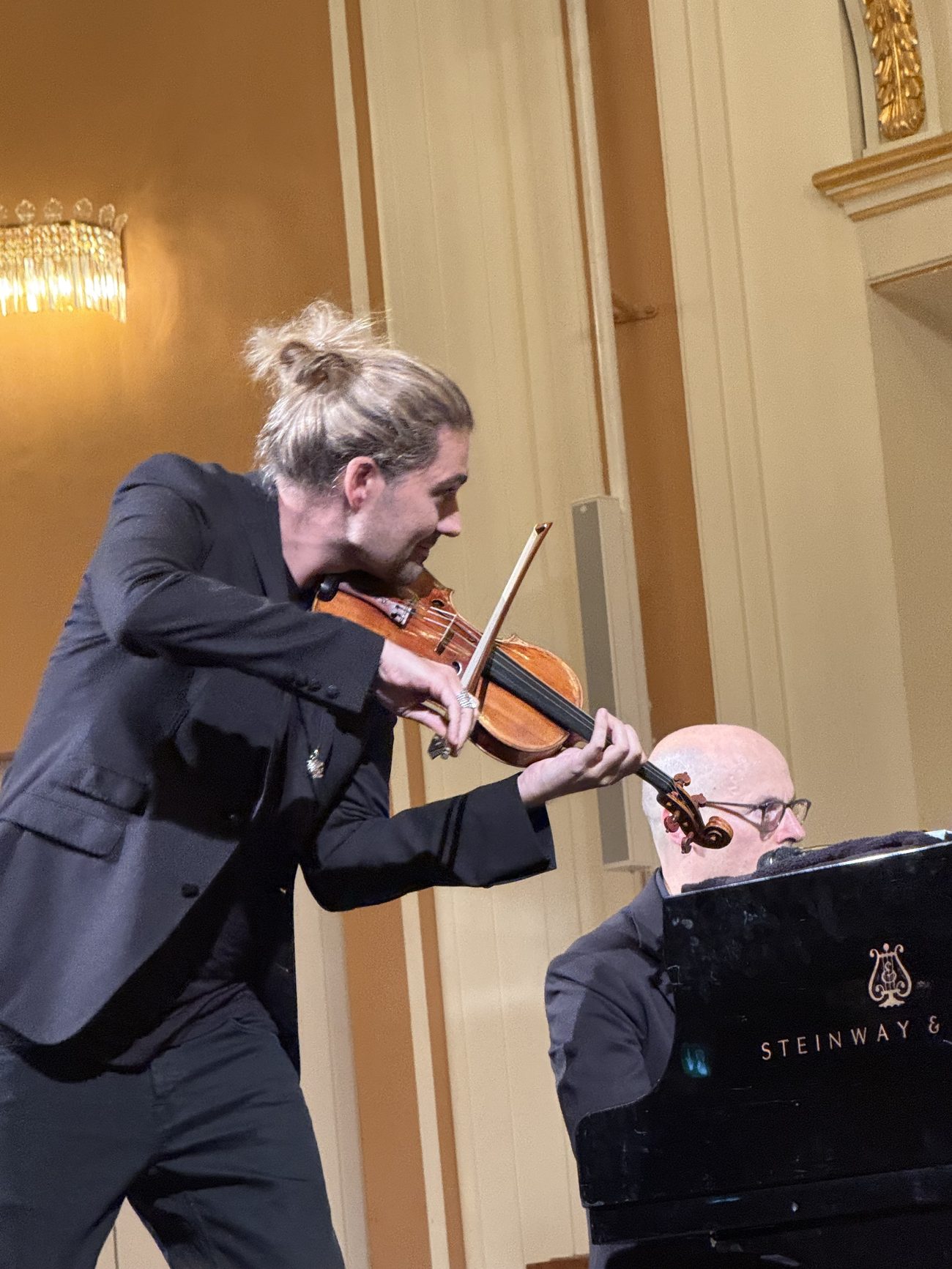
The Strings SocietyAfter more than fifteen years beside David, can you hear what he’s about to do before he does it? Is there a moment of telepathy — or is it more like a very old friendship where you’ve simply stopped surprising each other?
Julien QuentinSince our first concerts in the summer of 2008, people often imagine that after so many years you stop surprising each other. I think it’s actually the opposite. Of course, we know each other’s musical instincts very well. There is a shared language that only comes from spending many hours rehearsing, recording, and performing together. But if I ever felt I knew exactly what David was going to do, I would stop listening — and that would be the end of chamber music. The trust we’ve built doesn’t eliminate surprise. It gives us the confidence to embrace it. Sometimes the most beautiful moments happen because one of us does something unexpected and the other immediately says, “Yes, let’s go there.”
The Strings SocietyWhen the two of you disagree about a phrase in rehearsal, how is that conversation conducted — in words, or in playing?
Julien QuentinMostly at the piano and with the violin — less with words. Of course, we talk, but music has a wonderful way of settling arguments. Someone tries an idea, the other responds, and very often the piece itself tells you which direction feels more convincing. Neither of us is interested in winning an argument. We’re interested in discovering something we had not imagined before. The best rehearsals aren’t the ones where everything is easy — they’re the ones where both of us leave with a new idea.
The Strings SocietyThe violin can soar and hold a note forever; the piano speaks and then immediately begins to fade. In your duo, are you constantly shaping a sound that’s already dying under your fingers?
Julien QuentinThat’s one of the beautiful frustrations of being a pianist. A pianist is always dealing with time. The moment you play a note, it starts disappearing. So instead of holding the sound, you’re constantly imagining where it’s going and shaping what comes next. With the violin, you can sustain a line almost like breathing. The piano has to create the illusion of continuity from hundreds of tiny disappearances. In chamber music, I think that’s actually a gift. It forces you to think beyond individual notes and to hear the larger architecture of the phrase. I always like to breathe and sing a phrase like a singer would.
The Strings SocietyIn your duo, the piano often carries the harmonic ground the whole piece stands on. Is there a work where you feel the music is most truly yours to shape — where David follows you?
Julien QuentinI don’t think of it in terms of leading or following. Those roles change constantly, sometimes within a single phrase. There are certainly moments — especially in Brahms or Franck — where the piano carries so much of the harmonic architecture that it naturally shapes the direction of the music. But even then, I don’t feel that David is following me. We’re both following the score, trying to understand where it wants to go. That’s one of the great pleasures of music making. Leadership becomes something fluid rather than fixed.
The Strings SocietyReal chamber playing is a conversation between equals. What does genuine musical generosity between two artists look like to you — and when have you felt it most strongly with David?
Julien QuentinFor me, generosity begins with listening. It means being willing to let go of your own idea because someone else’s makes the music stronger. That’s not a loss — it’s a gain. With David, there have been many moments over the years when one of us has changed direction in an instant because the other discovered something unexpected. Those moments require trust. You can’t protect your ego and make chamber music at the same time. We also trust our natural instincts and we keep surprising each other musically. The audience may not notice those decisions consciously, but I think they feel them. They feel when two musicians are really creating something together rather than simply playing alongside each other.
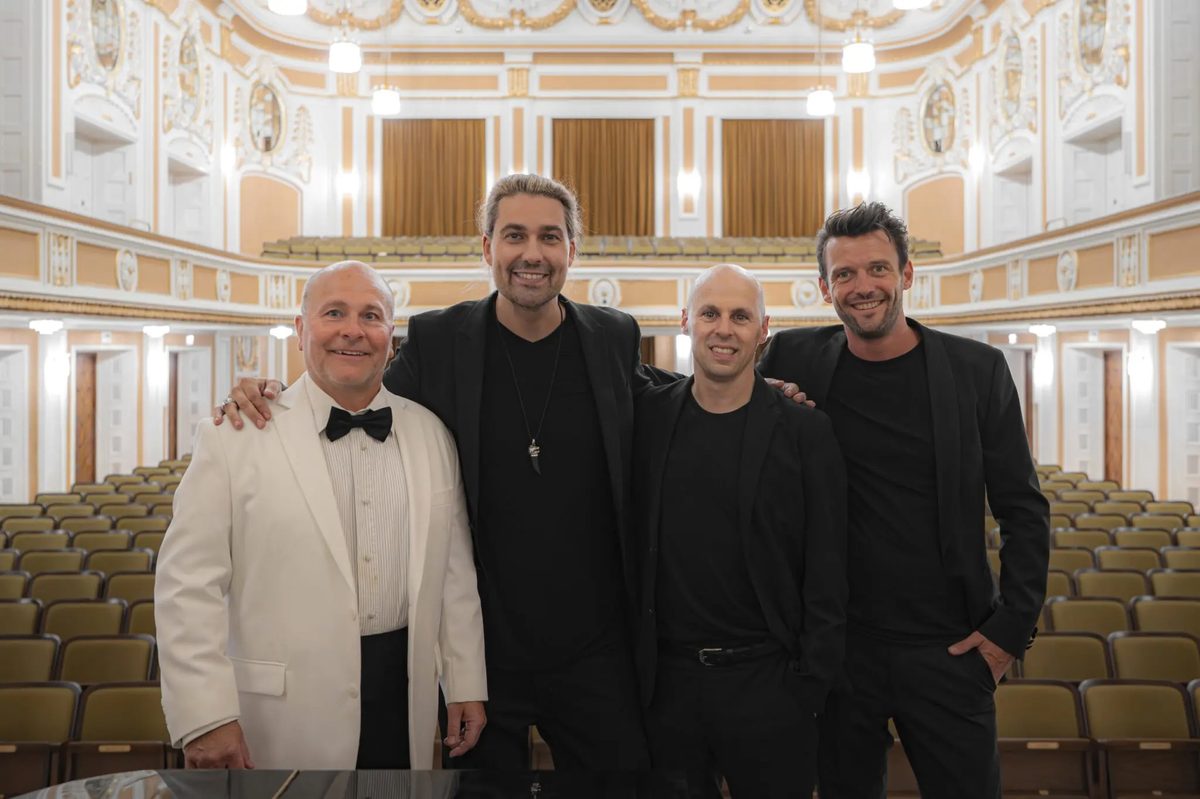
The Strings SocietyYou’ve been the pianist for the gatherings of the Del Gesù Club — the friends David draws around him for the concerts that matter most. From the inside, what binds that circle together: the instruments, the friendship, or David himself?
Julien QuentinThe instruments are extraordinary, of course, and anyone who loves violins can’t help being fascinated by them. But after a few minutes, you stop thinking about the instruments themselves. What really brings everyone together is a shared love of music and the people who make it. David has a wonderful gift for creating an atmosphere where great musicians don’t feel they have to prove anything. There is curiosity, friendship, and a real pleasure in playing for one another and discovering each other’s beautiful instruments. Those evenings never feel like exhibitions. They feel like gatherings. I think that’s why people remember them.
The Strings SocietyYou were at the piano in Salzburg last year for the Klangblick benefit at the Mozarteum, where the music was given for children touched by cancer. Does the sound change under your hands when you’re playing for a reason larger than the concert — and what do you remember feeling in that room?
Julien QuentinI don’t think I play differently because the cause is different. The responsibility is the same every time I walk on stage. But you are certainly more aware of why everyone has come together. In a benefit concert, the music becomes part of something larger than itself. It reminds you that music isn’t only about beauty or perfection. Sometimes it’s simply about offering comfort, hope, or a sense of community. I remember the atmosphere in the Mozarteum more than any particular note. There was a remarkable concentration in the room. You could feel that everyone — performers and audience alike — understood that the evening wasn’t about us.
The Strings SocietyThose Salzburg evenings have become a quiet tradition. If you can’t be at the piano for every one of them, do you feel that absence — and what do you hope keeps living in those rooms whether or not your hands are there?
Julien QuentinI’ve watched those Salzburg evenings grow over the years through David, long before I had the chance to be part of them myself. Joining last year made me understand why they mean so much to everyone involved. They have a very special atmosphere — intimate, generous, and centred on the joy of making music together for a meaningful cause. Unfortunately, I won’t be able to be there this year, and of course, I’ll miss it. But I know that what makes those evenings special isn’t any one musician. It’s the spirit behind them: friends coming together, listening to one another, and sharing something genuine with the audience. I very much hope to be back as soon as I can. Traditions like this are precious, not because they repeat themselves, but because each year they create new memories while keeping the same sense of purpose.
The Strings SocietyImmortal is built around composers who outlived their own deaths. As a musician who has spent a lifetime inside the architecture of music — harmony, structure, the ground a melody stands on — what do you think actually makes a piece refuse to die?
Julien QuentinI’ve been thinking about that while working on Immortal. I don’t think music survives because it’s perfect. If perfection were enough, I guess libraries would be full of immortal pieces. I think music survives because every generation finds something of itself in it. Bach wasn’t writing for us, Schubert wasn’t imagining our world, and yet somehow their music continues to speak. That’s extraordinary. As performers, we’re only temporary custodians. We don’t keep music alive by preserving it under glass. We keep it alive by allowing it to breathe again in front of an audience. Every performance is another conversation across time.
The Strings SocietyWhen two artists record something this personal, your voice and David’s have to meet on the same track. Where do you hear yourself in it — what did you bring that only you could?
Julien QuentinThat’s always a difficult question because when a collaboration really works, you stop hearing the borders between the musicians. David came to the project with a very clear artistic vision and created the arrangements together with Franck van der Heijden and John Haywood. Before we went into the studio, the four of us spent a great deal of time refining details, questioning ideas, making small corrections, and searching for the right balance. Those conversations were an essential part of the creative process. Once we started recording, my role was to help give those arrangements depth, colour, and space. The piano isn’t simply accompanying the violin — it helps shape the harmony, the rhythm, the atmosphere, and sometimes even the silence, alongside Franck at the guitar. At the same time, everything is there to allow David’s violin to sing naturally and to let the orchestra remain a living presence throughout the album. If I brought something to the album, I hope it was a sense of dialogue. I’ve never really believed in accompaniment as a secondary role. Whether on stage or in the studio, I think of chamber music as building a shared musical landscape together, where the violin can shine, the orchestra can breathe, and every musician contributes to telling the same story.
The Strings SocietyOf the composers on this album, which one would you most have wanted to play for — to have them sit in the room and listen?
Julien QuentinMy first instinct is to say Bach — not because I think he would necessarily have approved, but because I imagine he would have been endlessly curious. To have any of these composers sitting in the audience would be both exciting and fascinating. Of course, it would also be a little intimidating. I often wonder what they would recognize in our interpretations, what would surprise them, and whether they would hear something in their own music that they hadn’t imagined. What fascinates me most is that, in the end, their music no longer belongs only to them. Once a piece enters the world, it begins a life of its own. Every performer, every audience, every generation discovers something slightly different. Perhaps that’s the closest thing to immortality.
The Strings SocietyYou studied with musicians who studied with people who knew Liszt’s world. Do you ever feel you’re carrying messages from the past to an audience that has no idea it’s receiving them?
Julien QuentinSometimes, yes — but not in the sense of preserving secrets. What we inherit from our teachers is often less about information than about a way of listening. György Sándor, for example, belonged to a tradition that reached back through Bartók to Liszt. With Émile Naoumoff, I encountered a different lineage, one profoundly shaped by his close connection to Nadia Boulanger and, through her, to the great French musical tradition of Fauré and so many others. Those aren’t just family trees of music history — they’re ways of thinking, listening, and understanding a score. What stayed with me wasn’t a particular fingering or a recipe for interpretation. It was an attitude: to be curious, to question, to search for honesty in the music, and to remember that every generation has to rediscover it for itself. If there is a message that gets passed on, perhaps it’s simply this: music is never finished. We don’t preserve it by repeating the past; we honour it by allowing it to speak again in the present.
The Strings SocietyGyörgy Sándor, Earl Wild, Badura-Skoda — what’s one piece of advice from a teacher that you’ve never quite been able to obey, no matter how hard you try?
Julien QuentinCuriously, the advice that has stayed with me the most didn’t come from one of the great teachers I studied with later, but from the first true master in my life, Alexis Golovine. He shaped not only the musician I became, but also the person I am today. Long before we spoke about careers or concert halls, he taught me values that have stayed with me ever since. One of them was trust — trusting myself, trusting the music, and trusting the work that had already been done. At the time, I probably didn’t fully understand what he meant. As musicians, we’re trained to question everything: the score, our sound, our interpretation, our technique. That constant self-criticism helps us grow, but it can also become a habit that’s difficult to switch off. So perhaps the advice I’m still trying to follow is simply to trust. To trust that all the preparation is there, and then, once I walk on stage, to stop judging myself and let the music speak. It’s a lesson I’ve spent a lifetime learning, and I suspect I’ll still be learning it many years from now.
The Strings SocietyIs there a way of playing — a touch, a rubato, a kind of silence — that you fear is disappearing with your generation?
Julien QuentinI wouldn’t say I fear it’s disappearing. Every generation finds its own voice, and that’s exactly as it should be. What I do hope is that young musicians continue to listen to the great historical recordings — not as models to imitate, but as invitations to think freely. Hearing Rachmaninoff, Kreisler, Cortot, or Bartók is a reminder that each of them spoke the same musical language with a completely unique voice. It’s also fascinating to hear how much freedom the composers themselves took with their own music. Those recordings remind us that music is a living art, not a fixed object, and that finding your own voice has always been part of the tradition.
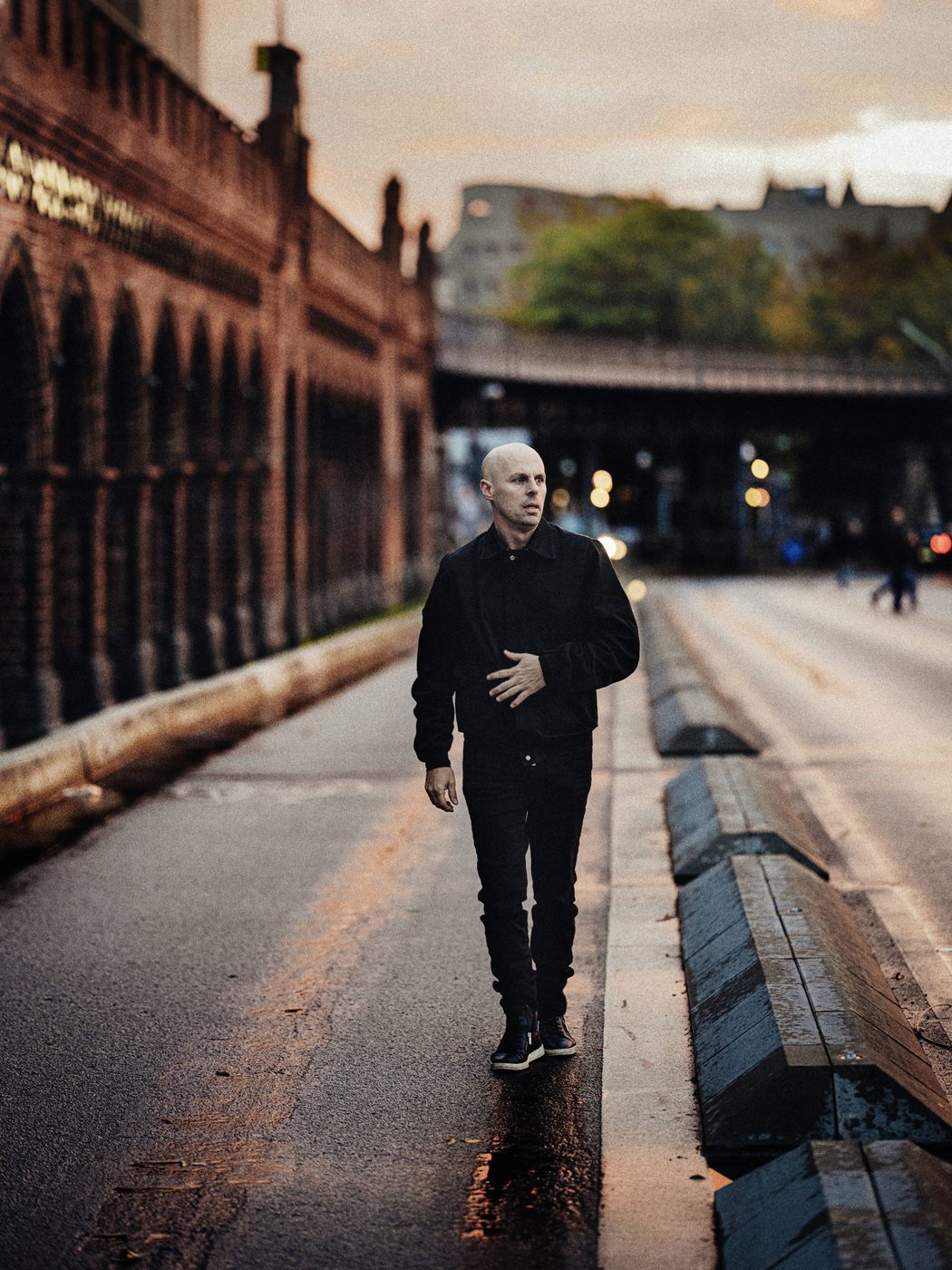
The Strings SocietyWith Musica Litoralis at Piano Salon Christophori, you recreated the salons of the 1920s — and you also make electronic music. Are those two things opposites, or the same impulse wearing different clothes?
Julien QuentinTo me, they’re very much the same impulse. In both cases, I’m exploring how music can be experienced in a fresh and meaningful way. Musica Litoralis looks back to a tradition where music was shared in an intimate, social setting, while electronic music opens up an entirely different sonic landscape. They may seem far apart, but they both begin with the same curiosity. I’ve never felt the need to choose between tradition and innovation. Classical music has always evolved, and I see these different projects as part of the same journey. Whether I’m playing Debussy, creating a new electronic track, or imagining a concert in an unconventional space, I’m asking the same question: how can music speak to people today? For me, they’re simply different languages expressing the same artistic identity.
The Strings SocietyIn a candlelit salon the audience is close enough to hear you breathe; in a great hall they can barely see your hands. Which version of you is more honest?
Julien QuentinI hope they’re equally honest. The scale changes, but my relationship with the music shouldn’t. I always say to myself that there is no such thing as a “small concert”, ever. Of course, a salon invites a different kind of communication. You can see every face, feel every reaction. Sometimes it feels almost like playing in someone’s living room. A large concert hall has another kind of magic. Hundreds or a couple thousand people become completely silent together. That’s an extraordinary experience too. Honesty doesn’t depend on the size of the room. It depends on whether you’re really listening.
The Strings SocietyWhen you sit at a laptop building electronic music, do you miss the resistance of a real key under your finger — or is it a relief to escape it?
Julien QuentinI don’t really experience it as sitting in front of a laptop. For me, making electronic music starts much the same way as any other musical project — with ideas, with sounds, with instruments. I’ll spend time in the studio playing the piano, keyboards, synthesizers, or whatever the project calls for. Then those ideas begin to evolve. I’m fortunate to work with friends and producers who have become real musical partners. We build the tracks together, layer by layer, and the process becomes a conversation, just as chamber music is a conversation. Of course, it’s quite unlike playing a Mozart sonata. The timescale is completely different. In a concert, a musical decision disappears the moment you’ve made it. In the studio, you can live with a sound, reshape it, question it, come back the next day and hear something new. What fascinates me is that both worlds demand exactly the same thing: being attentive and fully engaged. The technology is different, but the musical curiosity is the same.
The Strings SocietyWhat can a roomful of forty people in Berlin give you that the grandest concert hall never could?
Julien QuentinProximity. Not physically, but emotionally. When forty people gather in a room, there is almost nowhere to hide — for the audience or for the musicians. Every breath, every silence, every spontaneous moment becomes part of the performance. Great concert halls have an incomparable grandeur, and I would never want to lose that. But intimate spaces remind us that classical music was often born in rooms not much bigger than this one. Sometimes I think music speaks most quietly when people are closest together.
The Strings SocietyThe harpsichord can’t grow louder or softer no matter how hard you press — every expression has to come from time itself. What did learning it teach you that the piano never could?
Julien QuentinThe harpsichord taught me to think differently about music. As a pianist, it’s very easy to believe that expression comes from touch, from colour, from dynamics. Then you sit at a harpsichord and realize that none of those things work in the same way. Suddenly your greatest expressive tools become timing, articulation, harmony, and rhetoric. It showed me how much emotion can exist without volume. Sometimes a tiny hesitation, the way a dissonance resolves, or the shape of a line can say more than the most beautiful sound. When I return to the piano after playing the harpsichord, I think I listen differently. I rely a little less on the instrument’s possibilities and a little more on the music itself.
The Strings SocietyIs there a physical sensation — in the hands, the back, the breath — that tells you a performance is going to be great, before a single note confirms it?
Julien QuentinI’m not sure there is such a signal. I’ve had evenings where I felt wonderful backstage and nothing extraordinary happened. And I’ve had concerts where I was tired, distracted, or not particularly optimistic, and somehow the music took over. I’ve even experienced the opposite of what one might expect: performing while feeling unwell. As long as there is enough stamina to get through the concert, being ill can sometimes become a surprisingly transformative musical experience. You’re forced to let go of any illusion of control, to stop relying on comfort or routine, and simply trust the music. In those moments, something very honest can emerge. If there is one thing I’ve learned, it’s not to trust my expectations too much. That said, there is one encouraging sign I always notice. Sometimes, from the very first moments before a note has really settled, you can sense that the audience is completely with you. There is a particular kind of silence — not an empty silence, but one full of attention. It’s impossible to explain, but you feel that everyone in the room is truly listening. That’s often the beginning of a very special evening. Perhaps the only reliable sensation is a certain calm. Not confidence in myself, but the feeling that I’m completely present — for my colleagues, the instrument, the audience, and everything that might happen in that moment.
The Strings SocietyA pianist is alone with a vast instrument that someone else built and tuned. Do you ever feel you’re collaborating with the piano itself — and do some pianos simply refuse to cooperate?
Julien QuentinAbsolutely. Every piano has a personality. Some welcome you immediately, others make you work harder before they reveal themselves. When I arrive at a concert, I don’t think, “Is this a good piano?” I think, “Who are you?” It’s a conversation. You learn very quickly what the instrument loves, what it resists, where it sings, where you have to help it. Some instruments are generous from the first note. Others require patience. A great piano technician is an invaluable partner in that process. Before the performance has even begun, they can often help the instrument reveal its best qualities. It’s remarkable how much can be achieved by someone who truly understands both the piano and the needs of the artist. Their work often goes unnoticed by the audience, but musicians know how essential it is. In the end, I don’t think the goal is to make every piano sound the same. The goal is to discover what makes that particular instrument unique, and together — with the instrument, and often with the technician — to let it become the best version of itself. I’ve always loved a gesture of my good friend Víkingur Ólafsson’s. At the end of a concert, before leaving the stage, he turns back to the piano and quite deliberately acknowledges it, almost as if he were thanking a trusted friend and musical partner for everything they have just shared. I think every pianist understands that feeling.
The Strings SocietyIf you could keep just one ordinary, unrepeatable moment of music-making — a rehearsal, a soundcheck, something nobody applauded — and it became the only recording of you that survived, which moment would you choose?
Julien QuentinProbably not a concert. I’d choose a rehearsal where, quite unexpectedly, everyone in the room suddenly understands the music in exactly the same way. No audience, no applause, no sense that anything important is happening — just that moment when a phrase suddenly makes complete sense, when everything falls into place. Those are the memories that stay with me the longest.
The Strings SocietyYou’ve built a world that is entirely your own — your salon, your recordings, your electronic work. What is the thing you most still want to say, as Julien Quentin, that you haven’t yet said?
Julien QuentinI don’t think of music as saying one final thing. What keeps me curious is precisely that there is always another question to ask, another collaboration to discover, another sound I haven’t imagined yet. If I have a wish for the years ahead, it’s to keep creating moments where music speaks directly to people. Whether that’s in a concert hall, a small salon in Berlin, a recording studio, or somewhere I haven’t imagined yet matters less than the connection that’s created in that moment. I hope I never lose that curiosity.
The Strings SocietyAnd finally, to finish a sentence: “The audience thinks the pianist is there to …”
Julien Quentin“… play the right notes.” For me, every concert is about telling a story.