Vibrate the Small Notes
When we decided to widen our horizon, to run free of the niche and explore, a whole new world opened up. New perspectives, new artists, new interests — all of them new angles from which to look at music our own way.
If you have followed us along this journey, you haven't only met artists. You've learned about the craft of instrument making, and had a quick look at how instruments pass from hand to hand. And there is so much more to come: you'll know everything about sound, about bows, about composing, about the thorough research it takes to walk onto a stage with an orchestra.
And now you'll know about conducting.
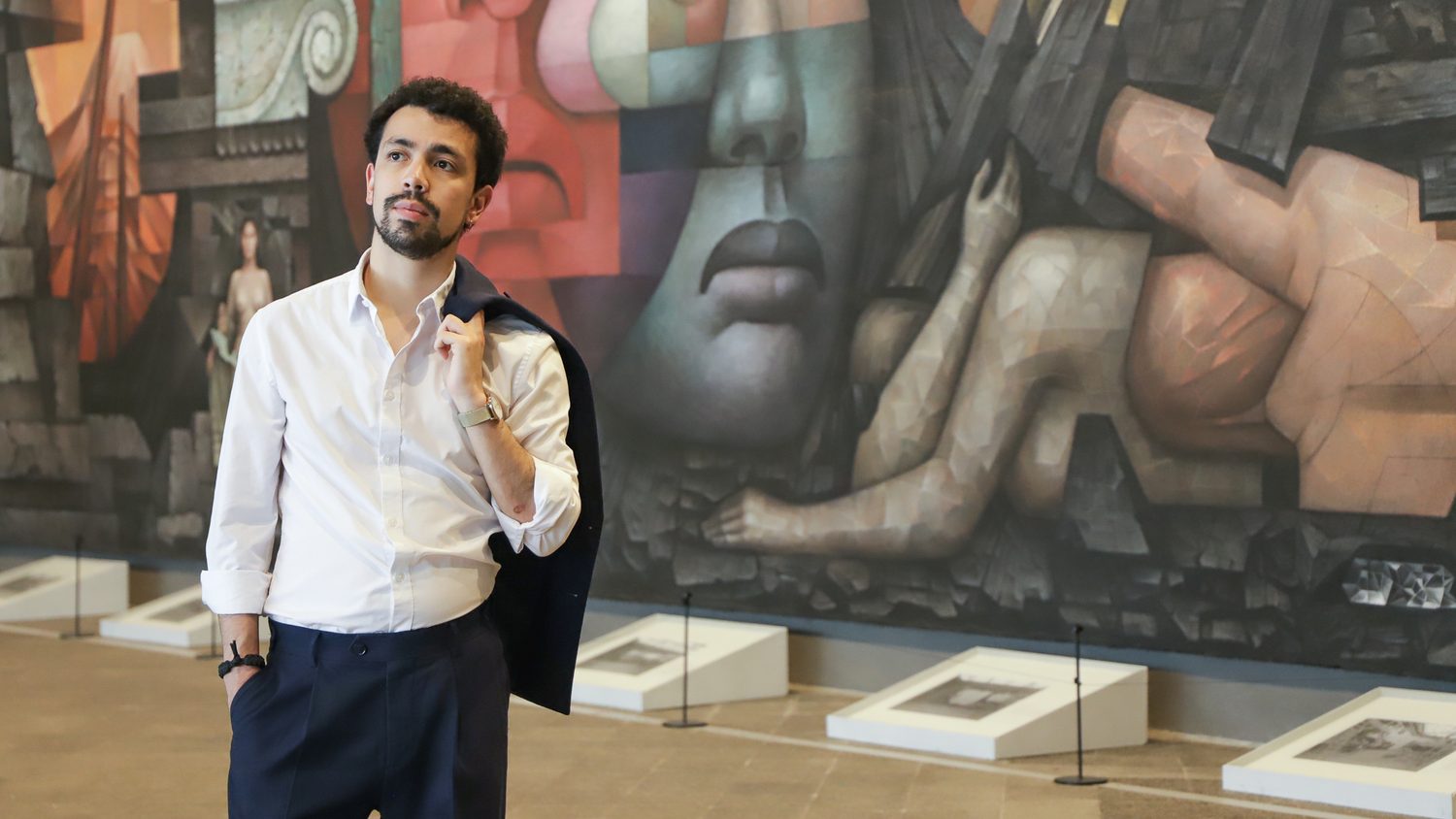
Our friends at TYB Arts brought a young Chilean conductor to our attention: Luis Toro Araya. We have come to adore him — and he turns out to have a great deal to say about orchestras, and about strings.
This is our conversation with him.
• • •
On a Wednesday evening in June, the chief conductor of the Orquesta Sinfónica de la Universidad de Concepción walked onto the stage of his own theatre carrying a violin.
The theatre's announcement called it la faceta oculta del director — the conductor's hidden side. The programme was Brahms and nothing else: the Scherzo in C minor, then two of the sonatas, with the Brazilian pianist Richard Octaviano Kogima. The Scherzo is the movement the twenty-year-old Brahms wrote as his share of a sonata made for Joseph Joachim in 1853, and built on Joachim's motto: frei aber einsam, free but lonely.
We asked him why that, of everything he could have chosen.
“I feel deeply connected to Brahms' music. The first time I played a piece by Brahms, I was 13 years old and I didn't understand it at all; it made little sense to me. Over the years, I learned to love his music, and especially as a conductor, I developed a very precise idea of how his music should sound — the colors, the warmth, the heaviness. It was a challenge and a beautiful experience to try to bring that to the violin after so many years.”
Hidden from whom, we asked. The audience, the orchestra, or himself?
“This is a wonderful question. To be bluntly honest, there are aspects of my own personality that I still don't fully understand. The violin was once my greatest passion, yet over time, I barely even touch it. Perhaps it represents a younger version of myself — someone who had far fewer answers and wasn't very happy. I see things differently now.”
• • •
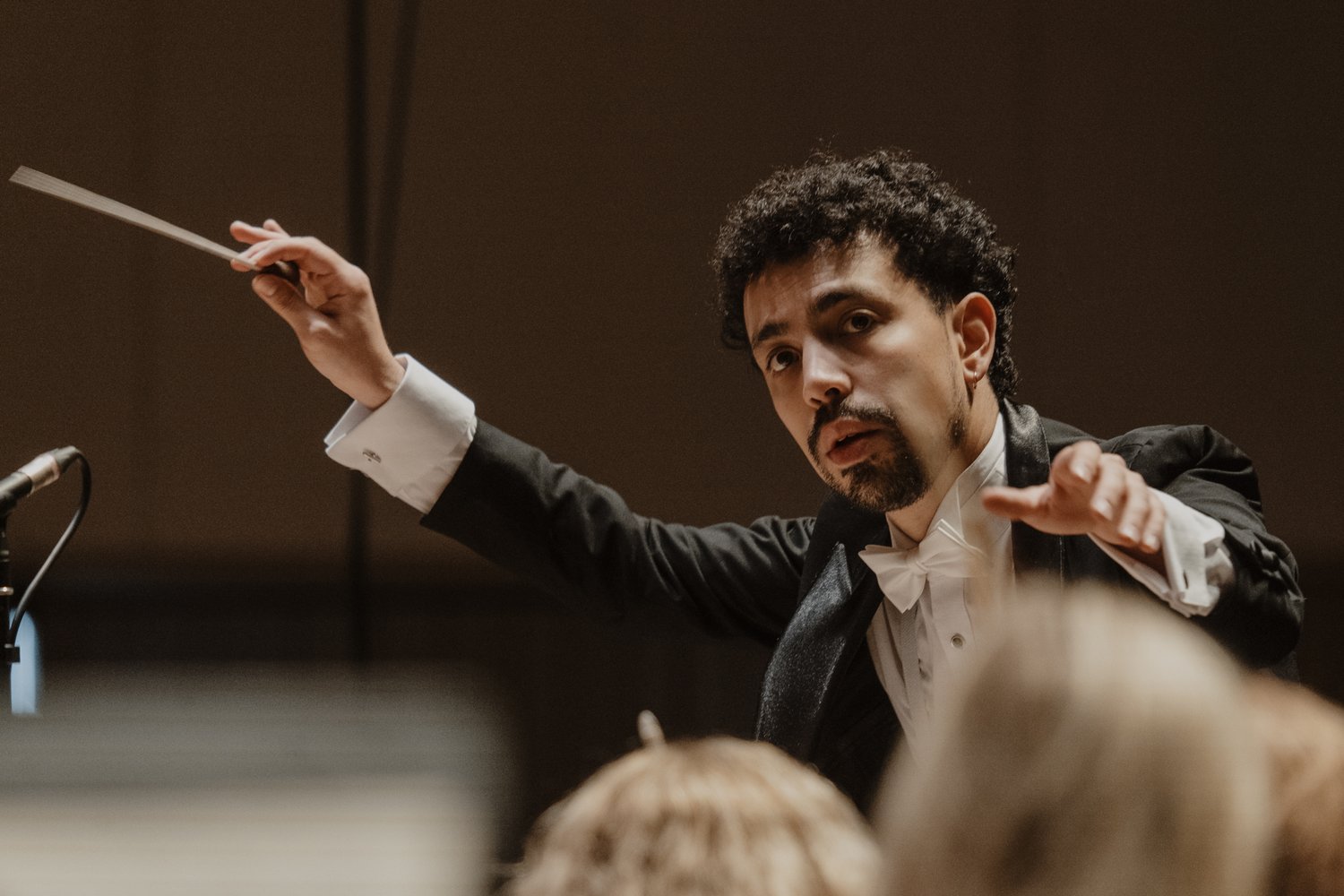
He was born in 1995 in San Vicente de Tagua Tagua, a town in the Cachapoal valley, south of Santiago. He studied violin at the Universidad de Chile and at the Escuela Moderna de Música with Alberto Dourthé, and at eighteen he joined the Orquesta Sinfónica Nacional de Chile. He stayed three years. In the second of them, he began studying conducting.
Which means that for two seasons he was learning the gesture by day and sitting underneath it by night.
“I believe playing in the orchestra has been my most vital learning experience. While you can learn a great deal about the art of conducting and music — yes, conducting is an art in itself — nothing compares to sitting in the chair of an orchestral musician. You gain a profound understanding of the group's internal energy, and you realize what a conductor truly needs to provide, and what they should refrain from doing. Sensitivity, insistence, timing: these are essential elements of leadership, and playing in this orchestra gave me an intuitive feel for them. I have deep love for the National Symphony in Chile. Every time I return to work with them, it feels like coming home.”
And what he misses:
“To be honest, I wonder every day if I made the right choice. There was a time when being part of that marvellous chaos brought me profound joy. The job of a conductor is a solitary pursuit with a lot of room for self-doubt, at least in my case. The standards are always very high, and that obsession with delivering at the highest possible level can turn out to be very consuming.”
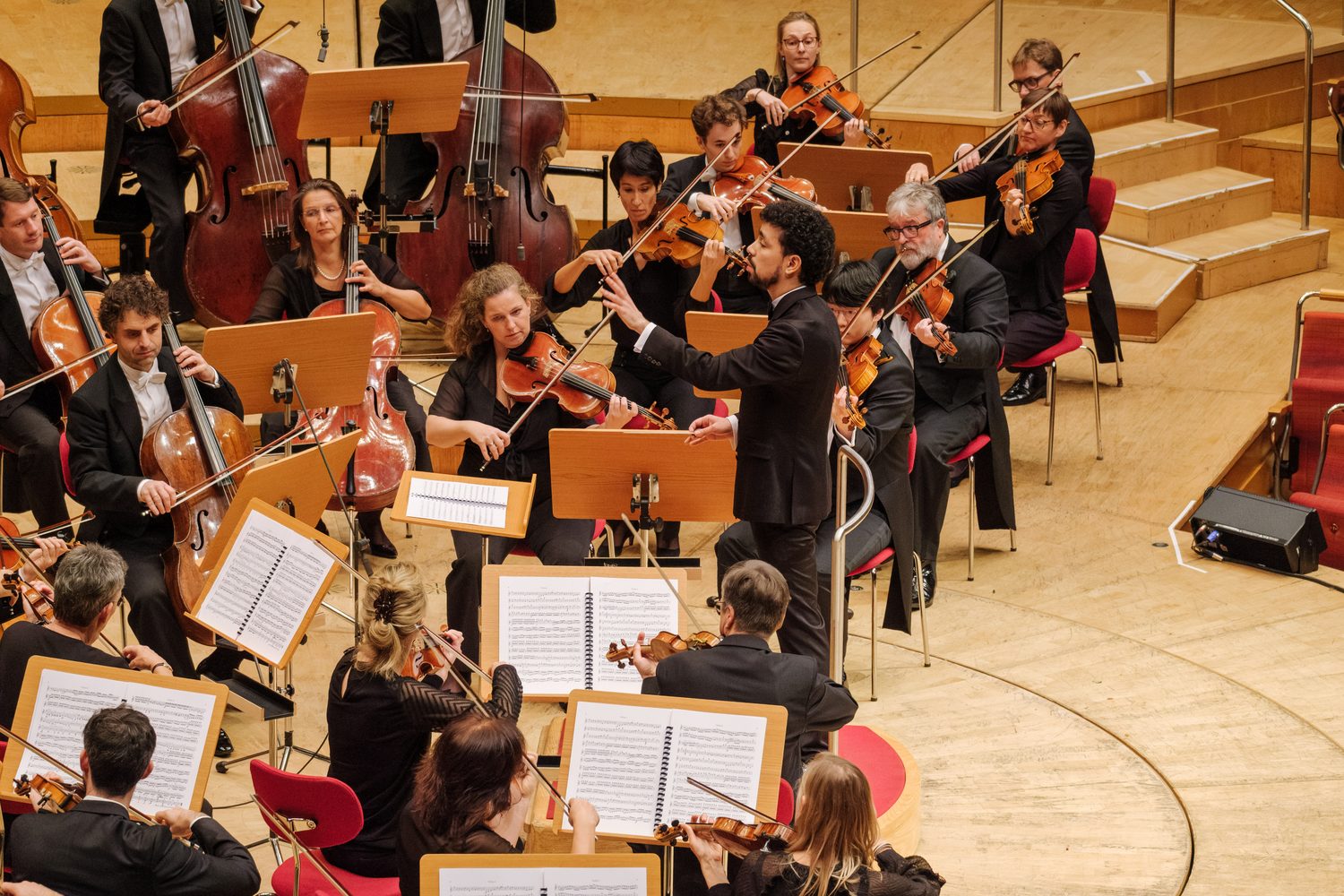
He is thirty-one. Since March 2025 he has been chief conductor and artistic director in Concepción, an orchestra founded in 1952, five hundred kilometres from the capital. Before that he was assistant conductor of the Orquesta Nacional de España for two years, a Dudamel Fellow with the Los Angeles Philharmonic in 2023, a finalist for the Karajan award in 2021, and a prizewinner in Rotterdam and Liège. In October 2025, in Cologne, he took second prize at the German Conducting Award, in front of the Gürzenich-Orchester and the WDR Sinfonieorchester.
• • •
Ask him what his teacher gave him and he answers in four words.
“There is one piece of advice I always carry with me that fundamentally shaped my concept of sound: ‘Vibrate the small notes!’ As string players, we often forget that vibrato applies to eighth and sixteenth notes as well. Incorporating it intentionally — combined with a proper legato — adds a completely new dimension to the sound and creates endless musical lines. He was a wonderful mentor and like a father to me. I learned so much from him, above all through the boundless passion he brought — and brings — to his work.”
“Vibrate the small notes!” As string players, we often forget that vibrato applies to eighth and sixteenth notes as well.
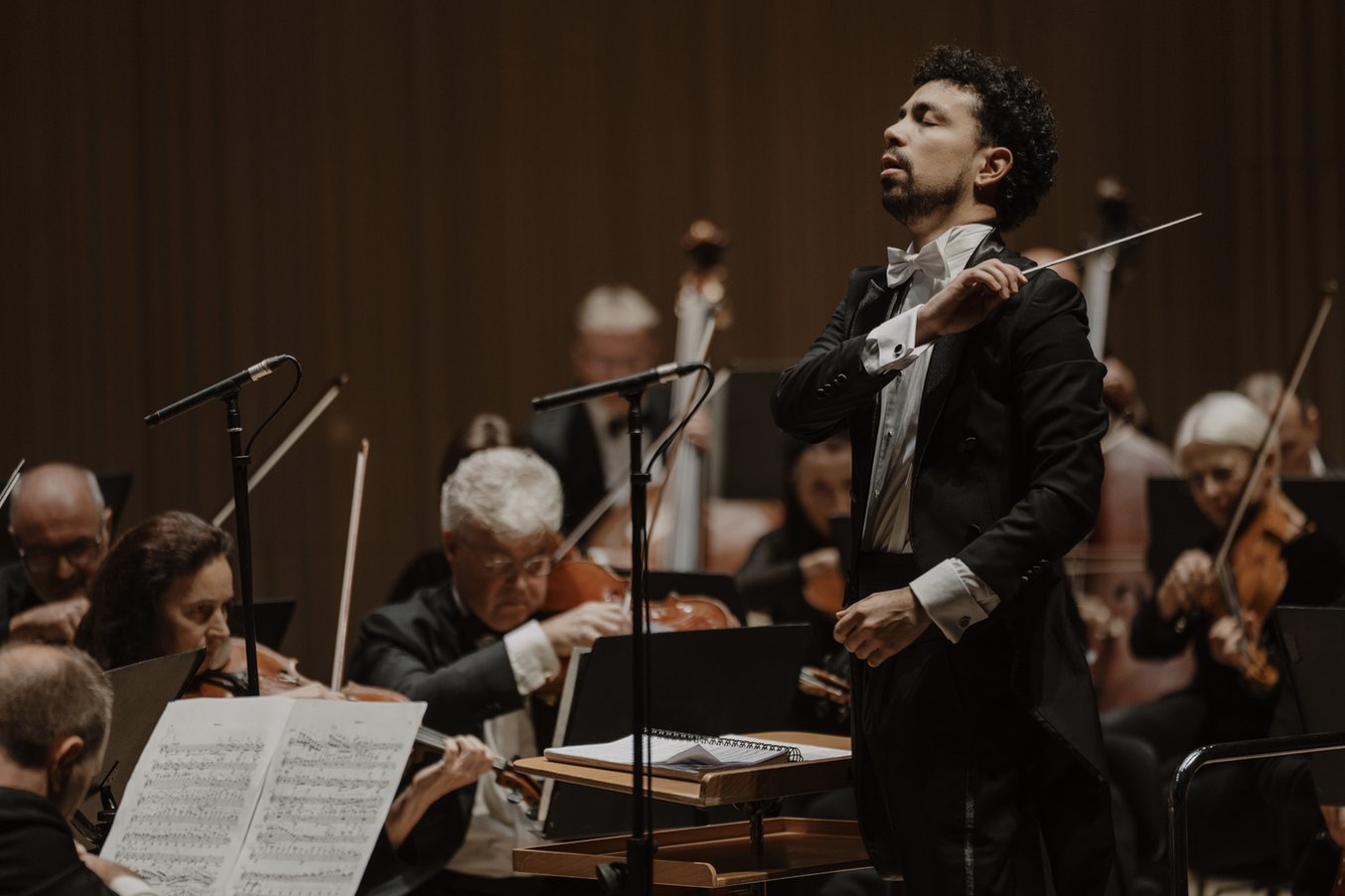
It is a small instruction about small things, and everything else he says about sound turns out to follow from it.
“I believe sound begins from within. You can call it heart, inner ear, soul, head, or mind — it doesn't matter. First, you must have an exact vision of the sound you wish to create. Of course, there are technical elements to achieve this: how much bow pressure, how much bow hair, how much arm weight. There are endless possibilities. My own search is about beauty. I don't really care about loud dynamics or complex passages executed like clockwork. For me, the essence of music resides purely in the sound itself; that is what transcends words and touches the soul directly.”
In rehearsal this makes him unusually reluctant to impose. Bowings, for instance — the one place a conductor who used to hold a bow might be expected to arrive with opinions.
“I rarely bring my own bowings; I might have done so once for a specific Beethoven symphony. I think bowings are part of an orchestra's DNA, and you should respect that. First, see what they have to offer! Then you can decide. I am not afraid of asking them to change if there is something specific I want to achieve, but that's all part of the rehearsal process.”
We asked what he says to the last desk of the second violins, having once been the person at a desk.
“I don't think I say anything specific to them. Rather, I've learned the importance of making everyone feel included in the process — from the projection of your voice and direct eye contact to how attentively you acknowledge every person in the room. Ultimately, every single person is an active participant in the music making.”
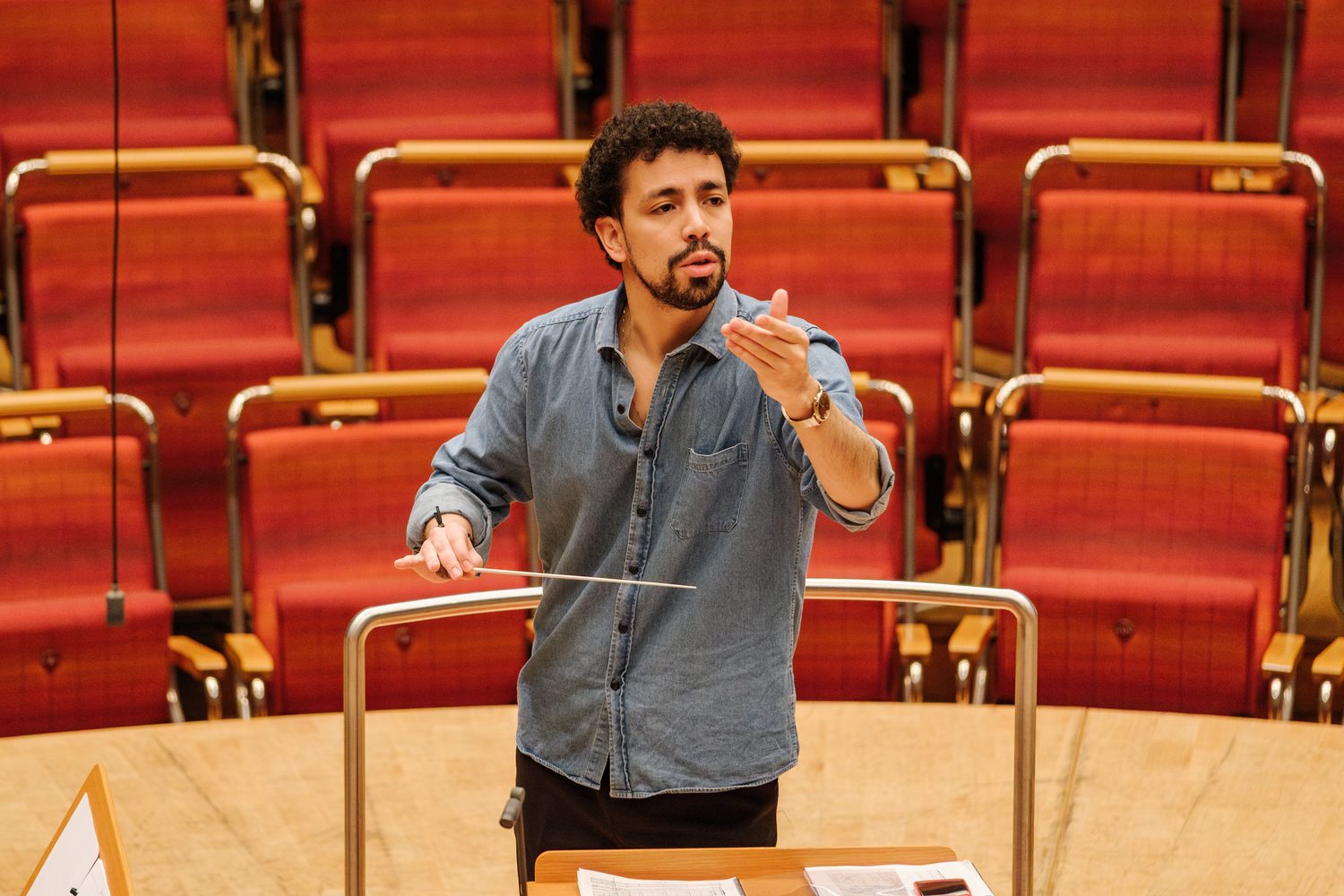
Two seasons in, he can hear the difference in the section he inherited.
“They have always been very flexible, which is not always the case for an orchestra that doesn't play a lot of opera. The strings used to sound rather brilliant, with a lot of character in the sound. Now, I think we're transitioning to that warm, round, deep sound I have always loved. I dare say they can produce a wonderful Brahms or Bruckner sound nowadays, which gives me immense satisfaction. I am eager to see how that sound continues to evolve in the years ahead.”
• • •
He has said elsewhere that the worst thing that can happen to a musician is to hurry, in a profession this long. By nature, he told us, he is an incredibly impatient person, and has to remind himself that life moves at its own pace. “At the end of the day, music could not care less if someone is in a rush.”
Where the patience shows is in what he agrees to conduct.
“I only conduct works where I feel I have enough to say — something of real substance for both the musicians and the listeners. Otherwise I would be wasting someone's time, and life is too short to do that.”
So: no Bartók yet, and no Ravel yet, “because I haven't found a deep connection yet.” And then the ones that are not a matter of time. “Composers whose music I simply don't like, such as Berlioz, Nielsen, or Mendelssohn — with the obvious exception of his Violin Concerto!”
• • •
There is one composer he will conduct anywhere, and has.
Enrique Soro was born in Chile in 1884, won the Grand Prize for Composition at the Milan Conservatory, toured Italy and France, signed a fifty-year contract with Schirmer, and knew Casals, Puccini and Ravel. Then European programmes let him go so completely that Chile itself had to rediscover him. Toro Araya has spent four years quietly putting him back: Sinfonia Rotterdam in 2022, the Orchestre de Picardie in Amiens and Soissons in the spring of 2025, the National Symphony Orchestra of Ireland in Dublin that July.
Which Soro would he put in front of a European audience first?
“All of them! There is not a single piece by Soro that is not shaped with exquisite beauty. He was such a marvelous composer, with nothing to envy in European music. He simply suffered from our country's geographic isolation. Nowadays, everything is connected, but back then it must have been quite hard as a composer to live in Chile and still try to have a presence in concert halls across the world. His musical language is unique, and I would recommend it to everyone. I have a particular love for his Sinfonía Romántica — it was the first work by Soro I ever heard, and I was in love from the very first bars.”
• • •
In November he conducts Bruch and Respighi in Concepción, with the Spanish violinist Raquel Areal Martínez making her Chilean debut.
He is generous about soloists in a way that gives him away. Conducting a concerto he has studied or played himself, he said, he arrives with a very clear idea of how it should sound — and then: “understanding how difficult the instrument is, I always try to be very supportive, and I genuinely cherish the chance to collaborate with great violinists. They are definitely much better than I ever was. Otherwise I would probably still be playing.”
So we asked where the violin lives now. In a case, or on a stand.
“I'll be honest, it's in its case. I haven't practiced much lately, but I think I'm slowly starting to miss it, so who knows? I'm not sure if I'll perform in public anytime soon, but I would definitely like to play string quartet again in the near future.”
• • •
We ask everyone the same last question: who should we talk to next?
He answered without hesitating — Valerie Steenken, concertmaster of the Orquesta Nacional de España, where he spent two years as assistant conductor. He even sent along the question he would ask her.
So the conductor hands us back to a violinist. We'll take it.
Thank you, Luis. We'll be listening in November — and if that string quartet ever happens, we'd like a seat.
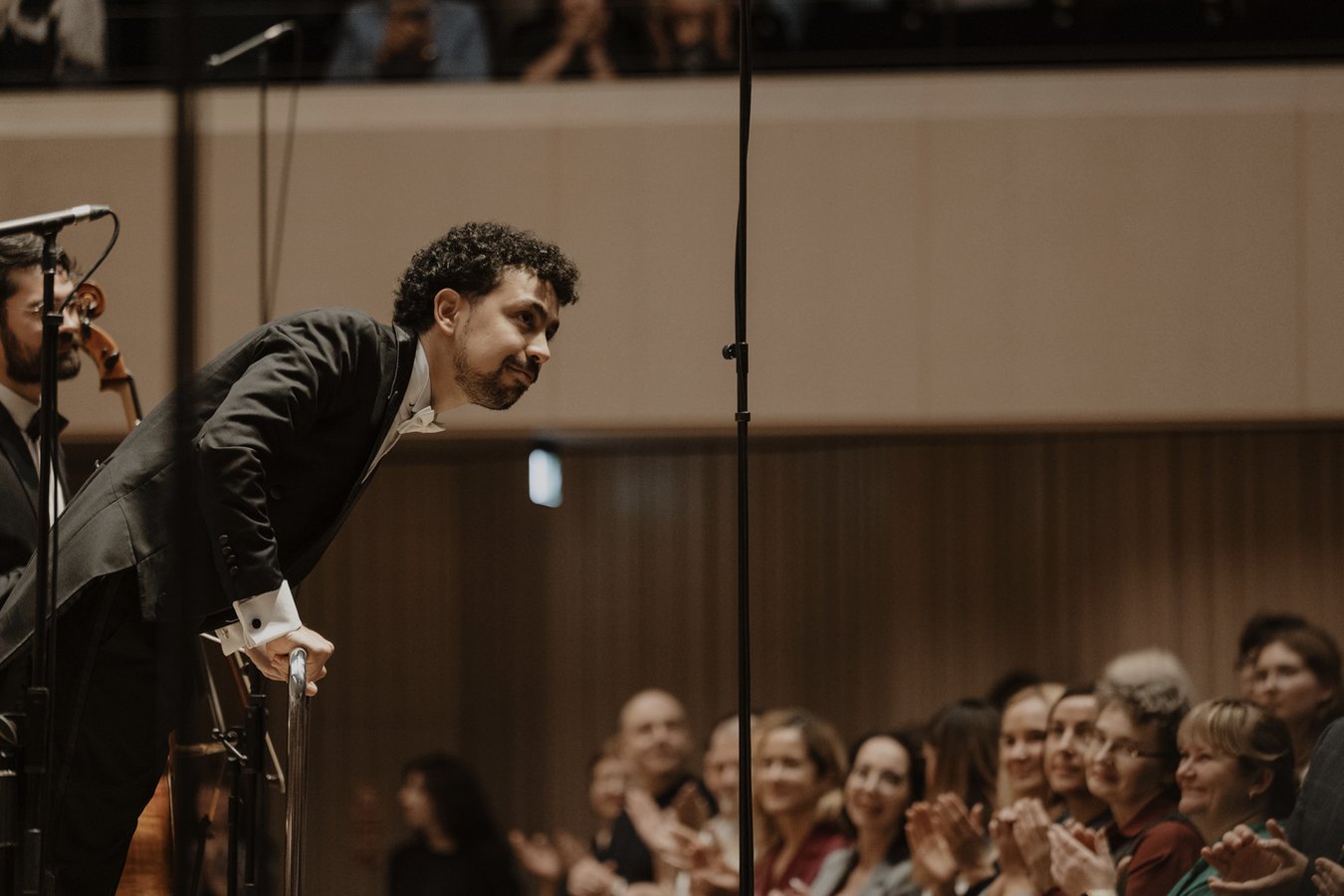
Our warmest thanks to Francisca and to TYB Arts for the introduction and for the care they gave it. And thank you, Luis, for twelve answers written out in full, in a language that is not your first, between two continents and a season of concerts.
Interview conducted in writing, in English, in September 2026, and published with his approval.
Photographs © Monica Matilda Andrulyté, © WDR / Simin Kianmehr and © Simón Puente, as credited.