The Orchestra That Wasn’t There
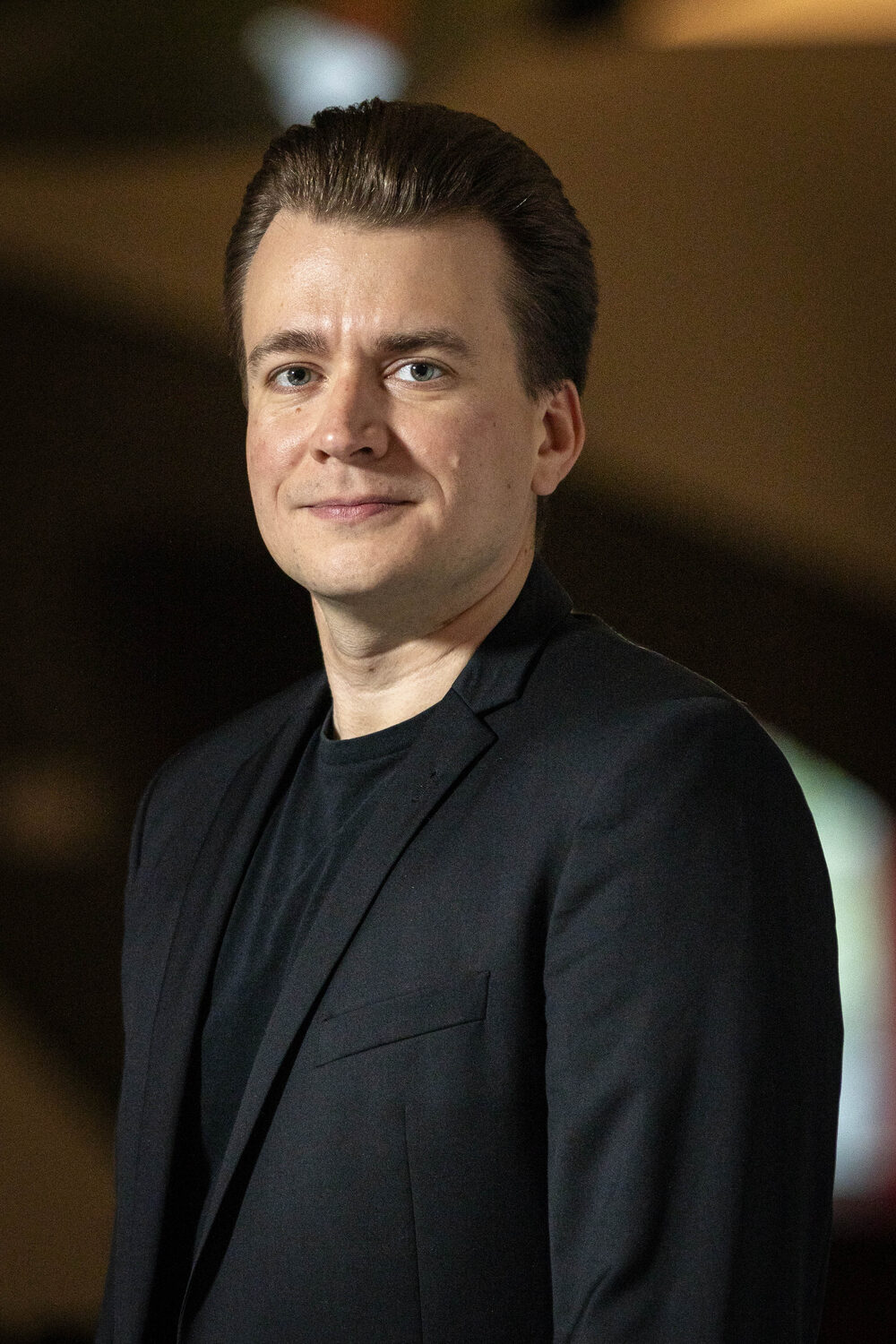
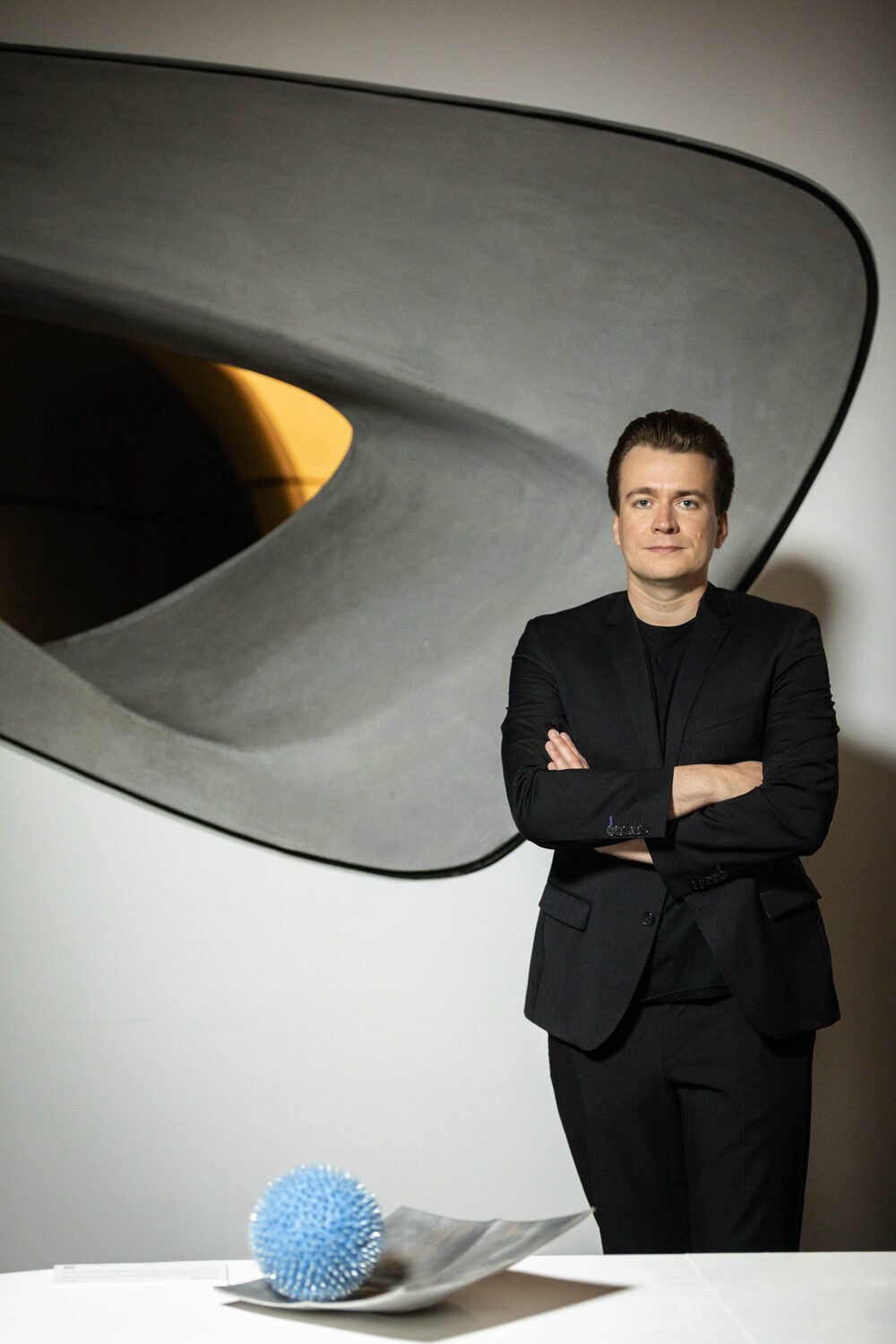
Teodor Doré. Photograph: Bruce Basudde, courtesy of Teodor Doré / Renaissance-21.
In January 1891, Sergei Rachmaninoff had finished a Suite for full symphony orchestra and had no orchestra to play it. He was seventeen, a student at the Moscow Conservatory, and the conservatory did not have the instruments his score called for. On 10 January he wrote to his friend Natalia Skalon that the performance would have to wait. Perhaps, he suggested, he could organise a concert of his own the following year.
He had already sent the score to the musician whose opinion he valued above anyone’s: Pyotr Ilyich Tchaikovsky.
That spring, Tchaikovsky crossed the Atlantic to conduct at the opening of a new concert hall in New York, the building we now know as Carnegie Hall. Rachmaninoff’s score never came back. He never heard the Suite played as he had written it, and the orchestral manuscript has been missing ever since.
Tonight, 12 November, an orchestra plays the Suite at Carnegie Hall. The music comes from Teodor Doré’s new orchestration of the surviving piano score, and ahead of the premiere we asked him how he set about imagining the orchestra Rachmaninoff never heard.
• • •A score sent to the wrong place
What happened to the manuscript is still not entirely clear. Rachmaninoff’s letters of 6 and 10 January 1891 show that he had completed the orchestration and entrusted it to Tchaikovsky. Notes published by Moscow’s Russian National Museum of Music suggest that the score was probably sent on by mistake to another recipient, and lost from there. It has never resurfaced.
Rachmaninoff had also made a version for solo piano, in the hope that it might win the music a hearing. That manuscript ended up among the papers of Alexander Siloti, his cousin and piano teacher. In the early 2000s, the musicologist Valentin Antipov identified an anonymous, untitled four-movement piano score in the museum’s archive as the lost Suite in D minor, and it was later published in a critical edition.
The notes had survived. The orchestral colours had not.
Two years in Rachmaninoff’s world
Teodor Doré grew up in a sculptor’s studio. His grandfather, Vitaly Zaykoff, was a sculptor, and Teodor spent his childhood among his works, watching them take shape. He is the third generation of his family devoted to the arts, and today he is a composer and pianist based in London, where he founded Renaissance-21, a cultural movement that brings art, science and philosophy back into conversation, and forgotten music back to the concert stage. Looking after what the past has left behind matters to him deeply, starting with his grandfather’s legacy, which he now helps to preserve. “For me, the restoration of historical heritage is an incredibly important process,” he says.
Rachmaninoff’s Suite won him over from the very first pages.
“This piece, from my point of view, represents a truly evolutionary significance in the establishment of Rachmaninoff’s creative identity,” he tells The Strings Society. “He was only 17, but both the first and second parts are captivating. The first, with its dynamics, richness of colors, and a special drama that will later manifest in his Second Concerto and other works that distinguish Rachmaninoff’s handwriting. And the second part, with its thoughtfulness and a certain sense of depth, is the heart of the suite. Just for these two parts, it was worth taking on this orchestration.”
His story with the Suite began in Paris, after a concert at the Rachmaninoff Conservatory, where he met the composer’s great-granddaughter, Alexandra Conus-Rachmaninoff. They stayed in touch, and she gave him her blessing for the orchestration.
As he worked, his grandfather’s studio came back to him. “In many ways, orchestrating this Suite reminded me of creating a sculpture: beginning with a framework and gradually building layers upon it until the complete form emerges.”
The work took him nearly two years. He studied Rachmaninoff’s orchestral scores alongside those of Tchaikovsky and Rimsky-Korsakov, the music Rachmaninoff himself had learned from. “I wanted to immerse myself in the same musical world that had shaped him, to follow his way of thinking and, in a sense, get inside his mind.”
• • •Four episodes, four problems
The Suite has four movements: Lento – Allegro moderato, Lento, Menuetto and Allegro. Doré hears them less as a symphony than as “a collection of four distinct musical episodes — much like Grieg’s Peer Gynt”. With one difference: the young Rachmaninoff still gave his Suite a classical frame, opening it with a movement in sonata form, the shape of a symphony’s first movement, and closing it with a true finale. Each movement asked something different of him.
Where the piano writing of the first movement is at its busiest, Doré turned it into figuration for the strings. “Instead of giving them all the material continuously, I split the string phrases with strategic rests. This gave the music more breath while heightening its intensity.” The lyrical second theme posed no doubts: “Rachmaninoff’s intention was clear.” He gave it first to the strings, then to a solo flute when it returns.
The second movement, “the heart of the suite in terms of its profound emotional component”, was already written in a more orchestral manner, except for its climax. “I worked a lot on that climax, adding a few extra inner voices of my own to create the massive volume Rachmaninoff indicated in the piano score.”
The Menuetto is a surprise: a minuet and trio closer to Haydn than to the Rachmaninoff most of us know. Doré calls it “very unusual in this context” and, following what he sees as the composer’s own idea, orchestrated it “strictly adhering to the classical orchestration of Haydn’s era”.
The finale was one of the hardest. It is a rondo, and its main theme keeps returning almost unchanged, passed between the pianist’s hands in octaves, with almost nothing in between. “Because there were no middle voices or clear vertical structure in the piano score, I relied on my own musical judgment to build the harmony.” He gave the returning theme in turn to the brass, the strings and the woodwinds. For Doré, the movement completes a journey across the whole Suite, “from the inner turmoil of D minor toward the ultimate discovery of light”, ending in a triumphant D major.
Where does Rachmaninoff end?
With so many decisions in his hands, we asked Doré where Rachmaninoff ends and he begins. He did not hesitate.
“First and foremost, any orchestrator aims not to express themselves, but to faithfully and skillfully embody the author’s original vision. In truth, I was merely helping this work acquire its orchestral contours. All the original music and the fundamental creation belong entirely to Sergei Rachmaninoff.”
The score that could tell us what Rachmaninoff would have chosen is gone. What remains is an answer built from long study and real respect, which may be the only kind of fidelity possible when the original is lost.
• • •The Rachmaninoff to come
Doré is convinced that the Suite holds the seeds of two later masterpieces. He points to a three-note figure at the very opening of the first movement, which he hears again, in another key, at the main entry of the Second Piano Concerto. And he hears the Suite’s lyrical second theme echo through the Third Concerto, which, like the Suite, is in D minor. “That is why I am thoroughly convinced that both the Second and Third Piano Concertos grew directly out of this early Suite.”
The Second Concerto arrived a decade later; the Third in 1909. Listening for them in the Suite is one way in. Another is to hear a seventeen-year-old writing inside the tradition he had inherited, and already testing how far it would carry him.
• • •A premiere, precisely
The Suite has been heard before. Once rediscovered, it entered the repertoire of pianists, starting with Denis Matsuev, who recorded it in 2007. Doré’s own first step was a version for violin, cello and piano, which he presented at Carnegie Hall on 29 January 2025 with Sergei Antonov and Taisiya Losmakova. His full orchestration was then recorded in Budapest in 2025.
Tonight, in Zankel Hall, the MidAtlantic Philharmonic Orchestra under its principal conductor Jason Tramm gives the world premiere performance of that orchestration, “scored for the same large symphonic forces as Sergei Vasilievich Rachmaninoff’s Second and Third Symphonies”. On the same evening, violinist Yury Revich, whom we interviewed last month, presents Ocean, his own piece for violin and orchestra.
• • •The orchestra that wasn’t there
In January 1891, Rachmaninoff had finished his score and wanted to hear it, and the instruments weren’t there. Perhaps next year, he thought.
A hundred and thirty-five years later, in the hall Tchaikovsky helped open that spring, the orchestra is finally there, playing not from Rachmaninoff’s lost pages but from Teodor Doré’s long and careful answer to them.
Sources: Teodor Doré, in written correspondence with The Strings Society, November 2026; Russian National Museum of Music, Moscow; Valentin Antipov’s critical edition of the Suite; Carnegie Hall. Photographs: Bruce Basudde, courtesy of Teodor Doré / Renaissance-21.