Two Endings
Some time ago I wrote a piece here called A Whole World Out There. It was about a realisation I am still a little embarrassed by: that I knew almost nothing about the music being made around me right now, and that my mind kept returning to the same handful of musicians, over and over.
It still does, a bit. But this adventure keeps putting extraordinary artists directly in front of me, and with time the connections have turned into relationships built on trust and a certain stubbornness about getting things right.
A few weeks ago Deutsche Grammophon gave us Justus Eichhorn. The same label, the same desk, sent us a list of what was coming in September, and I picked the one name on it I did not know: Yu-Peng Chen. My bad, and a big one. The violin on his record we knew very well — Daniel Hope, with Avi Avital's mandolin and Philipp Schupelius's cello beside him.
I would never have found him on my own. I asked whether he would talk to us, and he said yes.
Then The Poem of Life arrived, out on 25 September. I put it on, in order, the way he asks for at the end of this interview, and I did not get up for an hour. Nothing in the room managed to pull me out of it.
The story is already there in the track titles, and that was the first thing that disarmed me. A box of chocolates. A first breath. A waltz for children chasing fireflies, a wind chaser, a first love in two parts. A journey forged through fire. A family under the moon, with an erhu and a guzheng in the room. Then, in the middle of all that orchestra, two and a half minutes called Unspoken: him, alone, at a piano, in his own studio. A wordless farewell. And at the end, an unfinished poem standing between two different ways of ending a life.
Twelve movements, in order, and you can see the whole arc of a lifetime before you have heard a note of it.
What he did not say in any press release is that he wrote the ending twice.
Where Longing Ends comes tenth. Life, Like a Dream closes the album. We had asked him about the Chinese title of the first one, 知止之时, which does not mean longing ending but something closer to knowing when to stop — a person choosing to stop, rather than a feeling running out. His answer went somewhere we had not expected. The two pieces, he says, are two different endings to the same life: one that ends well, one "tinged with regret." He compares it to a game where the hero makes a choice and the story closes one way or the other. Listen closely, he says, and the two have quite different colours. He calls it an Easter egg he left in the album, and he does not tell you which is which.
Between them stands The Unfinished Poem.
The comparison is his, not ours. He spent four years writing music for a game, and the habit came with him: not the sound — this album does not sound like a game for a second — but the shape. A life that can end in more than one way, and the listener left holding both.
We sent far too many questions. He took every one of them seriously, and at length, writing in Chinese and having the English sent alongside so that as little as possible of him would be lost on the way to you.
Here they are, and they are beautiful.
The Strings SocietyThe English title of the Overture is The Flavors of Life. The Chinese title, 一盒巧克力的人生, says something different — closer to "a life like a box of chocolates," which, to anyone who grew up with the film, sounds like Forrest Gump. The last piece is Life, Like a Dream in English, and 人生若只如初见 in Chinese, a line from Nalan Xingde. Readers in Shanghai and in Lisbon will be holding the same album with different words on it. Did you write the Chinese titles first? And what do you think gets lost on the way into English, if anything?
Yu-Peng ChenThe Flavors of Life, the Chinese title of which translates as A Box of Chocolates in Life, draws on an everyday image. Life is full of unpredictability. We can never know what we will encounter next, just as we never know what flavour the next chocolate will be until we open the box. The English title, The Flavors of Life, places more emphasis on the many different experiences and emotions that life encompasses. I think both titles point to the same theme, simply approaching it from different perspectives.
As for Life, Like a Dream and its Chinese title, If Only We Could Meet as We First Did (人生若只如初见), the Chinese title carries a particular sense of memory, the passage of time, and regret. The English title, by contrast, is more direct and open to interpretation.
I don't think translation necessarily means losing something. Sometimes, one language cannot fully convey the cultural nuances of another, but that can also create room for new interpretations. For me, what matters is not making the two titles identical, but allowing each of them to lead listeners to the music itself.
The Strings SocietyWhere Longing Ends in Chinese is 知止之时, "the moment of knowing where to stop." That isn't longing that ends. It's someone who chooses to stop. Which of the two did you mean?
Yu-Peng ChenI don't think these two titles contradict each other. In fact, Where Longing Ends and Life, Like a Dream represent two different endings to life that I envisioned when designing the album. When life reaches its end, we may arrive at very different outcomes. It's a little like a video game, where the protagonist faces a crucial choice that leads to different endings — one a happy ending, the other tinged with regret.
If you listen closely to these two pieces, you'll notice that they have quite different musical colours. In a way, this is a little Easter egg I've left for listeners within the album. I believe different listeners will find their own points of connection and reflections in these two pieces, and each will discover an interpretation that is personal to them.
The Strings SocietyIn A Journey Forged Through Fire, Daniel Hope isn't the soloist in front of the orchestra. He's the first violin of a sextet, alongside five players from the Shanghai Philharmonic. That's a very different thing to ask of a soloist, and a very different thing to ask of the orchestra's own players. Why a sextet, and why put him inside it rather than in front of it?
Yu-Peng ChenMy approach to recording differs somewhat from the traditional method of recording orchestral works, as I prefer to record each section separately. This is simply the way I have always worked.
Daniel Hope is an outstanding solo violinist. For this project, he made a special trip to the recording studio in Shanghai to record his violin solo separately, rather than recording alongside the Shanghai Philharmonic Orchestra. I'm deeply grateful for his involvement, and I was truly impressed by both his extraordinary musicianship and his dedication. I'm very thankful that he took part in this album and brought such a wonderful interpretation to the music.
The Strings SocietyUnder the Moonlight is the only piece on the album where the violin and the erhu share the same music. They are both bowed instruments, and almost opposites: the violin has four strings and a fingerboard, while the erhu has two strings, no fingerboard, and its bow passes between the strings. When you wrote for the two of them together, did you treat them as relatives or as strangers?
Yu-Peng ChenThat's a very good question. In terms of playing technique, the violin and the erhu differ in many ways, yet both instruments can express subtle and rich emotional nuances through the friction between the bow and the strings.
I have always wanted to create works that explore a musical dialogue between traditional Chinese instruments and Western orchestral instruments. However, I don't want to emphasise their differences simply because they come from different cultural backgrounds.
For me, the music itself always comes first. When two instruments play the same melody, I'm more interested in how their distinctive timbres bring different emotional nuances to it, and whether they can establish a natural connection while retaining their individual characteristics. Sometimes, these very differences can open up entirely new possibilities for musical expression.
As a Chinese composer, I wanted this album, which is a personal statement of my work in classical music, to reflect not only my individual musical expression but also my cultural background and artistic roots. That's why I felt it was important to include a piece with a distinctively Chinese musical character.
In Under the Moonlight, alongside the erhu, I also incorporated traditional Chinese instruments such as the guzheng, pipa, dizi and sheng. Together with several outstanding soloists specialising in traditional Chinese instruments, they help paint a warm and intimate picture of a family reunited during a holiday, sharing a joyful moment together. For me, these instruments are more than just choices of timbre; they also carry emotional significance. In a sense, they represent the loved ones who are closest to us, bringing a feeling of familiarity, warmth and togetherness to the piece.
The Strings SocietyWhat did Daniel Hope bring to the violin line that wasn't on the page? Has anything he played changed the music you'd written?
Yu-Peng ChenA score records the fundamental structure of a piece of music, but each performer brings their own interpretation to it. The same melody can sound very different depending on the performer's choices in timbre, phrasing, dynamics and emotional expression. These nuances cannot always be fully captured in the score, yet they can have a profound impact on how the music ultimately comes to life.
Daniel is a highly accomplished musician, and his understanding and expression of the melody brought a distinctive character to this piece. I don't see composition and performance as a process in which one person creates the music and another simply reproduces it. An exceptional performer can breathe new life into a work while remaining true to the composer's intentions.
Daniel brought me so many wonderful surprises throughout the recording process. Even when I felt that a take was already perfect, he would continue to experiment and strive for an even better interpretation. I was deeply moved by his relentless pursuit of musical excellence, which also showed me just how much care and dedication he brought to this work.
I am sincerely grateful for the thought and sensitivity with which he interpreted my music, and I feel truly honoured to have had the opportunity to collaborate with him.
The Strings SocietyWaltz of the Fireflies is carried by a string quintet from the Shanghai Philharmonic — two violins, viola, cello and double bass — and not by the full orchestra. Why so small for this particular piece?
Yu-Peng ChenWaltz of the Fireflies is written for a standard symphony orchestra. It opens with a string quintet and piano, using a relatively simple and delicate arrangement to convey the innocence and tenderness of early childhood. As the music develops, the string sections gradually expand, revealing the richer layers of the orchestra's sound. This progression symbolizes a child growing up and beginning to experience and explore the world from a broader perspective.
As the title suggests, I wanted to use the light, graceful character of a waltz to evoke the image of children chasing fireflies. It represents a joyful, carefree time, filled with the most direct and genuine sense of curiosity and wonder about the world. For me, fireflies are not only a beautiful image from childhood memories, but also a symbol of those small yet precious moments in life. They may be fleeting, but as time passes, they become the happy childhood memories that continue to glow brightly whenever we look back on our lives.
The Strings SocietyThe cello appears only at the end of the album: Under the Moonlight, Wordless Farewell, Where Longing Ends. On an album that follows a life from birth to farewell, that means the cello arrives in the later years. Is that deliberate? Is there an age that sounds like a cello to you?
Yu-Peng ChenI think the cello's timbre naturally evokes a sense of time, memory and deeper emotions. It has a warm, rich sound, yet it is also capable of expressing very complex feelings.
However, I didn't intend to associate any particular instrument with a specific stage of life. For me, the twelve movements of this album together form a journey through life, and my choice of instruments is primarily guided by the emotional character and musical expression of each piece. If listeners can sense the passage of time through these sounds, or even find themselves reflecting on a particular stage of their own lives, I would find that deeply meaningful.
I would also like to express my special thanks to the young cellist Philipp Schupelius, who performed the cello solo on this album. Despite his young age, he demonstrated an astonishingly precise and sensitive understanding of the emotions within each musical passage. I was truly impressed by his performance, and there were several moments during the recording when his playing moved me deeply.
The Strings SocietyThe mandolin is there only at the very beginning, in the Overture, and never comes back. If the Overture is "a concentrated distillation of everything that follows," what is the mandolin doing there? And where did it go?
Yu-Peng ChenThe overture serves as the opening to the entire album. It is not simply a standalone piece; I also wanted it to give listeners a sense, in a relatively short time, of the different emotions and musical colours that run throughout the album.
The mandolin has a very distinctive timbre, bringing a texture to the music that differs from both the piano and the orchestra.
I don't think every sound needs to recur throughout an entire album. Sometimes, an instrument can fulfil its purpose simply by appearing at a particular moment. I would rather listeners focus on the flow of the music as a whole than try to assign a fixed symbolic meaning to each instrument.
I am very grateful to mandolinist Avi Avital for joining me in recording this overture and bringing a unique colour to the opening of the album. I absolutely love his playing, and even during the recording sessions, I often found myself becoming completely immersed in the music.
As the title of the overture, The Flavors of Life, suggests, I hoped the mandolin's distinctive, warm timbre would leave listeners with a sweet and joyful aftertaste, much like those unforgettable, beautiful moments in life that remain especially vivid in our memories. I wonder if listeners can also feel that sense of sweetness and happiness when they listen to this piece.
The Strings SocietyGame music has to accept that the listener might stay in one place for an hour, or leave after thirty seconds. It has to loop, wait, restart. A suite in twelve movements asks for the opposite: one direction, from the first breath to the farewell, with no way back. What was the hardest habit from game writing to give up for this album?
Yu-Peng ChenI don't think I need to deliberately break away from my past creative habits.
Game music and classical music do differ in their approach to composition. Game music needs to take the player's experience in different settings into account. Sometimes it needs to loop, while at other times it needs to evolve in response to the progression of the game.
The Poem of Life, by contrast, is a classical album that represents my personal musical expression. Through its twelve movements, I wanted to build a relatively complete journey through life, allowing the music to unfold from beginning to end.
That said, I believe my previous experience has been very valuable in creating this album. Working in game music has taught me to pay closer attention to musical storytelling and to how emotions gradually develop over time.
For me, the real challenge is not to forget the past, but to find new ways to apply what I have learned to different musical forms.
The Strings SocietyMany of the people who will buy this album have never been to a concert hall, and they know you through Genshin Impact. Many of our readers go to concert halls every week and have never played a video game. You're the only person standing between the two groups. What would you say to each of them about the other?
Yu-Peng ChenGame music can be rich in both emotion and musical structure, and classical music does not necessarily have to feel distant or difficult to understand. To me, both are ways of expressing emotions and telling stories through sound.
I would be delighted if a listener discovered orchestral music through game music, or developed a new interest in game music after listening to a classical album. I don't want people to decide in advance whether they can understand a particular form of music simply because it is familiar or unfamiliar to them.
Sometimes, all we need to do is listen carefully and allow the music to connect naturally with our own experiences.
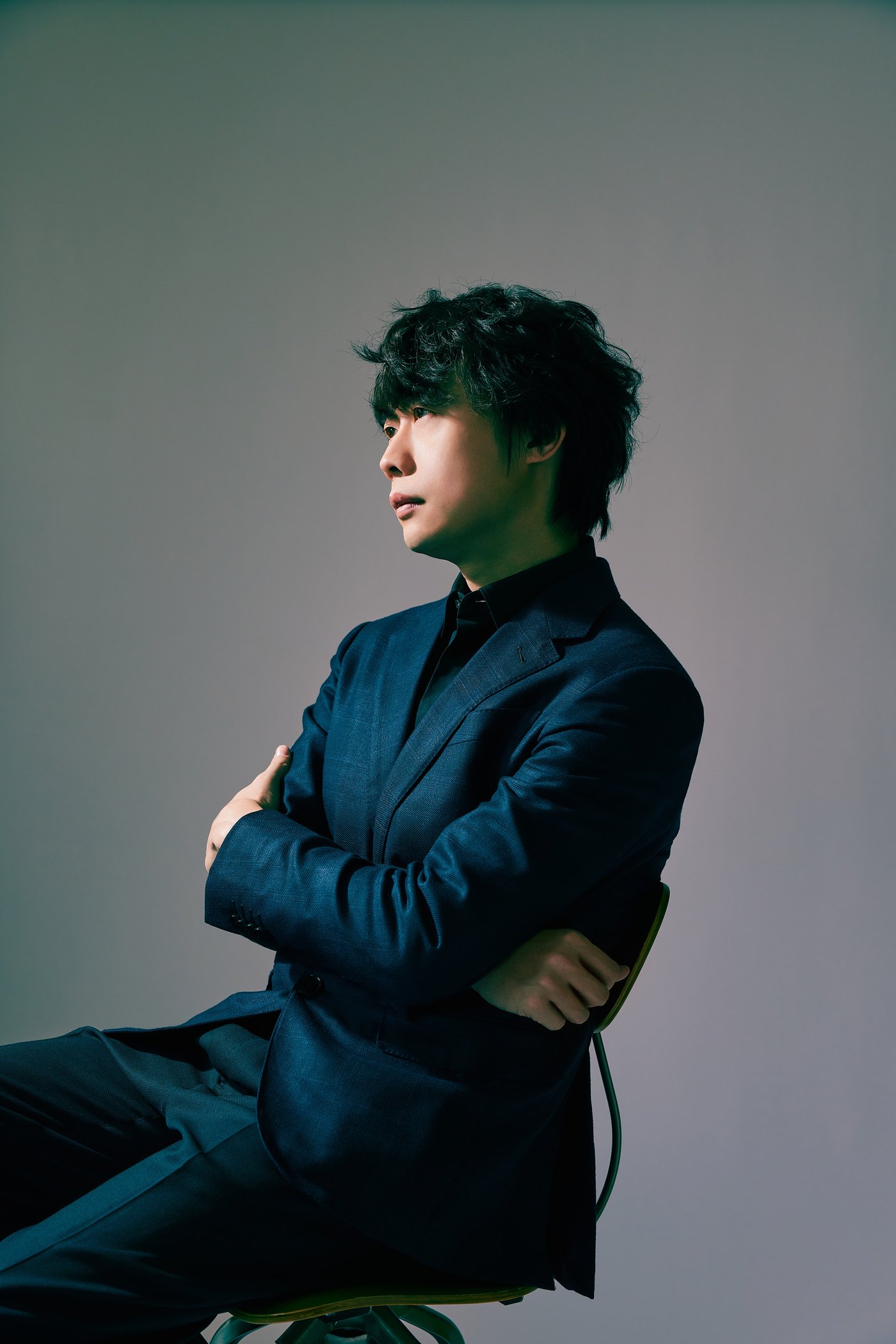
The Strings SocietyYou play the clarinet on Waltz of the Fireflies and The Unfinished Poem, as well as the piano throughout. It's rare for a composer to put his own clarinet on a Deutsche Grammophon record. Where does the clarinet come from in your life?
Yu-Peng ChenThe clarinet was one of the important instruments I studied in my early musical training. While attending Shenzhen Arts School in high school, I was a member of the school orchestra. Later, I was admitted to the Shanghai Conservatory of Music through both clarinet performance and composition, before ultimately choosing to study Music Design and Production in the Music Engineering Department.
Before studying composition formally, I also learned to understand music through performance. Playing an instrument allowed me to experience more directly the relationships between breath, timbre and phrasing, and these experiences have continued to influence the way I think about music.
Although composition is now my primary focus, I have always felt that playing an instrument myself offers a very special experience. It allows me to understand music from different perspectives, rather than thinking about sound solely through a score.
Returning to the clarinet for this album was therefore a particularly meaningful experience for me.
The Strings SocietyUnspoken is the only piece with nobody in the room but you and a piano, recorded in your own studio. Two and a half minutes, in the middle of the album. Why does the only solo piece come at that point in the life, and not at the beginning or the end?
Yu-Peng ChenIn an album primarily centred on piano and orchestra, I think it is important to include a relatively simple and quiet solo piece. When there are no other instruments accompanying the piano, listeners can connect more directly with the melody itself and the subtle emotional nuances in the performance.
The title Unspoken is also very close to how I understand this piece. Some feelings do not necessarily need to be expressed in words; sometimes, the music itself is enough. As for why the piece appears in the middle of the album, I wanted it to offer a moment of stillness within the larger musical journey, allowing listeners to pause, reflect and gather their thoughts before continuing towards the music that follows.
I would also like to express my special thanks to Yixuan Wei, a young and talented Chinese pianist who performed the second piano part on this album. She travelled to the recording studio specifically for this project and devoted nearly three days to recording the second piano parts throughout the album.
A Journey Forged Through Fire is particularly demanding, presenting a considerable challenge even for professional pianists. Yixuan Wei performed it exceptionally well, and I was deeply impressed by her professionalism and outstanding technique. I am sincerely grateful for the time and effort she dedicated to this album.
This piece is also one of the fastest and most musically energetic works on the album, and it is among my personal favourites. I truly hope listeners will discover and spend time with this piece, experiencing the energy and musical intensity it has to offer.
The Strings SocietyWhere Longing Ends is sung in French, by two Chinese voices, on an album made in Shanghai and Berlin. Why French?
Yu-Peng ChenFor me, language itself is also part of musical expression.
Different languages have their own pronunciation, rhythm and sonic qualities, all of which directly influence how a melody is expressed.
In this piece, I wanted the human voice to become an integral part of the overall emotional expression, rather than simply serve as a vehicle for conveying the lyrics. The sonic qualities of the language were therefore also important considerations in the compositional process.
I believe that even if listeners do not fully understand the lyrics, they can still connect with the emotions of the music through the timbre of the voice, the melody and the overall atmosphere.
I would also like to express my sincere gratitude to Yi Li and Zhengzhong Zhou, two outstanding Chinese bel canto singers, for their wonderful performances and delicate emotional expression. They captured the spirit of this piece with great precision, bringing the emotions and imagery I hoped to convey vividly to life.
The Strings SocietyYou describe Where Longing Ends as "an act of reverence," honouring "the final hours of a human life. Not an abstract life, but every life, including my own." That's a rare sentence from a composer about his own work. When did you write it: before the music, or after you'd heard it?
Yu-Peng ChenI believe that composing music can sometimes lead us to reconsider questions we may not normally wish to confront.
The end of life is something none of us can avoid, yet it is often difficult for us to talk about it openly. Through this piece, I wanted to use music to explore these feelings and come closer to understanding them.
I wasn't trying to give listeners a definitive answer, nor did I want to turn the piece into an abstract philosophical statement.
For me, every life carries its own experiences, memories and emotions. Whether we are facing a farewell or looking back on the life we have lived, we may find something in the music that resonates with our own experiences.
I am an ordinary person too. I experience the passage of time and must also face loss and farewell. In that sense, the emotions expressed in this piece do not belong to any one person alone.
As for whether that particular sentence was written before or after the composition, I don't think there is always a clear distinction between the two. Sometimes, music and words continually influence one another throughout the creative process.
The Strings SocietyThe cover is inspired by Monet's Woman with a Parasol: his wife and their small son, on a hill, in the wind. Out of all the paintings that exist, why that one, and why for this album?
Yu-Peng ChenThe Poem of Life tells the story of a journey through life, from birth to farewell, encompassing themes of growth, family, memory and the passage of time.
I feel that the album cover shares a deep emotional connection with the music as a whole. Rather than conveying something through dramatic imagery, it captures an ordinary moment in everyday life, reminding us of the simple yet precious emotions that make life meaningful. It also brings back memories of the time I spent with my mother during my childhood.
In fact, this album is also a gift to my mother. She is an outstanding Chinese folk vocal artist. In order to devote herself fully to raising me, she put her own artistic career on hold and personally taught me piano from an early age. Together with my father, she supported me throughout my musical education. Even today, she continues to support my music career wholeheartedly.
Although my busy schedules mean that we cannot see each other as often as we would like, I hope this album can serve as an expression of my love, gratitude and longing for my mother, my father and my family.
The Strings SocietyThe album ends on Life, Like a Dream, and the booklet says it summons "both a beginning and an end." If someone plays the album on repeat, the last piece goes straight back into the Overture. Did you write it so that the album could start again?
Yu-Peng ChenI really like this idea.
The Poem of Life follows a journey through life, from its beginning to the final farewell. But I feel that an ending does not necessarily mean that everything has truly come to an end.
When we look back on the path we have taken, many memories return to us in different ways. There may be things we did not fully understand at the time, but as time passes, we come to see them in a new light and discover new meanings in them. So, if listeners choose to play the album again after it ends and sense a connection between the final piece and the overture, I would find that a truly beautiful experience.
For me, music does not always need to provide an absolute ending to every story. Sometimes, allowing it to begin again feels just as natural.
There is a painting on the front of this record of a woman on a hill with a small boy, and we asked him why that one. He told us about his mother.
She is a singer. She sang Chinese folk music, and she stopped, so that she could raise him. She taught him the piano herself. His father was there for all of it too. He says that work keeps them apart more than he would like, and that the album is for them.
So the box of chocolates is hers, and the fireflies, and the family under the moon, and both of the endings.
He asked us for only one thing, and it was not about himself: that people listen to the twelve movements in order, from beginning to end, once, the whole way through. We had already done exactly that, without knowing he would ask for it. Now we pass it on to you.
Trust us on this one. It is a caress, and you do not want to miss it.
• • •
Interview conducted in writing, in September and October 2026, through Deutsche Grammophon. He answered in Chinese; the English was supplied by the label alongside it. Published with the approval of the artist's team.
Photograph © MOIN.