The Right to Be Cheeky
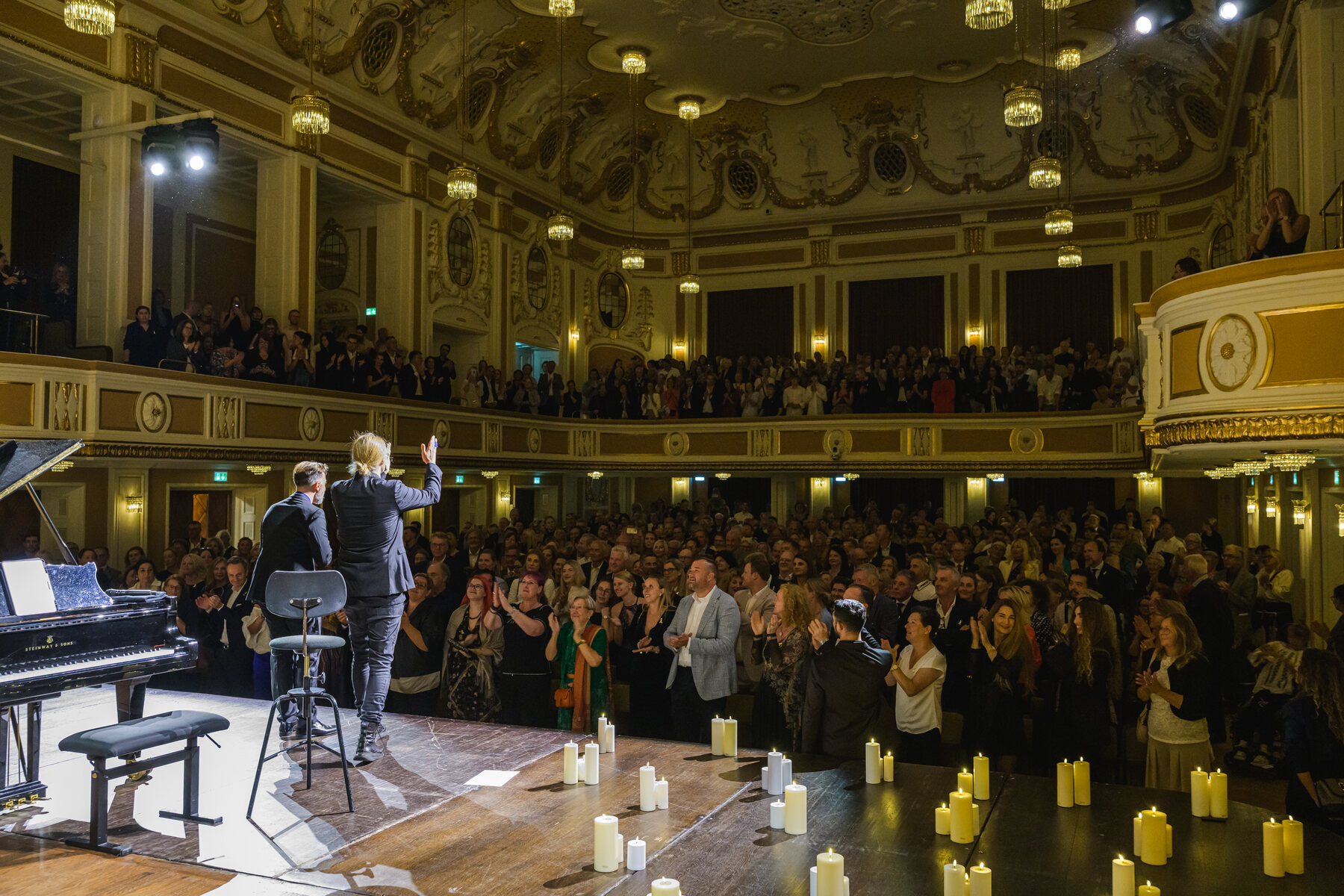
KlangBlickMomente · Großer Saal, Internationale Stiftung Mozarteum, Salzburg · Saturday 12 September 2026
Salzburg, again
You all know by now how dear this evening is to us. We talked about last year’s concert incessantly — too much, maybe? I’d say no. Last year marked something, musically and, far more, humanly. This is not just a concert. It is an experience: a wholehearted night that pulls you bodily into music, yes — and also into despair, into suffering… and into hope.
So when I learned that KlangBlickMomente was returning to Salzburg, I did not hesitate for a second. I booked a front-row seat.
I would have gone anyway. But I go to concerts through a different lens now — not only as a passionate melomaniac (definitely maniac), but as your ears and your eyes, there to absorb everything and carry it back to you. And The Strings Society is growing. People are reading us. So I thought: why not ask the venue and the organisers for a press accreditation? It’s worth a try, I said to myself. And it was!
Long story short (too late?) I got in touch with Martin Pfannenstein at KlangBlickMomente and with the Mozarteum, and both agreed to put The Strings Society on their press list. What that means, concretely, is this: I will receive all the press material from now on, and every photograph you see here — and, we hope, soon every clip — comes directly from the source. And it meant I could walk into the Mozarteum in the early afternoon, hours before the doors opened. To have a look, of course. But mostly to sit down with Kevin Conners, tenor, host, and really the master of ceremonies of the whole evening; and with Peter Tomek, who is not merely the pianist but the spine of the entire first half.
There was a third conversation waiting, too. After our interview in June we kept a real and affectionate relationship with Emanuel Graf, and I asked whether we might pick it up again, in person, in Salzburg. He said yes to that as well.
So we left for Salzburg with a press accreditation — our first — three interviews in the diary, and a great deal of enthusiasm.
I could not have imagined how far past those expectations the evening would go.
Two o’clock in the afternoon
I reached the Mozarteum at two, walking from my hotel straight through the Mirabell gardens — warm light, cheerful voices along the paths. I barely noticed any of it. I was too nervous.
And then I sat down with Kevin Conners and Peter Tomek, and what I found were not two artists in their roles. They were two kind, open, warm men getting ready for an evening of enormous meaning — two artists who had decided to give their time to a stranger from a publication they had never heard of.
What a conversation we had.
I started with the numbers
Which was probably an odd way to open a conversation with two musicians four hours before a concert. But the numbers of this evening are extraordinary, and I wanted to hear how the people inside it think about them.
Three hundred people in a parish church in Kitzbühel, in 2023, and something in the region of forty thousand euros raised. The following year, still in Kitzbühel, a full church — 588 people — and a hundred and three thousand. Then 2025: the first Salzburg edition, the Großer Saal of the Mozarteum, 775 seats sold out, €251,639, a sum the Austrian children’s cancer charity described as unprecedented in its history.
Look at those three figures again. Each year raised roughly two and a half times the year before. Not a slow climb. A doubling, and then a doubling on top of it.
So I asked what the hope was for tonight.
They hoped to do even more, I was told. To reach three hundred.
Keep that number somewhere. We will come back to it before the night is over.
And then something I had not expected, said lightly, almost in passing: after this concert, they will sit down together and decide what this evening becomes. Whether to move it to a bigger venue. Whether to keep it exactly as it is. Whether to keep adding artists — because this year’s bill is already by far the most elaborate the series has had, more artists, more varied, and, they promised me, a surprise for everyone.
You can see the arithmetic they are facing, and it is a strange and rather beautiful problem to have. The hall was full last year. It is the same hall. Whatever else happens tonight, this evening cannot grow by seats any more.
“No one should be nervous tonight”
So I asked the obvious next question. What is it that makes this evening work — what is it that turns a concert into two hundred and fifty thousand euros, and a room of strangers into whatever wonderful that room becomes every time?
The answer was not the music. It was not even the cause.
It was the atmosphere — among the artists, and between the artists and the people organising it. On stage and off it. What that produces between them, and what an audience can feel coming off a platform. That, they told me, is what makes the real difference.
Which sounds like the kind of thing people say. Except that Conners then told me, in some detail, how he goes about building it — and it turns out to be a matter of posture.
He has been the host of this evening every year, since the first one in that church in Kitzbühel. And the posture he wants on stage is very precise:
Thirty-eight years at the Bavarian State Opera will teach you the difference. He said the number himself, almost in passing, and it stopped me: thirty-eight years in one house, since 1988. Most singers move. He stayed.
Humour conquers death
I asked him the question I had come with. People come for the music, but they also come for the cause. How do you hold both without the evening turning heavy, intense?
He didn’t reach for a soft answer.
And then, quietly:
I told him that I write, and that there is a passage in the book I am working on that says almost exactly this: that being light is not being superficial, and it is not being careless. It is having the right attitude in front of the darkest thing that can happen.
Hold on to that sentence. You will need it again.
A monster who eats notes
Because the other thing Conners does, and has done for nearly four decades, is sing for children, play with children.
He arrived at the Bavarian State Opera in 1988 and one of his first productions there was Britten’s The Little Sweep — the boy sold to a chimney sweep, and how he gets out. Then Michael Ende’s Traumfresserchen, the little dream-eater. It has grown, over the years, into a show of his own: the tenor meets Kikolino.
“Who is this kind of person, monster, that loves music,” he said.
I told him I had read that Kikolino eats notes.
“He eats notes, exactly.”
An American tenor in Munich invented a note-eating monster and gave him an Italian name. I have thought about it several times since.
It was Conners, too, who told me the thing that would matter most a few hours later — and he said it without any weight at all, the way you mention something ordinary about a colleague:
Remember that. It comes back.
The programme that wasn’t the programme
Then Peter Tomek told me, cheerfully, that the concert I had read about was not the concert I was going to hear.
No Puccini. The printed text had promised arias and duets; Tomek had other plans.
Conners, who loves Italian opera the way other people love their children, took this with grace, having already extracted his one non-negotiable: “Verdi stays.”
And here is why it changed. Emily Pogorelc has left the Munich ensemble and is freelance now. Two days before Salzburg she was singing at the Deutsche Oper in Berlin. She sent Tomek her programme two weeks before the concert — and he arranged the whole thing for piano during his holiday.
What she sent him was Mozart. Not a soft Mozart, either.
Martern aller Arten. Arranged, by one man, on his holiday, from an orchestra down to ten fingers. And placed first.
Like a bang, I said. You’ll start with a bang!
There is something else buried in that choice, and Tomek knew exactly what it was. Martern aller Arten is Constanze’s aria — and Pogorelc sings her first Constanze next season, at the Bavarian State Opera.
A Salzburg audience heard a role debut before the house that will stage it.
The rest of the first half he built like a set of rooms: a Liszt song on a text by Victor Hugo — “glorious, absolutely glorious, a kind of dreamy love song”, and the only piece that came to him already written for piano; Lehár’s Meine Lippen, sie küssen so heiß from Giuditta, “a little homage to Austria and to operetta”; Verdi’s Traviata for Conners; and, because the word Broadway had appeared in the programme and someone had to honour it, My Fair Lady.
Which left Conners free to talk about the Italian opera he wasn’t going to sing. The end of the first act of Tosca: the whole stage, the incense, the most evil man in Italy standing in the middle of a Te Deum.
I told him I wasn’t sure he could see himself, but he had sparkles in his eyes while he said it.
“I love this,” he said, with a dreamy roll of his eyes.
“Be a good person and come”
I had one question left, and I told him plainly what it was for: if you still had time to convince someone to come tonight — and we don’t, the doors open in a few hours — what would you say? I’ll use it at the end of the article. For next year.
Conners did not pause.
So there it is, a year early, exactly as he gave it to me. The music is the bonus. Come anyway.
I said that the core is the cause, and everything else is a very great bonus. “Yes,” he said. “We do.”
Then we shook hands, and I went out into the afternoon to wait for the doors, still considering what had just happened, and how shaken I already was, mumbling “Off to a great start…” while walking back.
The room
I have already described the Mozarteum — the Großer Saal, all white and gold, the light, the baroque choir loft. What I am not sure I can describe is the warmth you step into. It is enveloping. I cannot tell you whether it is always like this, or whether it was this particular night that gave the room its aura. Maybe the anticipation plays a part. Maybe it is the lifeline running through the whole evening. But it is something you feel.
As it was last year, the setting is simple and enchanting: candles scattered across the wooden stage, a Steinway grand, and a microphone waiting.
And that, in fact, is what gives this concert its peculiarity. Everything is unplugged. No amplification at all. The music and the voices arrive raw and true, and you become part of them.
The microphone, it turns out, is not for the music. It is for the talking.
Two o’clock becomes seven
The doors had been open since half past five. At seven, the lights came down as far as they were going to come down — which, in a hall lit by candles at floor level, is not very far — and two men walked out.
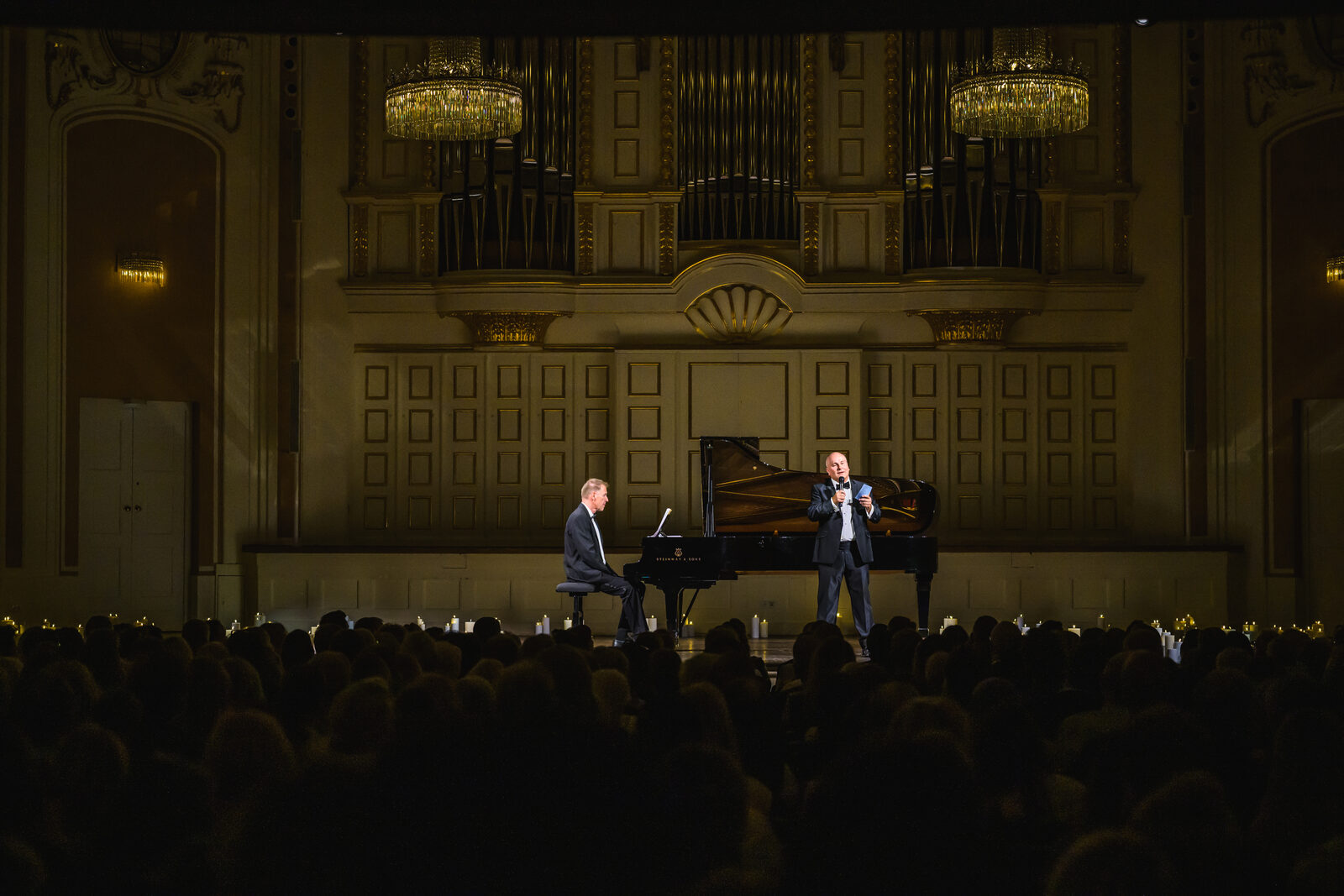
Peter Tomek went to the piano, and sat. Kevin Conners came to the front of the stage, picked up the microphone, and began to talk to us.
He hosted in German — I will not pretend I followed every word of it. I did not need to.
Because I knew exactly what he was doing. He had told me himself, four hours earlier, in an empty version of this room. No one should be nervous tonight. No one should feel they are going out to be judged. Not I am here to show you something — but I have something I would like to share, and I would love you to take part in it.
It is a peculiar thing, watching a man carry out a stated intention in front of a full house of fewer than eight hundred people, and watching it work. The room settled. Whatever he said, it was the right amount of light.
The bang
And then Emily Pogorelc walked out in a yellow dress — the only colour anywhere in that room — and sang Martern aller Arten.
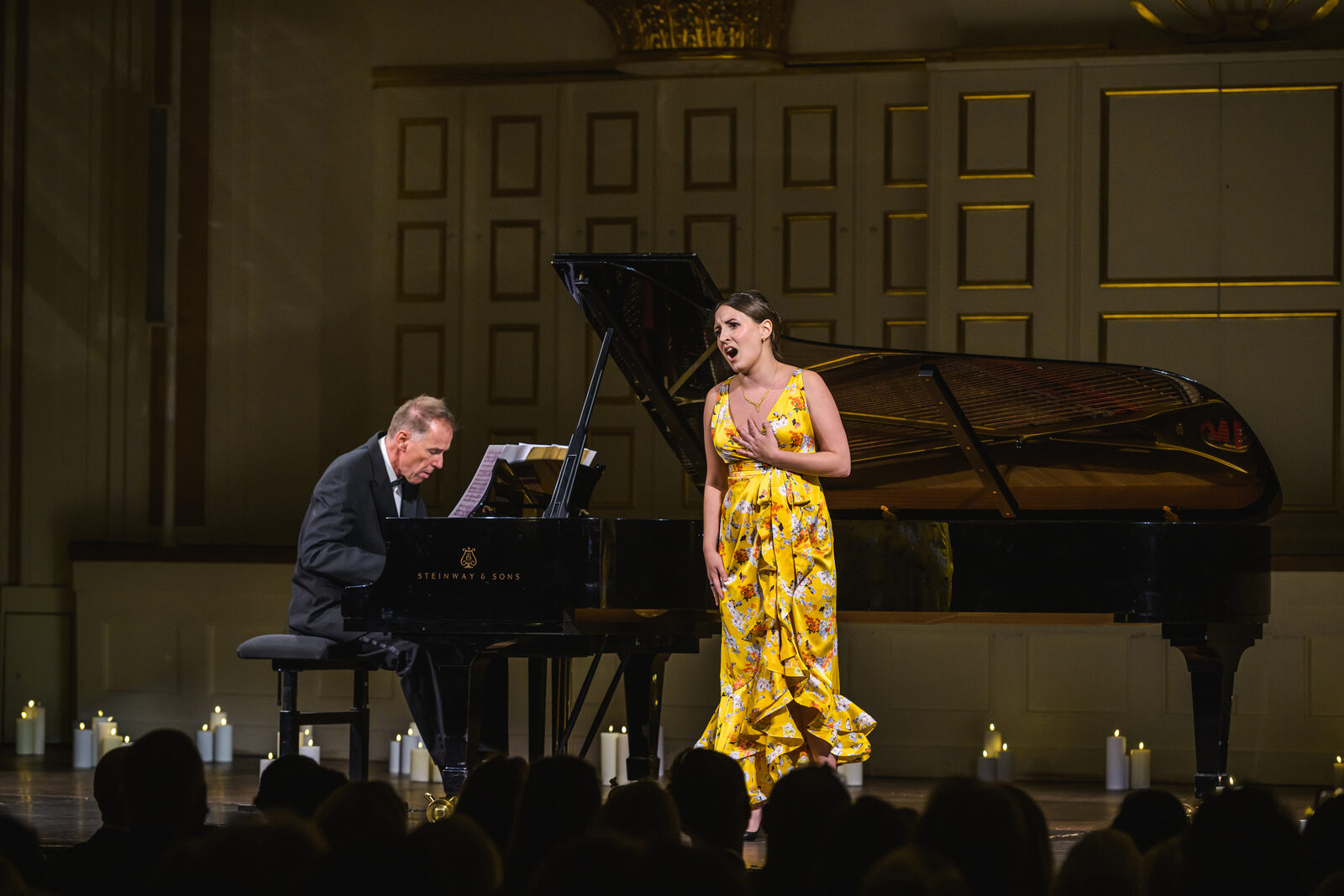
If you have just read the first half of this piece, you know what you are hearing. You know it is the largest concert aria in any Mozart opera. You know it was written for a voice and four solo instruments and an orchestra, and that the man at the piano had taken all of that apart and rebuilt it for ten fingers, on his holiday, from music she had sent him a fortnight earlier. You know he was nervous about it.
Nobody else in the hall knew any of that. They simply heard the evening begin at full height.
It was a bang.
She has an enormous voice and — this is the part that surprised me — an enormous amount of control over what she does with it. Constanze’s aria is a test piece; it is four minutes of defiance sung by a woman being threatened, and it can very easily become four minutes of a soprano being impressive. It didn’t. It was sung as an argument, by somebody who meant it.
And there is a private joke folded into the programme that I only understood because Tomek had explained it to me in the afternoon. Pogorelc sings her first Constanze next season, at the Bavarian State Opera. So what Salzburg heard, before the house that will stage it, was a preview. “A kind of avant-goût,” he’d said. “And also a kind of trailer, if you like.”
Some trailer.
The rest of the first half
What followed was built the way Tomek had described it to me: a set of rooms, each with a different temperature.
Conners took his Verdi — La Traviata, the one non-negotiable of the evening, the piece he had protected when everything else around it was being rearranged. Then Emily came back into the spotlight and sang the Liszt: a song on a text by Victor Hugo, the only piece in Pogorelc’s set that had arrived already written for the piano. “Glorious,” Tomek had called it. “Absolutely glorious. A kind of dreamy love song.” Then Lehár — Meine Lippen, sie küssen so heiß, from Giuditta — the operetta bow to Austria, sung in Austria, which the room received exactly as you would expect.
And somewhere in that second group she stopped standing. She sat down on the boards, among the candles, at the very front edge of the stage, and sang from there: head back, hands closed in her lap, the yellow dress spread out around her on the wood.
No announcement, no business, nothing theatrical about how it happened. She simply put herself on the floor of the Großer Saal, a metre from the front row, and sang.
They danced
The evening’s Broadway classic was My Fair Lady — the one title on the bill that needed no translating for a German-speaking audience, because My Fair Lady in these countries is not a curiosity, it is a standard.
And Conners sang “On the Street Where You Live.”
Which, if you know it, is a song sung by a man standing outside a house, too happy to go home, about a woman who is not there.
Except that she was. Emily came back out, and while he sang it, the two of them danced.
It was the most purely happy thing that happened all evening — and it was, I think, the point. Four hours earlier Conners had told me that humour conquers death, and that the trick of a night like this one is not to make it lighter than it is, but to look at the heaviest thing in the world with some warmth in your face. Nobody had said the word cancer yet. It was coming. Everyone in that room knew why they were there.
And in the meantime, two people danced.
The least anticipated thing on the bill
New moment, new artist on the stage. And here I will allow myself something personal, because it is the thing I keep coming back to: the least anticipated act of the evening was, as so often happens in music, the most surprising.
Antonio Pavan. Italian — yes, and I am allowed to be pleased about that. Thirteen years old, and only just: his birthday had been two days earlier. He sat down at a full-size Steinway on an empty stage, with a line of candles along the front edge of the platform and nothing else in front of him at all.
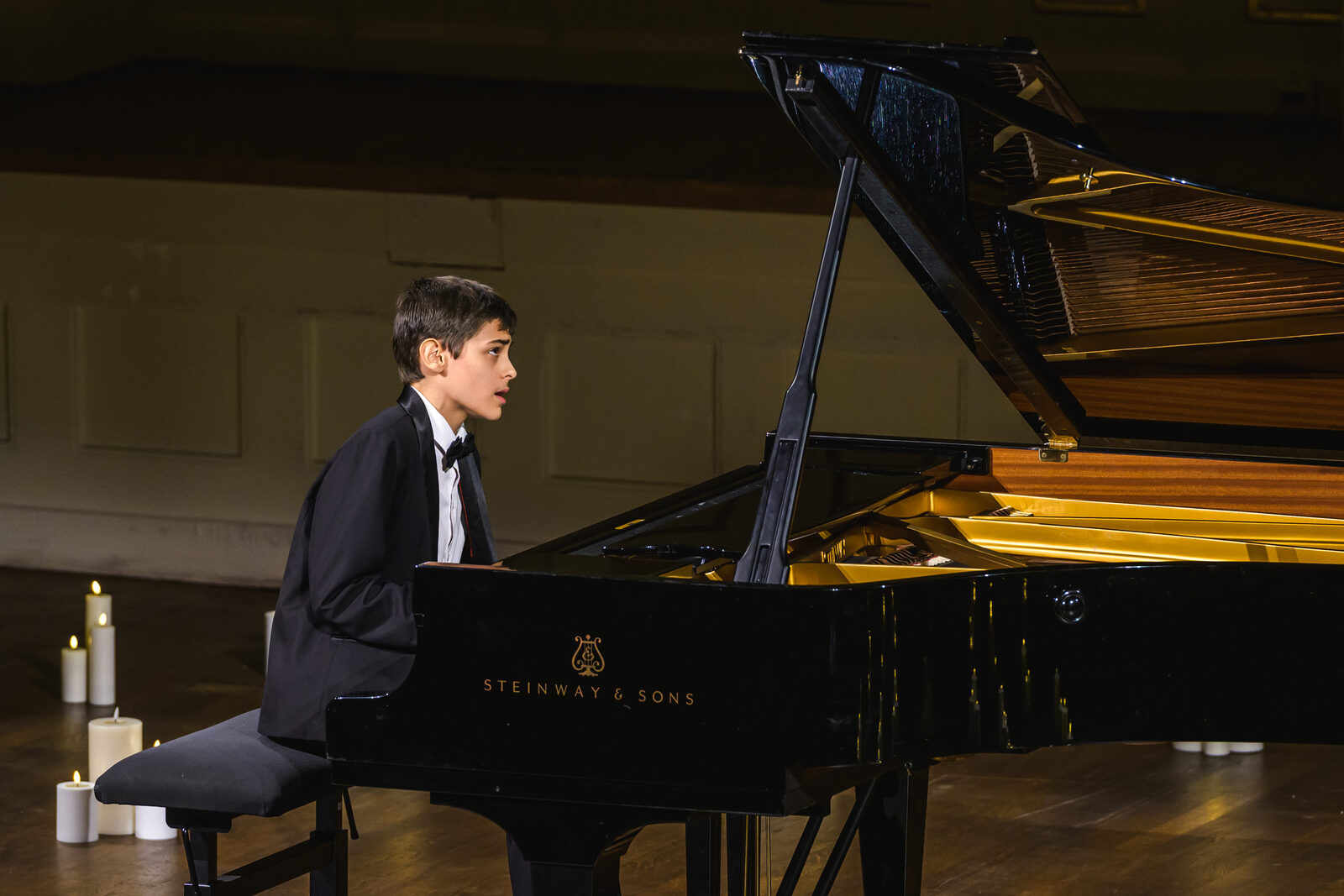
He is from Treviso, which is a detail I want you to keep. We will be back there before the night is over, and by a route nobody in that hall could have predicted.
He began playing at four. He first played in public at five. And let me tell you: he shines.
The Chopin
He played Chopin’s Ballade No. 1 in G minor, op. 23.
Not a curtain-raiser. Not something chosen to be sweet, or safe, or age-appropriate. The G minor Ballade is one of the pieces by which pianists are measured — ten minutes of shifting weather that has to be held together by a single line of thought, and it ends in a coda that has undone professionals in front of paying audiences. It is a serious ask of anyone. Putting it in front of a thirteen-year-old is either a mistake or a statement.
It was a statement.
He played with a sharp, unhurried focus, with delicate fingers and — this is what stopped me — with so much intention. Nothing decorative. Nothing hurried through to get to the loud part. An emotional maturity you simply do not expect at that age, and would not think to demand.
The house came down.
And then he played his own
And then, as an encore, he played a piece of his own composition.
Let me say that again, because I had to say it twice to myself in the hall: his own composition. At thirteen.
At thirteen I was still working out how to keep my head held high in a school corridor.
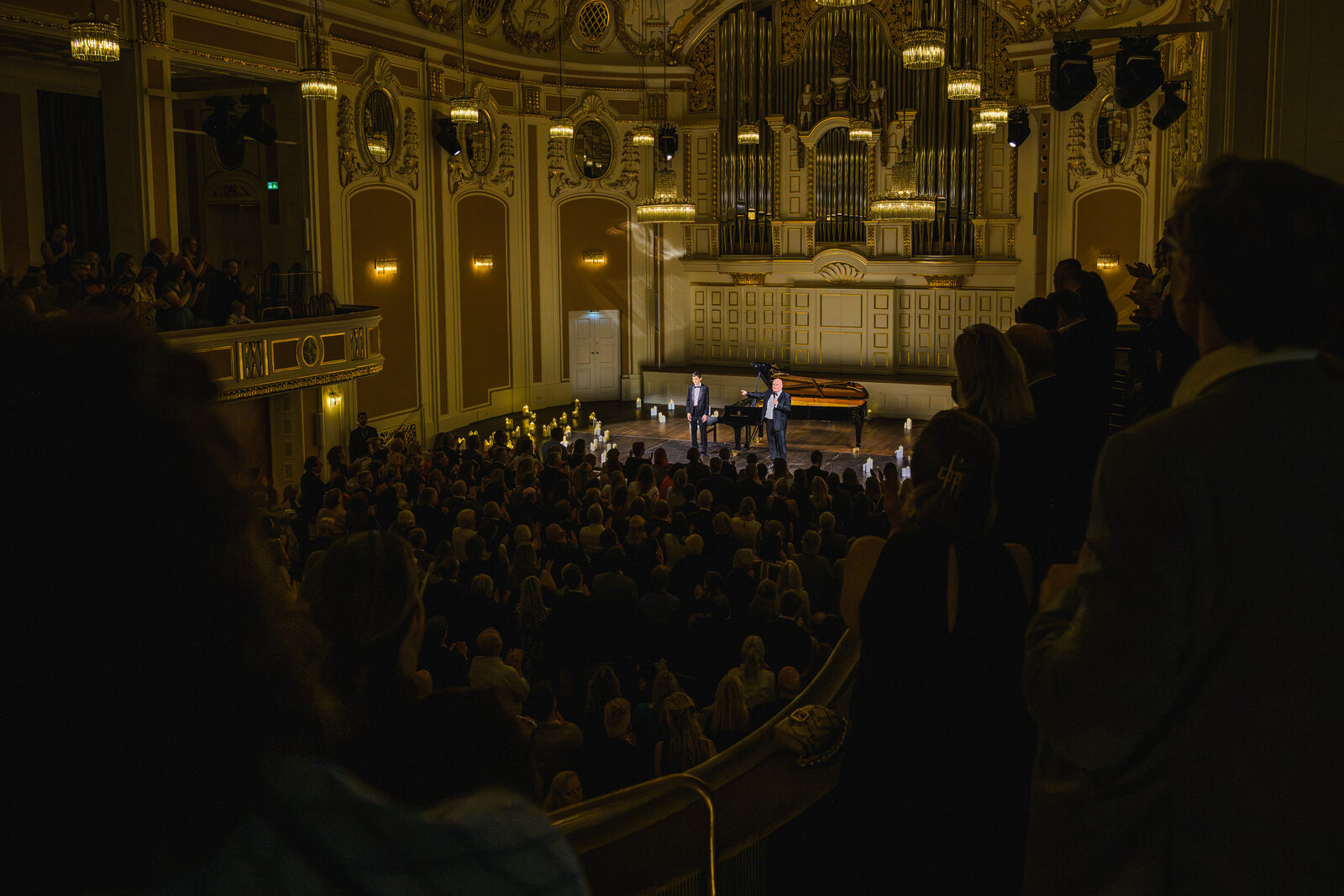
The audience erupted. A long, roaring applause, and then the whole room stood up.
And I want to be precise about why, because it matters. It was not for his age. It was not a room of adults being kind to a boy in front of a full house. Nobody in the Großer Saal rose to their feet to encourage him. They rose because of his talent, his music, and what he had just done with both. It was deserved. Totally, totally deserved.
If I may add one small piece of malice — and I apologise for it — it was also an extremely clever piece of programming. On a night given entirely to sick children, you put a thirteen-year-old at the piano and you let him be magnificent. Not pitiable. Not touching. Magnificent. Whoever thought of it understood the evening perfectly.
The letter
And then the evening stopped being about music for a while.
Conners came back to the microphone and introduced them, and two people who are not performers came out onto that stage.
Univ.-Prof. Dr. Thomas Müller directs the University Clinic for Paediatrics I in Innsbruck. He came to tell us, quite practically, what last year’s money had turned into. Not a sentiment — a list. Among the things it built was an app, since given an award, that has changed how young patients, their families, their paediatricians and the clinic talk to one another. Which sounds like a small thing until you consider what it is actually for: a child in treatment, a family several hours away in a valley somewhere, and a hospital that now hears from them sooner.
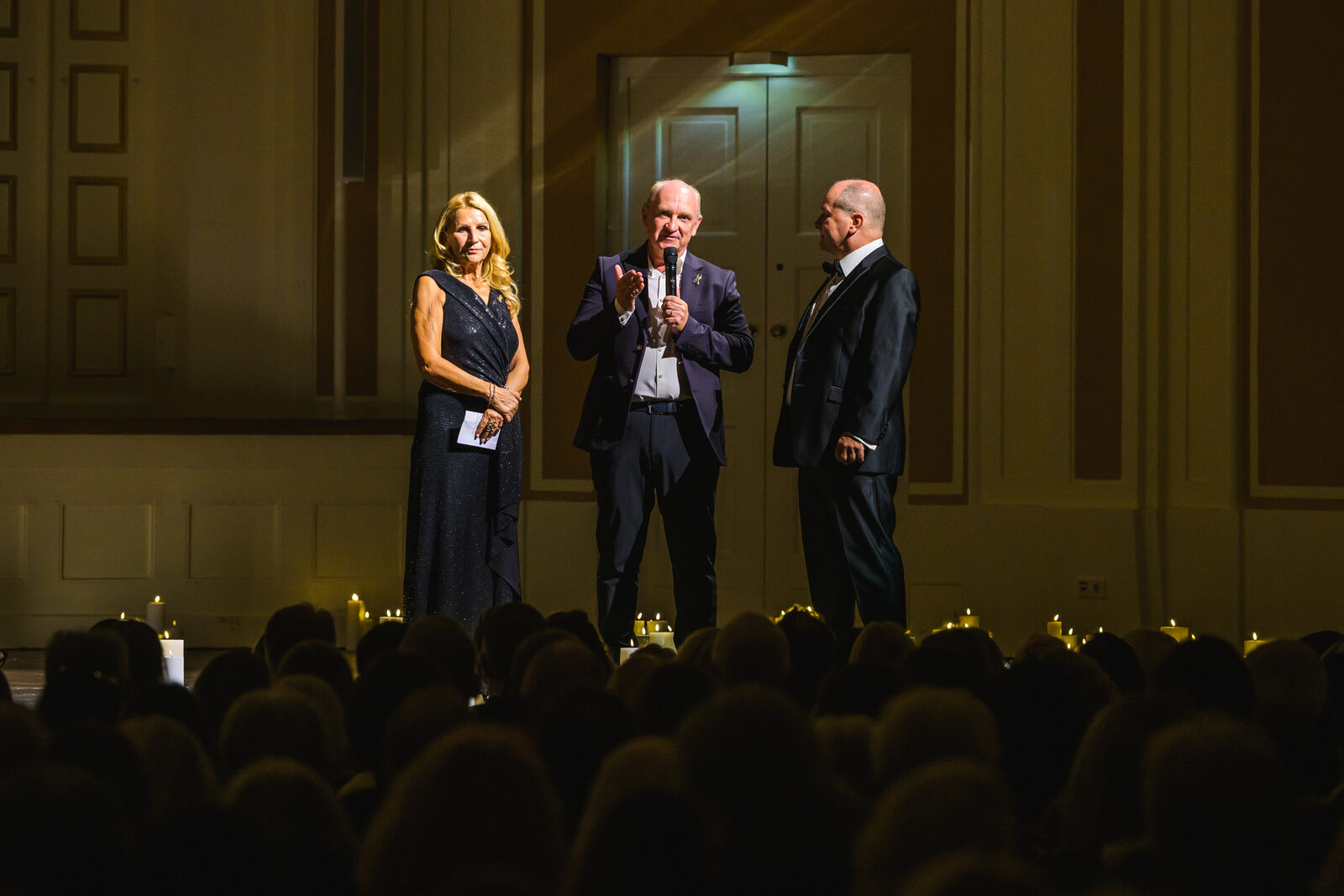
Ursula Mattersberger has been with the Kinder-Krebs-Hilfe für Tirol & Vorarlberg for thirty-five years. She is its chair. She explained what the organisation does, and then she read us a letter.
It was written by a girl who has been given a diagnosis of cancer. Mattersberger read it from the stage, in full, and it was not short.
I am not going to reproduce it here. It was not written to be published; it was written to be read to a room, and it was read to that room. What I can give you is the line it ends on, which the organisers have quoted since, and which I have not been able to put down:
The hall went silent. Not the polite silence of an audience waiting for the next thing. The other kind — the kind where several hundred people are all, simultaneously, somewhere else.
This is the part that did it to me last year, too. I told Kevin Conners so, in the afternoon, in that empty room: that what stuck with me from 2025 was sitting there in tears and then looking around and seeing groomed, well-dressed, grown men in tears beside me. It is a strange and rather wonderful thing to watch happen to a concert hall.
It happened again.
And now you understand why the man hosting this evening had spent his afternoon explaining to a stranger that humour conquers death. You do not put that letter into a room and leave it there. Somebody has to carry the room out the other side.
Which is, more or less, the exact moment Emanuel Graf walked on.
Emanuel Graf, and the four stations
When Emanuel Graf took the stage, I felt something close to pride. I have to admit it. It may be childish. It is also true.
He has played every edition of this evening since the church in Kitzbühel. He gave one of them its artistic direction. We interviewed him in June and have been talking to him ever since, and if you have read that conversation you already know how he thinks about the instrument under his chin — as a voice, and specifically as the voice you think in.
He came out in black, with Peter Tomek at the piano, and set his endpin into a plain wooden board laid across the boards of the Großer Saal. And then, before he played a note, he told the hall what he was going to do.
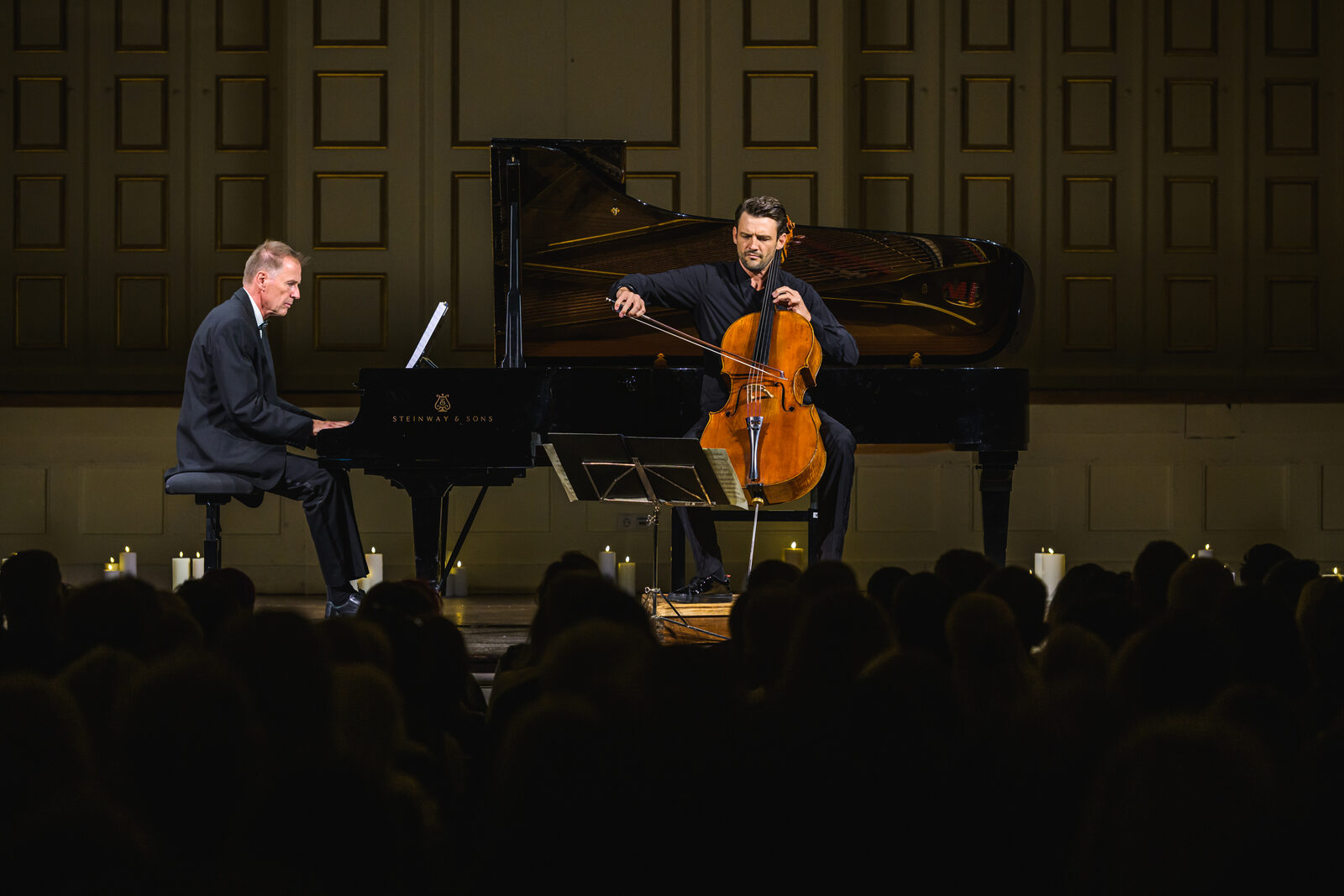
He did not mean four pieces. He meant four rooms, and he had decided in advance what each of them was for.
One · Saint-Saëns, and the will to live
The first station was the Allegro appassionato, op. 43. He told us afterwards what it had been for: the will to live. The fire. The untameable thing that simply keeps going.
And then he said where he had learned to recognise it.
I had heard this already. Four hours earlier, in the afternoon, Kevin Conners had mentioned it to me in passing, the way you mention something ordinary about a colleague: “Emanuel goes down to Innsbruck and he plays for the sick children in the ward that they are in. He does that a couple of times a year.”
Neither of them knew I would have both.
Two · Elgar, and the love on those wards
The second station was Elgar’s Salut d’amour, and he gave it to us with its story attached.
Elgar was a music teacher. A piano teacher. He had a pupil called Alice, and he was hopelessly in love with her, and Alice came from a very wealthy family, and the family’s position was clear: a music teacher who plays a bit of piano is not what we had in mind for our daughter.
So Elgar went home and wrote her a piece. A greeting of love. Salut d’amour.
“And afterwards,” Graf said, “she married him.”
The hall laughed. Which was, I now understand, entirely the point.
Three · Fauré, and the turn
Because he let the laugh land, and then he said this:
And walked us straight into Fauré’s Élégie.
Fauré was in love, and engaged, and the engagement collapsed — his fiancée ran away. He fell into a deep depression, and friends, Graf told us, described him from that point on as a broken man. And then he wrote an elegy.
I want to stop here for one sentence, because this is where the evening showed me its hand.
That is the exact manoeuvre Conners had described to me in the afternoon, executed live, by somebody else, without either of them knowing I had both halves. Humour conquers death. Not making the night lighter than it is — looking at the heaviest thing in the world with some warmth in your face, so that the room can bear to keep looking. Get the laugh. Then turn.
Nobody planned that for my benefit. It is simply how these people work.
The piece that was not on the programme
And then Emanuel Graf did something that is on no printed programme, in no press release, and in no account of that evening published anywhere. And I did not know he was doing it, because he was doing it in German, and I only learned what he had said days later, at a desk, with a translation in front of me. In the hall I only knew that eight hundred people had gone completely quiet.
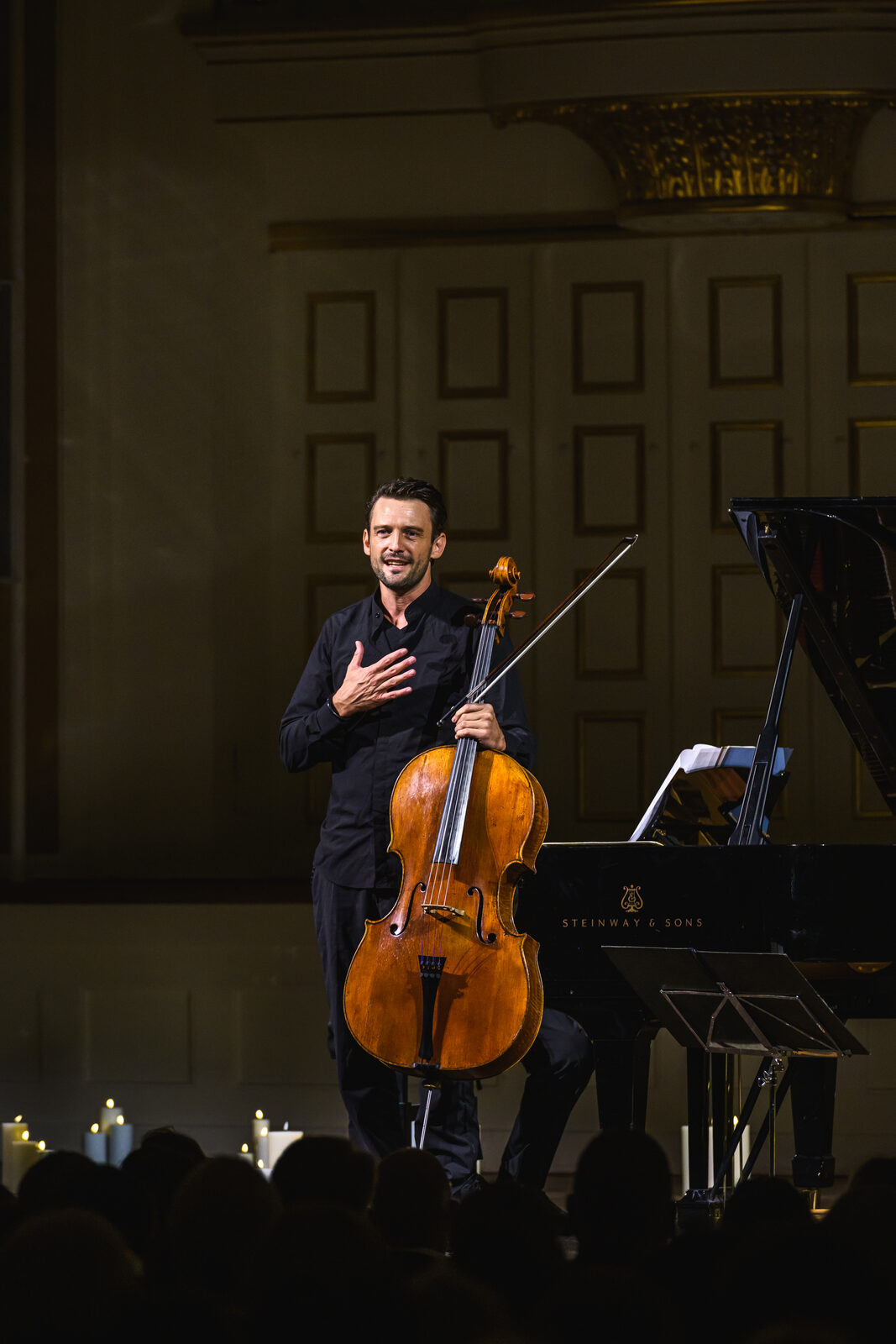
Before his last piece, he said, he would like to put one small song in front of it. Pablo Casals, El cant dels ocells — the Song of the Birds. Casals, the Catalan cellist, played it as an encore all over the world, all his life, as a message of peace. Even in person, Graf told the hall, for Kennedy.
He wanted to play it as a message of peace too. And he wanted to dedicate it to a child.
And then he told us what that child had said to him, after he had played for them:
Then he played it.
I am not going to describe how it sounded. I was there and I could not have told you, then, what he had just said — and I am not sure it would have made any difference to what the room did. Eight hundred people sat in a hall full of candles and did not move.
Four · Prokofiev, and the right to be cheeky
And then — and then — this is the part I keep turning over.
He did not end there. He had one station left, and he had chosen it long before, and he told us plainly what it was for.
Prokofiev’s Children’s March, in the arrangement by the great cellist Gregor Piatigorsky.
Read that in order. A song of peace for a child who died, and then a march about every child’s right to be cheeky. Not to be brave. Not to be an inspiration. Cheeky. Healthy. Marching through life and being a nuisance, which is the entire job description of childhood and the thing this illness takes away first.
He built that sequence himself, announced it before he played a note of it, and carried it through in front of a full house on a Saturday night in September.
Four stations: the will to live, love, grief with hope in it, and a child’s right to be a child.
And then he stood up, and the room stood up with him. And I flinched, to regain composure.
The number
A much-needed break, let me say, after the beautiful intensity of the first half.
And when we came back in, Kevin Conners stood up in front of us and announced what the evening had raised.
Over two hundred and ninety-three thousand euros.
A record. More than any KlangBlickMomente before it, in a hall that had already been full the year before.
And then, later that same evening, one donor rounded it up.
Over three hundred thousand euros.
Three hundred. The number I had been given in the afternoon as a hope — they hope to do even more; they hope to reach three hundred — arriving a few hours later as a fact. I had been carrying it around all night like a coin in a pocket.
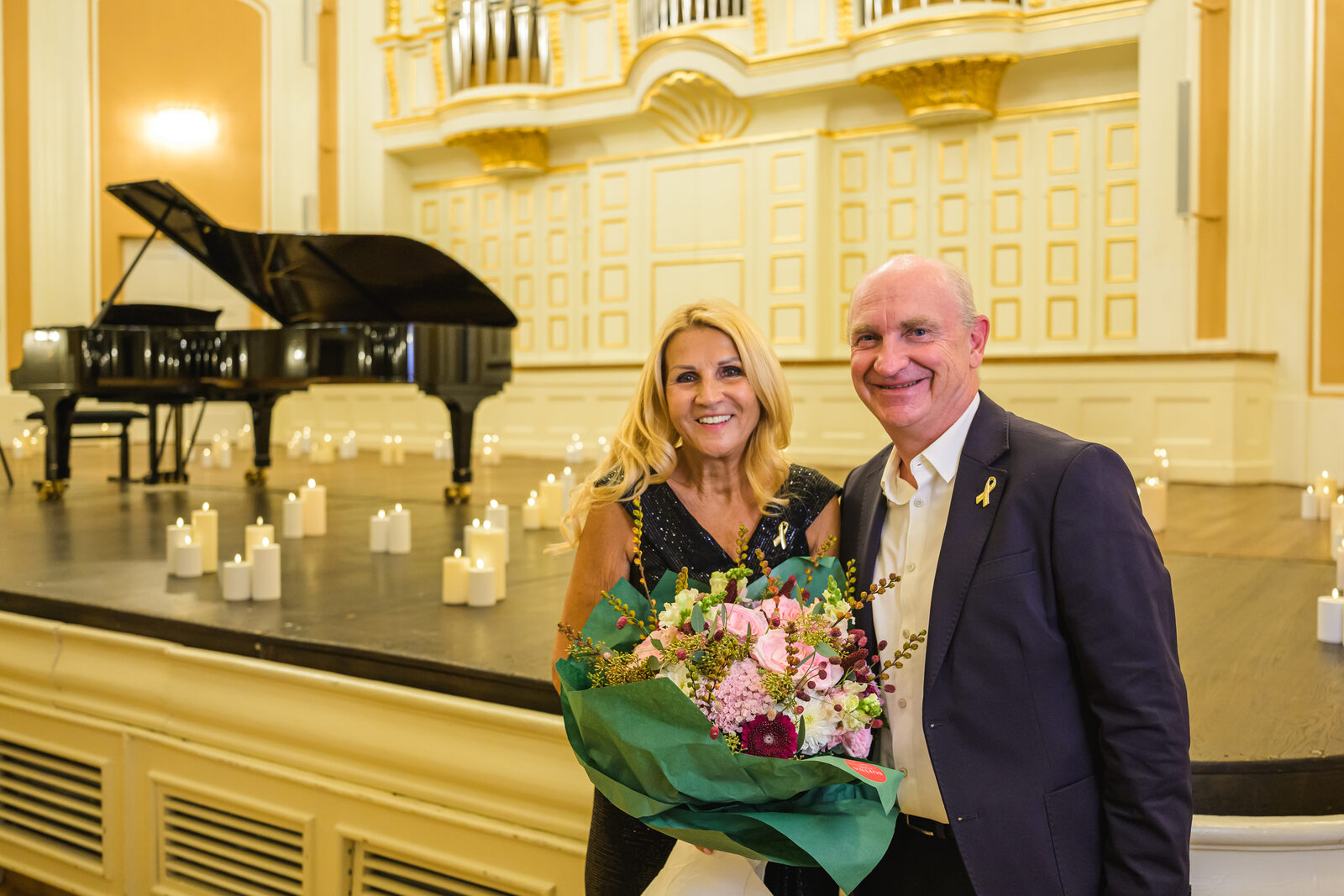
One more thing belongs here, because it is the least advertised fact about this evening and the one that changes the arithmetic completely: every artist waived their fee. The organiser carries every cost of the night himself. Which means that every euro given in that hall — all three hundred thousand of them — reaches the Österreichische Kinderkrebshilfe undiminished.
After the interval
And then the room changed key. David Garrett was taking the stage, with the pianist Vassilis Varvaresos — a longtime friend, we were told from the platform, and a colleague from their Juilliard years.
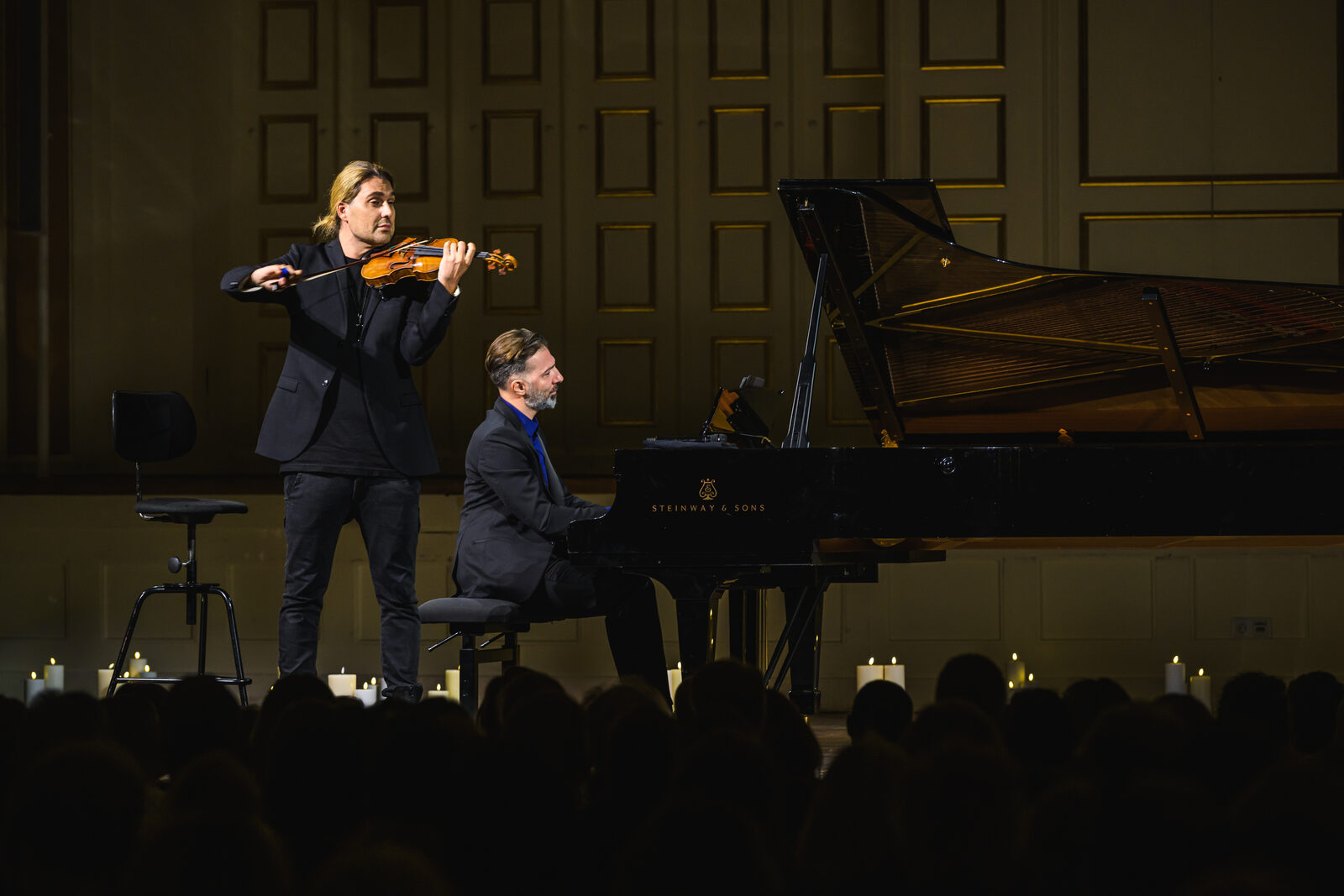
And again, the expectation exceeded the expectations.
This man is extraordinary. My fault entirely for not knowing him before — I make amends. I know now, and he is absolutely marvellous.
David Garrett is too, of course.
And yet — and I may be completely wrong about this — something seemed a little clouded in him.
I have been to a great many of his concerts, classical and crossover. I know by now what he is like on a stage, and that night I thought the usual spirit and charisma were dimmed a shade. I have no idea why and it is not up to me to guess.
Did it affect the performance? Absolutely not. Not for a second. If anything the reverse: he played a stellar evening, and whatever was or wasn’t going on behind it never reached the strings.
I have said many times that I believe classical music is his home. And this particular setting — close, raw, unamplified, a hall of fewer than eight hundred people and no production to hide behind — is probably where he is most himself.
It showed.
The programme
He played eleven short pieces and an encore:
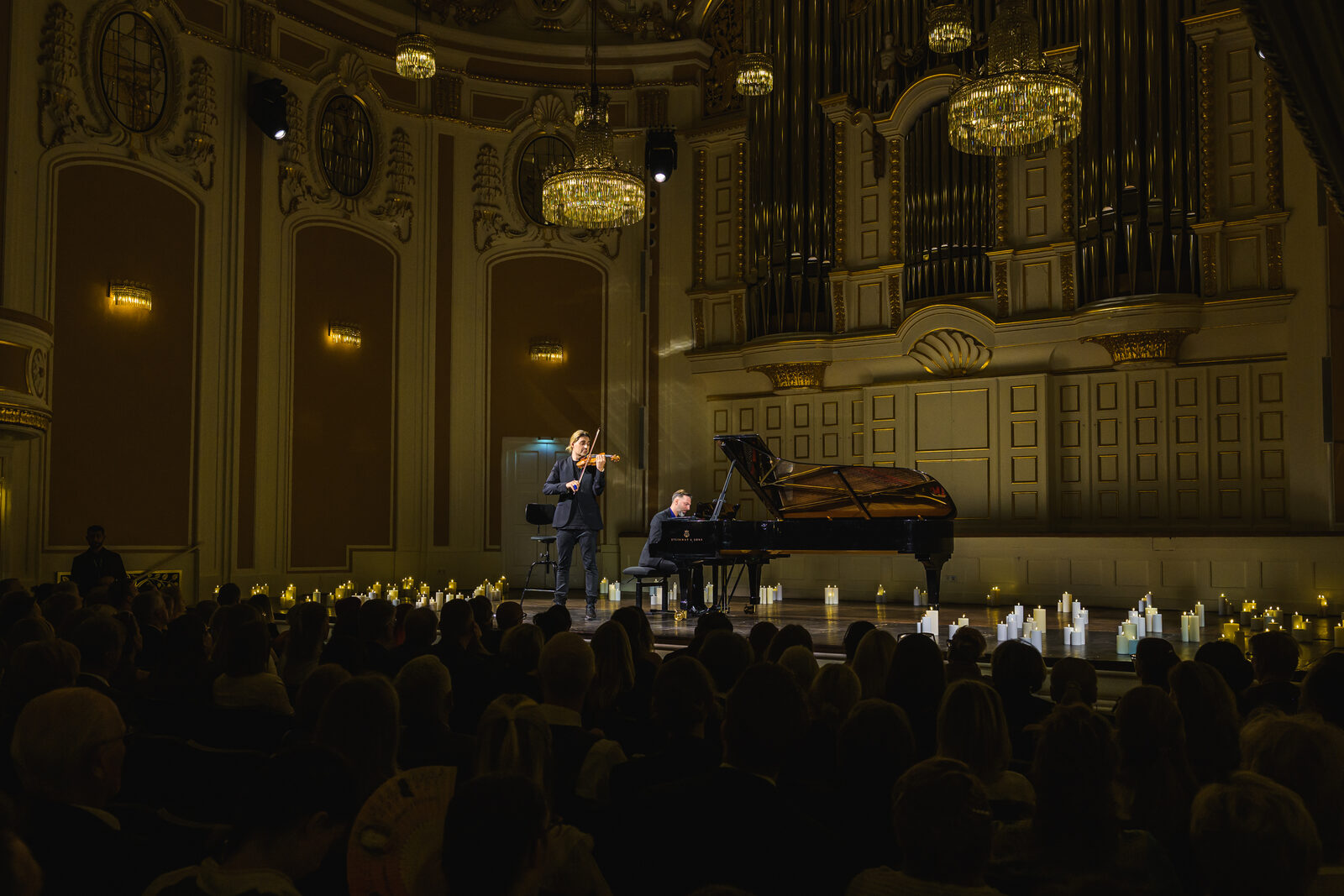
Tempo di Minuetto · Jeanie with the Light Brown Hair · The Swan · Gluck’s Mélodie · Liebesleid · Beau Soir · Cavatina · Dvořák · Träumerei · Andantino · Sicilienne.
Eight of them come from Iconic. Liebesleid has been in his hands for years, since Legacy.
And two of them had, as far as we know, never been played live before: Beau Soir, which opens Immortal, and the Andantino — Kreisler’s Andantino in the Style of Padre Martini, track nineteen. The album, as we were told from the stage, was due on 9 October — twenty-seven days after this concert — with a tour to follow in early 2027. So a hall in Salzburg, on a Saturday night in September, for a children’s cancer charity, heard two of those pieces before anybody else did.
There was no Brahms.
The July programme had promised the Third Sonata in D minor, op. 108, and Garrett himself told us so in June, in the words we published: “We will be performing Brahms' Violin Sonata No. 3 in D minor, and perhaps add some pieces from my upcoming album.” What happened was the second half of that sentence without the first. Programmes change; this one changed into an Immortal evening. And we’re glad!
And if you want a small, private joke that nobody in the hall was in a position to notice: he opened with a forgery and closed with the real thing. Tempo di Minuetto and the Andantino are both Kreisler — pieces Kreisler wrote himself and published for thirty years under the names of dead composers, Pugnani and Padre Martini. (We told that story here in June.) Hold that thought until the end of this section.
The Cavatina
When he started playing the Cavatina, I flinched slightly. It was the same piece he played here last year, and my first thought was — well, again?
And then the music punished the thought.
Because you can listen to the same piece over and over, and it will be different every single time. Not only because the performer is different, or the arrangement, or the instrument. But because of how you receive it in that precise moment. How it reaches you, and how you let it in.
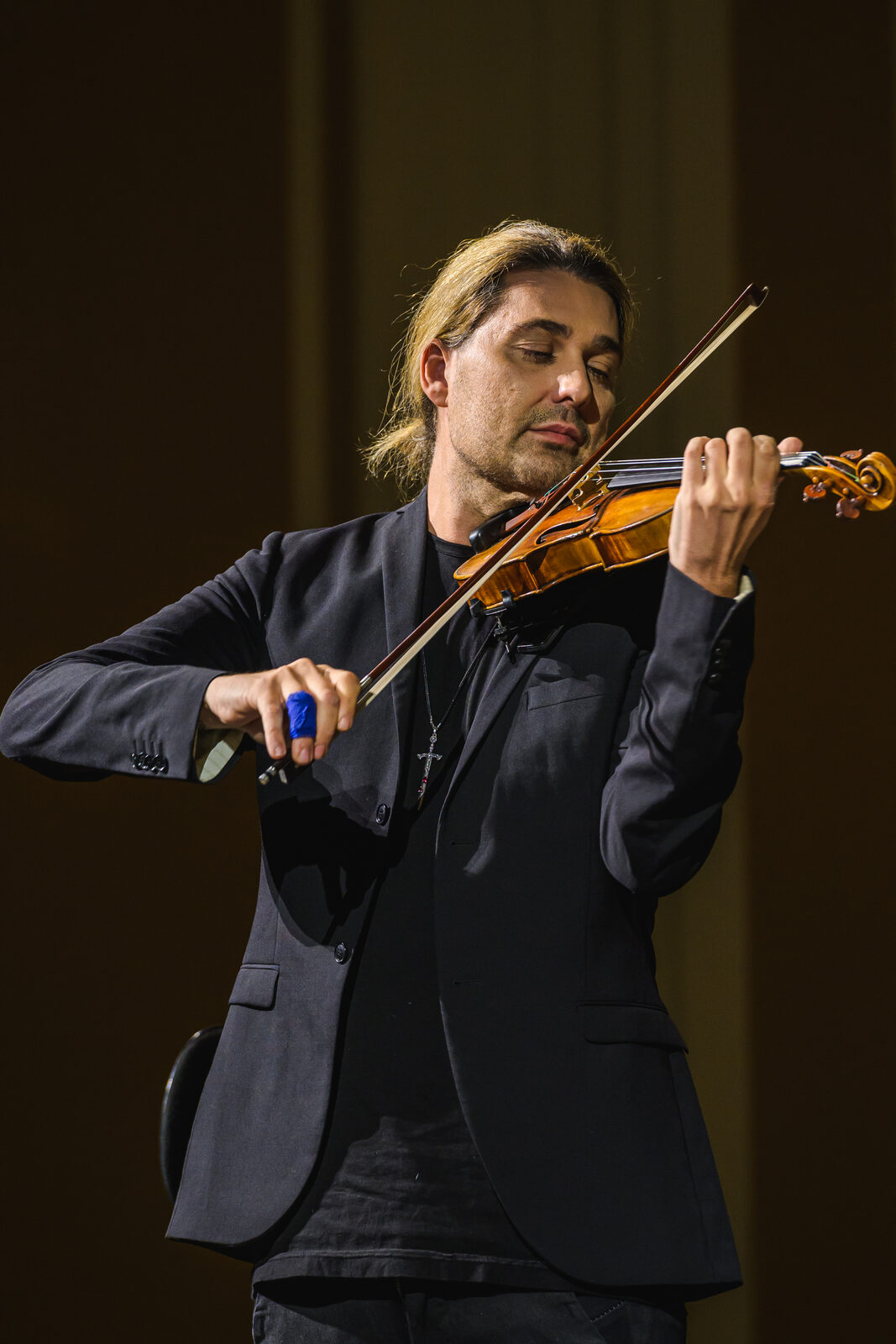
And this particular rendition — Garrett on the Guarneri del Gesù, Varvaresos at the piano — was so intense, so deep and so enveloping that it stopped me.
It will stay with me. For a long time.
The encore
Then he put the Guarneri down.
The violin he picked up instead was made in Treviso, in 1764, by Pietro Antonio Dalla Costa. The original label is still inside it. It spent Mozart’s Vienna years in Mozart’s house — when Constanze sold the estate in 1799 she recorded that her husband had played it often — and since 2013 it has belonged to the Stiftung Mozarteum, the gift of a private donor. We wrote its whole story here in August. That a private donor made it possible for the violin to be in that room on that evening is, we think, entirely in character: nobody in two hundred and twenty-seven years has treated this instrument primarily as an asset, which may be exactly why it is still allowed out of its case.
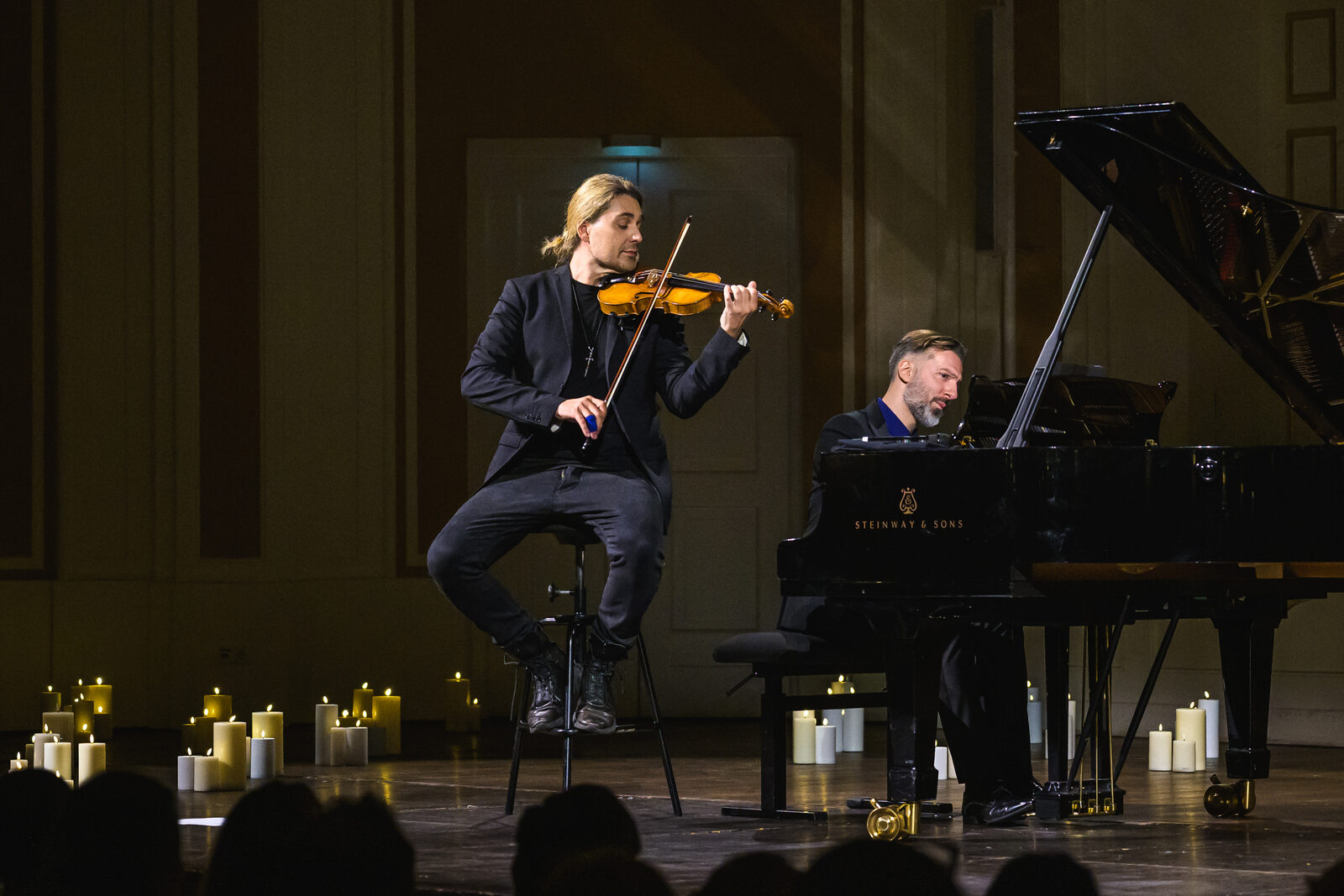
Treviso. I asked you to keep that word. Three hours earlier a thirteen-year-old from that same city had sat at the piano on this same stage and brought the house down. Nobody planned that. It is simply what happens when you put enough of the right people in one room.
And ten days before this concert, that violin had been in the Vatican. The Salzburg youth orchestra took it to the Vatican Radio studio on 2 September, where a nineteen-year-old played the finale of Mozart’s Violin Concerto K. 219 on it, and Pope Leo XIV held it in his hands.
Then it came home to Salzburg, and David Garrett sat down on a stool in a hall full of candles and played the second movement of Mozart’s Sonata in E minor, K. 304.
Of the more than thirty sonatas Mozart wrote for violin and keyboard, that one is the only one in a minor key. He wrote it in Paris in 1778, in the months around his mother’s death there — how directly the two are connected is something scholars have argued about for two centuries, and I am not going to settle it in a concert review. But nobody disputes that it is the darkest thing he wrote for the instrument.
And the movement is marked Tempo di Menuetto. A minuet that does not dance.
So here is how the evening ended, and I promise I am not arranging this after the fact — it is simply the order in which it happened. A man walked on stage and opened with a minuet that Fritz Kreisler forged in the eighteenth-century manner and signed with a dead man’s name. Eleven pieces later he put down a violin worth more than the building, picked up a modest one from Treviso worth a hundredth as much, and played a real eighteenth-century minuet, by the man who wrote it, on the instrument that stood in his house while he wrote.
In Mozart’s own city. For children with cancer. As the last thing anybody heard.
The last thing anybody heard
Besides the applause, of course, which exploded in that hall and did not want to stop. Besides the bravo shouted wholeheartedly from everywhere behind me. And besides the silence that came after it — when the goal had been reached, and everything had been said and done, and beautifully, beautifully played by each and every one of the artists who made that evening into something that will not fade from the hearts and minds of the people who were in the room.
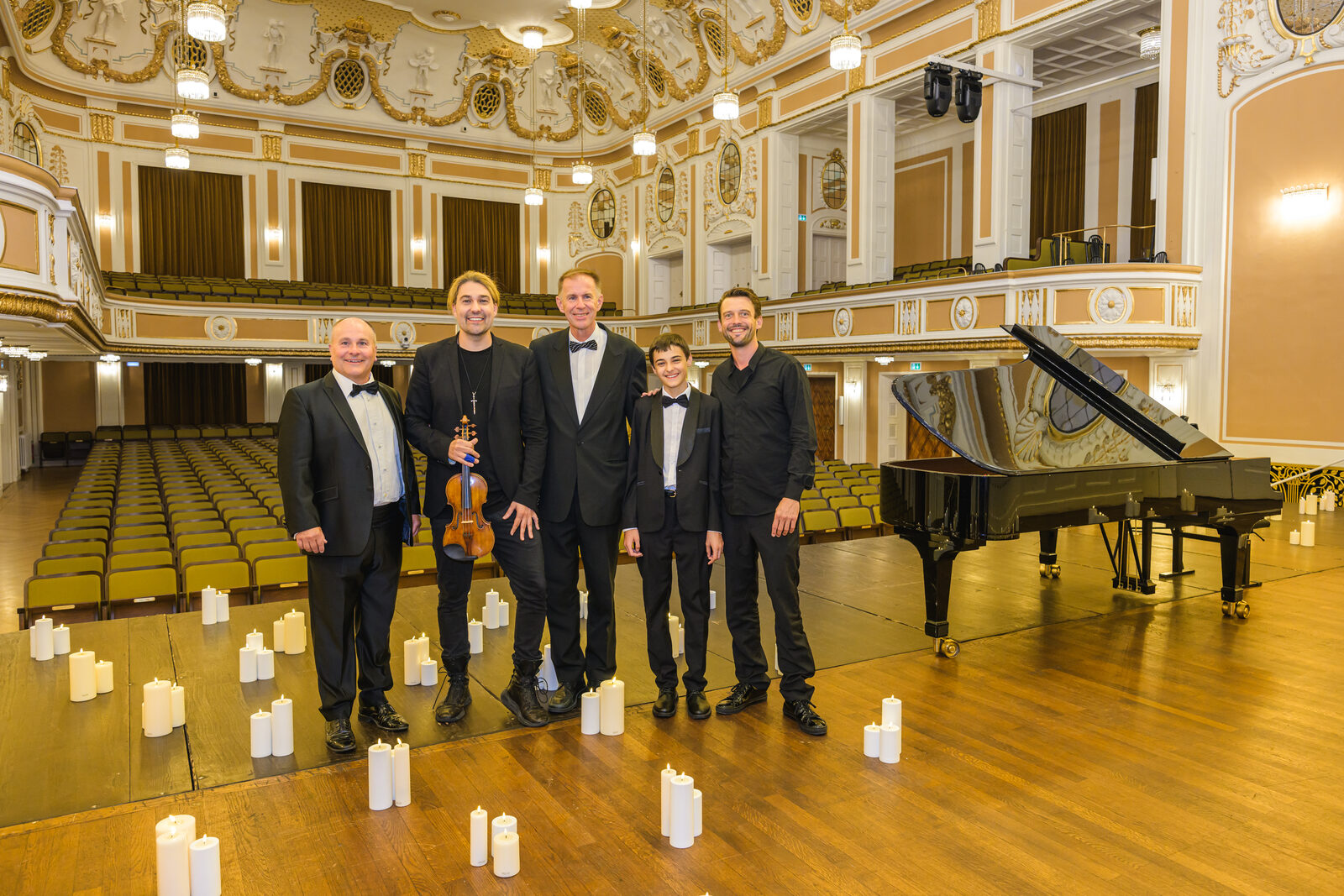
Until next year. When all of us shall “be a good person and come.”
See you in 2027, KlangBlickMomente.
We’ll be there.
P.S. — Thank you so, so much, Martin Pfannenstein. Thank you, KlangBlickMomente, for the trust and for the kindness. And thank you to the Internationale Stiftung Mozarteum. Without you, this experience — and this article — would not have been the same. Thank you so very much.
Photographs: frank schroth fotografie / KlangBlickMomente.